Category Archives: Movie Reviews

Reviews of movies I have seen.

Say hello to 1936

1936 Olympics

1936 Olympic Games long jump medal ceremony – on the podium from left to right are Naoto Tajima (Japan – bronze), Jesse Owens (USA – gold), and Luz Lang (Germany – silver)

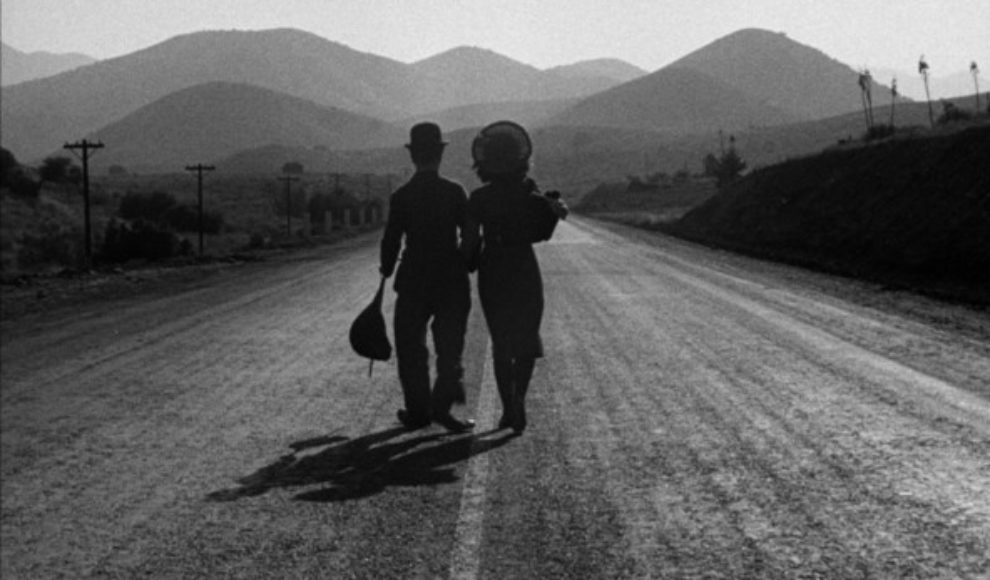
1936 was another wonderful year for movies.  Screwball comedies were getting into gear with some timeless classics like Our Man Godfrey.  Fred and Ginger were offering up some of their best work in Swing Time and Follow the Fleet and Yasujiro Ozu and Charlie Chaplin made their first sound films, The Only Son and Modern Times.

Producer Irving Thalberg died at age 37 and Deanna Durbin made her her first feature film at age 14.  The Trail of the Lonesome Pine  was the first three-strip Technicolor feature shot entirely on location.  Beggar’s Wedding (Italy) (aka Nozze Vagabonde) was the first 3-D talkie film to encourage the use of 3D polarizing glasses by its viewing audience.  Sir Arthur Bliss’s score to Things to Come became the first official soundtrack to be issued on LP records to the public. The British Broadcasting Corporation launched the world’s first regular television service, broadcasting 2 hours a day, 6 days a week.

In the USA, Franklin Roosevelt was reelected by a landslide.  A record heat wave struck North America, already suffering from the Dust Bowl, killing thousands and destroying crops.  The average price for a movie ticket was 25 cents and a gallon of gasoline cost around 20 cents.  There was no universal federal minimum wage legislation and the unemployment rate was about 17%.

Astaire and Rogers dancing to "Pick Yourself Up" in Swing Time

Astaire and Rogers dancing to “Pick Yourself Up” in Swing Time

Edward the VIII  was King of the United Kingdom and the Dominions of the British Commonwealth, and Emperor of India from January 20 to December 11, when he abdicated and was succeeded by his younger brother Albert who chose the regal name George VI.

Nazi troops enter the Rhineland

Nazi troops enter the Rhineland

Elsewhere, the world appeared inexorably headed toward calamity.  Pro-democratic militarist Keisuke Okada stepped down as Prime Minister of Japan and was replaced by radical militarist Koki Hirota.  War continued between Japanese and Chinese forces in Manchuria.  The Rome-Berlin axis was formed.  Italy annexed Ethiopia. In violation of the Treaty of Versailles, German troops marched into the Rhineland.  The Spanish Civil War began.  The first of the Moscow show trials was held as part of Joseph Stalin’s Great Purge.

The films I hope to get to for 1936 can be found here:  http://www.imdb.com/list/eBl1zIKZCOA/

Jesse Owens at 1936 Olympic Games to “Time” by Hans Zimmer

On the Road Again

I’m off on a road trip to visit relatives in Grand Junction, Colorado and should be back July 17.

It’s good-bye to 30 days of noir.  It was fun and there are plenty of good films noir left for the next installment.  When I return I will be set to wrap-up my 1935 viewing and start on 1936.

“Rocky Mountain High” to landscape photographs of Colorado

I Walked with a Zombie (1943)

I Walked with a ZombieI Walked with a Zombie Poster
Directed by Jacques Tourneur
1943/USA
RKO Radio Pictures

First viewing
#161 of 1001 Movies You Must See Before You Die
IMDb users say 7.2/10; I say 7.5/10


Paul Holland: Everything good dies here. Even the stars.

This superbly shot and lit psychological horror film from the Val Lewton shop at RKO falters in the story department.

Sugar mill owner Paul Holland (Tom Conway) hires a young Canadian nurse (Frances Dee) to care for his catatonic wife on a Caribbean island.  Paul’s half-brother Wesley believes that Paul caused the wife’s illness when he prevented Wesley and her from running away together.  But voodoo culture pervades the island….  Could Jessica be a zombie?

MARTIN SCORSESE PRESENTS: VAL LEWTON- THE MAN IN THE SHADOWS

This film is absolutely beautiful.  There is something to savor in almost every frame.  I especially like the way many of the scenes feature light streaming through blinds, leaves, or ironwork creating a kind of dappled effect.  The one islander zombie in the film, played by Darby Jones, adds an element of horror merely by standing and staring.  Unfotunately, I couldn’t get emotionally invested in the love triangle between the brothers and the wife nor in the budding relationship between Paul and the nurse.  I’m glad I saw the film but I doubt I will watch it again.

The only film I’ve seen Francis Dee in before is the 1933 Little Women.  It was hard for me to believe either her terror or her yearning.  She seems really grounded for a fantasy film.

Trailer


The Big Sleep (1946)

The Big SleepThe Big Sleep Poster
Directed by Howard Hawks
1946/USA
Warner Bros.

Repeat viewing
#189 of 1001 Movies You Must See Before You Die


 Vivian: Why did you have to go on?
Marlowe: Too many people told me to stop.

Movies have taken a back seat to life lately and when life rears its ugly head there is nobody better than Bogart for a little boost.  This is a fun but perplexing adaptation of the Raymond Chandler novel.

Philip Marlowe (Humphrey Bogart) is hired by wealthy General Sternwood to investigate a blackmail plot against his daughter Carmen (Martha Vickers).  Sternwood’s other daughter Vivian Rutledge (Lauren Bacall) attempts to keep him off the case.  Not to be deterred, Marlowe comes across a series of murders and is lucky to escape with his own life.  With Elisha Cook, Jr. as a would-be informant.

The-Big-Sleep-1946-movie-cover

The Big Sleep has a notoriously complicated plot, even for a film noir.  It is so complicated, in fact, that when writers William Faulkner and Leigh Brackett asked Chandler who killed a chauffeur in love with Carmen, even Chandler couldn’t figure it out.  I’m hazy on the most of the story.  Despite the fantastic repartee between Bogart and Bacall, this detracts a bit from my enjoyment of the film.  Nevertheless, it is well worth seeing.  It is probably the only film in which Bogart plays a James Bond like sex symbol, with all the girls he meets swooning.

Trailer

Clip – Dorothy Malone and Humphrey Bogart get to know each other in a bookstore

The Maltese Falcon (1941)

The Maltese FalconThe Maltese Falcon Poster
Directed by John Huston
1941/USA
Warner Bros.

Repeat viewing
#144 of 1001 Movies You Must See Before You Die


Wilmer Cook: Keep on riding me and they’re gonna be picking iron out of your liver.
Sam Spade: The cheaper the crook, the gaudier the patter.

The third time was the charm for this outstanding adaptation of the Dashiell Hammett novel.  Screenwriter John Huston’s first effort as a director created a classic that helped form the “new” Humphrey Bogart character and made him a star.

Beautiful Ruth Wanderly (Mary Astor) visits the offices of Spade and Archer and hires them to trace her missing sister.  While Miles Archer is trailing her sister’s companion, he is shot and killed.  Sam Spade (Humphrey Bogart) soon discovers that Miss Wanderly’s name is really Bridget O’Shaughnessy and that she is more interested in the whereabouts of a valuable ornament in the shape of a falcon.  As Sam tries to discovery Archer’s killer he is menaced by other shady types searching for the same bird.  With Peter Lorre as Joel Cairo, Sidney Greenstreet as Kasper Gutman, and Elisha Cook Jr. as Wilmer Cook.

MalteseFalcon 1

I’m running out of ways to describe timeless classics.  Suffice it to say that I love every single aspect of this film.  I’ve also seen the 1931 version of the same story and the difference that these actors make to the delivery of the exact same dialogue is amazing.  Some critics cite this as the first film noir.  I don’t know that I agree.  True, it has the hard-boiled dialogue and some of the high-contrast lighting and odd camera angles of a noir but the tone is different.  In particular, Sam Spade is a man who won’t play the sap for anyone and the noir hero is typically born to play that role.

We can all be thankful that this was Huston’s first film.  The studio first offered Bogart’s part to George Raft who turned it down because he did not want to work with an untested director.  Huston was buddies with Bogart and never wanted anyone else.

Trailer – oddly Bogart can’t escape his gangster past in the trailer


Double Indemnity (1944)

Double Indemnitydouble-indemnity-movie-poster
Directed by Billy Wilder
USA/1944
Paramount Pictures

Repeat viewing
#172 of 1001 Films You Must See Before You Die


Phyllis: We’re both rotten.
Walter Neff: Only you’re a little more rotten.

You have to hand it to Billy Wilder.  He was a true original and yet his films established many new genres.  Some critics believe this movie was the first “true” film noir.  Wilder claimed it was intended to be a “documentary”.  Whatever it is, it is a masterpiece.

Insurance salesman Walter Neff (Fred MacMurray) spots Phyllis Deitrichson’s (Barbara Stanwyck) anklet and it is lust at first sight.  Neff is trying to renew an auto policy but Phyllis convinces him that what she needs is an accident policy on her husband … and a fatal accident.  But can the pair collect when Walter’s friend, claims adjuster Barton Keyes (Edward J. Robinson), smells a fraud?

Double Indemnity 1

Walter Neff: Yes, I killed him. I killed him for money – and a woman – and I didn’t get the money and I didn’t get the woman. Pretty, isn’t it?

This film is just loaded with everything it takes to make a movie great.  The direction, acting, cinematography, screenplay, and music are all brilliant.  The care with which the first few minutes are handled, with MacMurray taking his time to settle in with the dictaphone are masterful and this is before the plot starts rolling.  Barbara Stanwyck is the perfect amoral femme fatal, but it strikes me that the fatal flaw here is within Walter.  Once again the sin of pride rears its ugly head and Phyllis merely gives Walter the opportunity to prove he his smarter than Barton Keyes, which has been his motive all along.  But Walter isn’t smarter; he is only taller.

DOUBLE INDEMNITY

The special edition DVD was loaded with two commentaries and a documentary.  One of the folks on the documentary said that “I did it for the money and the woman…and I didn’t get the money or the woman” sums up film noir in a nutshell.

Double Indemnity was nominated for seven Academy Awards including Best Picture, Best Actress, Best Director, and Best Screenplay.  It failed to win any, largely because Paramount was promoting its other 1944 classic Going My Way.  The story goes that Wilder was so miffed when Leo McCarey got up to claim his Best Director prize, he put his foot in the aisle to trip him.

This is truly not to be missed.

Trailer

In the Heat of the Night (1967)

In the Heat of the NightInTheHeatOfTheNight Poster
Directed by Norman Jewison
1967/USA
The Mirisch Corporation

Repeat viewing
#453 of 1001 Movies You Must See Before You Die
IMDb users say 8/10; I say 9/10


Gillespie: Whatcha hit him with?

Tibbs: Hit whom?
Gillespie: “Whom”? “Whom”? Well, you a northern boy? What’s a northern boy like you doing all the way down here?

And the List serves up another practically perfect movie …

Philadelphia homicide detective Virgil Tibbs (Sidney Portier) comes to Sparta, Mississippi to visit his  mother but finds he is not allowed to leave when a major investor is murdered.  First, Virgil is suspected as the murderer.  Then, in spite of himself, Police Chief Gillespie (Rod Steiger) has to acknowledge that he needs Virgil’s expertise to solve the case.  But in a South still transitioning from segregation, the townspeople don’t want Virgil mixing in their affairs and are a constant danger.

in-the-heat-of-the-night 1

This movie could have easily descended into preachiness.  Instead, the strong performances by the two leads and the deft screenplay make this an entertaining police procedural first and a message film second.  (Does anybody else but me grin throughout most of the Portier-Steiger exchanges?)  I also like the fact that Gillespie is an outsider like Virgil and that Virgil himself is almost steered wrong by his own personal feelings.  And you can’t miss when the great Ray Charles is singing over the credits.

Trailer

Raw Deal (1948)

Raw Dealraw_deal_1948 Poster
Directed by Anthony Mann
1948/USA
Edward Small Productions (as Reliance Pictures Inc.)

First viewing


Joseph Emmett Sullivan: [referring to Ann] Keep your eye on Miss Law & Order here. She might go soprano on us.

I love it when a movie I have never heard of shows up and becomes a new favorite.  This fabulous B-noir is available now on Netflix Instant streaming and is not to be missed by fans of the genre.

Joe (Dennis O’Keefe) is itching to get out of prison for a breath of fresh air and to collect $50,000 owed to him by crime boss Rick (Raymond Burr).   At the same time, good-girl Ann (Marsha Hunt) has been visiting Joe and encouraging him to work for parole.  Rick has financed the escape with the thought that Joe will almost certainly be killed in the attempt and faithful moll Pat (Claire Trevor) is there to help with the getaway.

When Joe is forced to find a hideout, Pat and he run to Ann’s apartment and eventually flee with her as a kind of hostage.  The story follows the trio on the run as they evade the police and eventually confront Rick and his thugs.  The escape is complicated by the growing feelings between Ann and Joe and Pat’s jealousy.

Publicity still

Publicity still

I loved everything about this picture.  The story has unexpected twists and turns, with great noir dialogue and a poignant voice-over narration by Claire Trevor.  All the acting is good but my favorite is Raymond Burr in a chilling turn as the villain.  The cinematography by noir great John Alton is fantastic as is the unique theramin-dominated score.  My highest recommendation.

Clip – Raymond Burr and John Ireland – inspiration for the Big Heat?

Clip – showdown in the fog with theramin


99 River Street (1953)

99 River Street 99-river-street-1953 Poster
Directed by Phil Karlson
1953/USA
Edward Small Productions

First viewing

Ernie Driscoll: There are worse things than murder. You can kill someone an inch at a time.

I could not get behind this odd and violent noir effort from B-picture specialist Phil Karlson.

Ernie Driscoll (John Payne) is an ex-boxer who was barred from the ring after suffering repeated blows to his eye during a championship bout.  His wife has lost all use for him now that he his driving a cab and is having an affair with thug Victor Rawlins (Brad Dexter) who recently pulled off a diamond heist.  Unfortunately for her, his fence doesn’t like dealing with women and is not happy that Victor murdered a man in the process.

During Ernie’s very bad day, he discovers the affair.  Then his friend Linda James (Evelyn Keyes) deceives him into helping her with a murder cover up.  Finally, Victor offs his wife and dumps her body in Ernie’s cab.  Ernie proves his continued ability with his fists by pummeling his many antagonists.  Linda gets off easy when she uses her seductive ways to help Ernie beat the murder rap.

99-river-street-1953 1

This two-fisted thriller just wasn’t for me.  It’s pretty brutal with sound effects heightening all the many punches and the plot is all over the place.  For example, Ernie has an arrest warrant out against him for assault during the “murder cover-up” episode and this is never referred to again during the second half of the movie.  The film also features some of the most totally unnessisary voice-over coverage of a fist fight in cinema history.  Everything is pumped up to the max and made as lurid as possible.  It is, however, a relatively highly rated film and could be a fun watch for those in the mood for it.  The trailer gives a very good feeling of what is in sto

Trailer


I Want to Live! (1958)

I Want to Live! I Want to Live (1958) Poster
Directed by Robert Wise
1958/USA
Figaro

First viewing


Carl G.G. Palmberg: Life’s a funny thing.
Barbara Graham: Compared to what?

This noir biofilm won Susan Hayward an Academy Award.

Hayward portrays Barbara Graham as a jazz-loving wise-cracking good-time girl.  The film covers Graham’s life as she starts out a good-hearted call girl, then suffers hard times as the wife of a junkie, and finally gets involved with some hardcore criminals.  A robbery goes wrong and a 63-year-old woman is murdered.  The criminals claim that Graham was along for the crime and actually committed the murder.  Graham denies that she was even present but her belligerent demeanor, shady past, and lack of proof of her alibi convict her. She becomes the third woman to be executed in the gas chamber in California.

I Want to Live 1

Director Robert Wise mounted a very stylish production of the story, with superb framing and brilliant use of black and white cinematography. The final minutes of the film depict in minute detail the preparation for Graham’s execution down to the stethoscope strapped to her body before her walk to the chamber.  Hayward is heartbreaking as she faces her death through a series of last-minute stays.  The jazz score by Johnny Mandel is fantastic.

Although the film strongly suggests Graham was innocent, as she never ceased asserting, the audience does not witness the crime.  Other accounts have concluded that overwhelming evidence pointed to her guilt.

Trailer