Category Archives: Movie Reviews

Reviews of movies I have seen.

The Lower Depths (1936)

The Lower Depths (“Les bas-fonds”)Lower Depths Poster
Directed by Jean Renoir
1936/France
Written by Yevgeni Zamyatin, Jacques Companéez,Jean Renoir and Charles Spaak based on a play by Maxim Gorky
Films Albatros
Repeat viewing


[box] “If it is true that only misfortune can awaken a man’s soul, it is a bitter truth, one that is hard to hear and accept, and it is only natural that many people deny it and say it is better for a man to live on in a trance than to wake up to torture.” ― Maxim Gorky[/box]

In this film, Jean Renoir displays all the skill that would make Grand Illusion a masterpiece the following year.  It also contains one of my favorite performances by Jean Gabin.

The paths of many different people intersect at a Russian flophouse run by a hypocritical old scoundrel and his young wife, Vassilissa (Suzi Prim).  Pepel, a thief, (Jean Gabin) had been dallying with the wife but now is in love with her virtuous younger sister, Natasha. Pepel meets a dissolute baron (Louis Jouvet) during a robbery attempt on the last night the baron is to own his house.  The baron goes to live at the flophouse and he and the thief become fast friends.  Other denizens of “the lower depths” include a talented actor in the final stages of alcholism, a woman in despair over lost love, a cobbler, a wise old man, etc.  All these people have their dreams and delusions.

Pepel believes that only if Natasha goes away with him can he escape the moral and physical squalor of his existence.  But the jealous and vindictive Vassilissa, who has treated her sister as a household slave, will have something to say about that …

Lower Depths 2

While this is not the equal of Grand Illusion or Rules of the Game, it approaches those great films in tone and structure.  Renoir has made a humanistic and somewhat optimistic place from Gorky’s miserable slum.  The interplay between the relaxed proletarian Gabin and the mannered Jouvet is a marvel to behold and the rest of the cast, while having less to do, is accomplished.  The deep-focus cinematography, moving camera, and careful blocking featured in Grand Illusion are present here in full force as is an underlying interest in class and how class relationships change as circumstances do.  Highly recommended. Gabin fans should not be sure not miss his performance here.

Akira Kurosawa remade the Gorky play as The Lower Depths (“Donzoko”) in 1957 with Toshiro Mifune in the Gabin role.  It is a much darker and grittier story in Kurosawa’s hands and, I read, is closer to the original play.


Das Boot (1981)

Das Boot (“The Boat”)Das-Boot-1981 Poster
Directed by Wolfgang Petersen
Screenplay by Wolfgang Petersen from a novel by Lothar B. Buchheim
1981/West Germany
Repeat viewing
#670 of 1001 Films You Must See Before You Die
IMDb users say 8.4/10; I say 9/10

Captain: [looking at one of the LI’s pictures] Funny. I haven’t seen snow in years.

This movie had my heart pumping vigorously for 149 minutes and me wishing that I was watching the 209 minute directors cut.

It is autumn 1941 and the war for control of the Atlantic is turning against the Germans. This is the story of the voyage of u-boat U-96 which set out from La-Rochelle, France.  It is seen through the eyes of a young military journalist who is along for the ride.  The crew of the U-96 endures boredom, celebrates strikes against the enemy, and struggles to survive hits on its boat.

Das Boot 2

I have seen this film at least twice before – once in the theater in what I assume was the theatrical cut and once on DVD in the director’s cut.  The version I rented this time was the theatrical cut.  The theatrical cut is gripping and well-acted and edited, with amazing special effects.  However, I really had the sense that the story suffered from the cuts.  There were several awkward gaps and the ending was extremely abrupt.  One minute they were surfacing after the Gibraltar episode and the next minute they were in La Rochelle.  I also think this is the kind of thing that is best seen fresh the first time.  I kept asking questions about little details when I should have been caught up in the action.

Don’t get me wrong.  I highly recommend this film to anyone looking for a well-made action adventure.  It is one of my very favorite war films.


German trailer (no subtitles but really not needed)


Princess Tam-Tam (1935)

Princess Tam-Tamprincesse-tam-tam poster
Edmond T. Gréville
1935/France
Productions Arys

First viewing


 “. . . I improvised, crazed by the music. . . . Even my teeth and eyes burned with fever. Each time I leaped I seemed to touch the sky and when I regained earth it seemed to be mine alone.” — Josephine Baker

I enjoyed Josephine Baker’s performance in this otherwise lackluster movie.

Max is a celebrated novelist suffering from writer’s block who is being nagged at ceaselessly by his wife.  He and his partner decide to escape to Tunisia for inspiration and respite.  There they meet the beggar Alwina (Josephine Baker).  They take the “wild” free-spirited woman into their villa where they begin to “civilize” her.  Meanwhile, Max’s wife has begun a flirtation with a maharaja in Paris.  Max introduces to Alwina to Parisian society as Princess Tam-Tam to make his wife jealous.  But Alwina can’t resist the urge to dance whenever drums begin to beat …

Princess Tam-Tam 1

Josephine Baker sings two songs beautifully and has a couple of dance numbers.  The last of these is as part of a relatively clunky Busby Berkeley-esque routine.  These musical interludes are the main reasons to watch.  The actors never catch fire and the story is pretty silly.

Clip – “Ahé!  la Conga”


Modern Times (1936)

Modern TimesModern Times Poster
Directed by Charles Chaplin
1936/USA
Charles Chaplin Productions

Repeat viewing
#95 of 1001 Movies You Must See Before You Die


A gamin: [Last lines] What’s the use of trying? A factory worker: Buck up – never say die. We’ll get along.[/box]

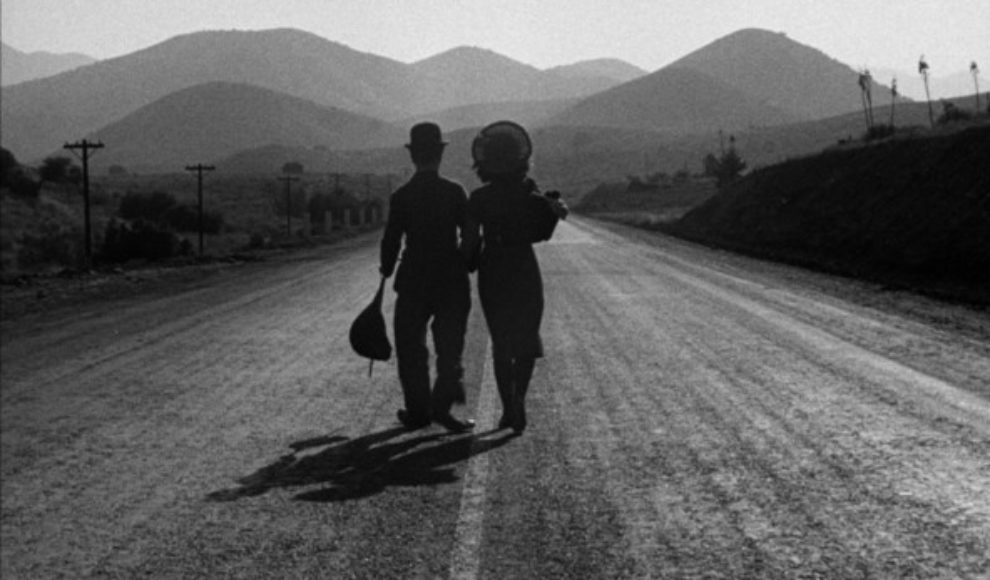
Chaplin and his Little Tramp fight the Great Depression in this masterpiece.

A Factory Worker (Charles Chaplin) is driven to madness by his job on the assembly line. After stints in the hospital and jail, Chaplin attempts to rescue a Gamin (Paulette Goddard) who is caught stealing a loaf of bread.  The two set up a kind of housekeeping, battle authorities, and walk off into the sunset.

Modern Times 1

This was the first and last time the Little Tramp’s voice was heard.  I think it is so fitting that his one song with words is in no language or any language.  After all, he belonged to the whole world.  The delights of this movie are too many to mention.  I think Chaplin’s great talents were as a mime and a kind of dancer and this film shows them off to the full. It’s too bad he didn’t go on making semi-silent films.  In my opinion, all his subsequent work suffers from preachiness,

Clip – conclusion


Camille (1936)

CamilleCamille Poster
Directed by George Cukor
1936/USA
Metro-Goldwyn-Mayer

First viewing
#99 of 1001 Films You Must See Before You Die


Marguerite: When one may not have long to live, why shouldn’t one have fancies?

I wasn’t particularly looking forward to this but it won me over almost immediately.  I wonder whether Garbo was ever lovelier or more appealing than in MGM’s glossy adaptation of the La Traviata story.

Marguerite Gautier (Greta Garbo) is a carefree Parisian courtesan, trading on her beauty to live an extravagant lifestyle between bouts of consumption.  One night at the theater, dressmaker Prudence (Laura Hope Crewes – Aunt Pittipat in Gone with the Wind) introduces her to fabulously wealthy Baron de Varville (Alan Mowbray) who can keep her well supplied with gowns and jewels.  At the same time, Marguerite is coincidentally introduced to Armand (Robert Taylor), an adoring young lawyer.  Marguerite starts a liaison with the Baron but her path crosses that of Armand repeatedly.  Finally, Marguerite falls hopelessly in love with Armand and accompanies him for some idyllic weeks in the country.  She must decide between Armand’s long-term prospects and her own happiness when Armand’s father (Lionel Barrymore) comes to beg her to leave his son.  With Jessie Ralph as Marguerite’s faithful maid.

CAMILLE1

 I am often quite resistant to Garbo’s acting but she captivated me here.  The gorgeous gowns only accentuated her stunning beauty and her smile was all the acting chops she really needed.  This movie also benefitted by an outstanding supporting cast, lavish set decoration, and beautiful score.  I think if the leading man had been a tad bit more sympatico – not that Taylor was bad – this film would have been just about perfect for the type of film it is.  As it was, I had tears in my eyes at the end.  Quite an achievement for Cukor.

Clip – second meeting

Things to Come (1936)

Things to ComeThings to Come Poster
Directed by William Cameron Menzies
1936/UK
London Film Productions

First viewing
#102 of 1001 Movies You Must See Before You Die


Raymond Passworthy: Oh, God, is there ever to be any age of happiness? Is there never to be any rest?

I have mixed feelings about this lavish but heavy-handed anti-war science fiction yarn.

The story begins in Everytown (evidently London) at Christmas, 1940.  The population is blithely celebrating while the headlines scream warnings of war and John Cabal (Raymond Massey) worries that another war will destroy civilization.  Suddenly the air raid sirens go off and an unprovoked aerial bombardment and gas attack of the city begins.  The enemy is unnamed.

A montage follows the war through its conclusion in 1966.  By 1970, the people of Everytown are living in medieval conditions.  A plague spread by enemy bombs causes a fatal contagious “Wandering Sickness” to break out.  A man becomes The Boss (Ralph Richardson) by insisting that sufferers be shot.  He consolidates power by continuing war against his neighbors.

John Cabal has gone on to become the leader of a technocracy in the Mediterranean called Wings of the World.  Cabal visits Everytown in his modern airplane, vowing to “cleanup” the city if it does not forsake war.  The Boss imprisons him.  The Boss cannot conceive of the might of Cabal’s organization or its “peace gas.”

Fast forward to 2036, when people live in sleek underground cities and prepare for space travel.  Scientists must still face the forces of reaction and jingoism in the form of Theotocopulos (Cedric Hardwicke) who incites the masses to revolt against any further progress.

Things to Come 1

Director Menzies was much better known as an art director and the design of this film (by Vincent Korda) is certainly striking.  His work with actors was not as successful.  Much of H.G. Wells’s dialogue sounds like it is being read from a book of sermons and the usually reliable Massey and Hardwicke are not able to do much with it.  Only Richardson manages to bring life to his character.  His Boss is a foolish bombastic bully and a lot of fun.

As usual with H.G. Wells’s material, I had a hard time following the logic.  This is supposed to be an anti-war story and yet the beginning of the war in the film would seem to be an argument for a strong army of defense.  “Peace gas” also seems somewhat oxymoronic.

This is a unique film and prescient of the catastrophe that was to overtake Europe a year earlier than predicted by the story.  I’m glad I saw it but I don’t see any reason to revisit it.

Trailer


The Crime of Monsieur Lange (1936)

The Crime of Monsieur Lange (“Le crime de Monsieur Lange”)crime of monsieur lange poster
Directed by Jean Renoir
1936/France
Films Óberon

Repeat viewing


“A director makes only one movie in his life. Then he breaks it up and makes it again.” ― Jean Renoir”

Jean Renoir made three films in 1936.  This one is a well-acted political piece with witty dialogue by the great Jacques Prévert, better known for his work with Marcel Carne, including in Children of Paradise.

It is 1901.  Hapless Amédéé Lange (René Lefévre – Le Million) and his girlfriend Valentine (Florelle) are taken to an inn near the Belgian border, which they hope to cross in the morning.  The patrons of the inn soon recognize Lange as a wanted murderer.  Valentine says they can turn him in if they still want to after hearing his story.

Lange worked for a debt-ridden publishing house owned by the crooked, lecherous Batala (Jules Berry).  In his spare time, he wrote a kind of Western/fantasy serial called “Arizona Jim”.  Batala tricks Lange into signing over the rights and then uses the serial to advertise a quack medicine.  Batala also leeches money from anyone gullible enough to give it to him and seduces and/or rapes innocent girls.

Finally Batala’s debts catch up with him and he feels forced to leave town.  He is believed dead after a train wreck that left many unidentifiable victims.  The workers at the publishing house form a cooperative with the support of an idealistic creditor.  “Arizona Jim” is a big hit and everyone is happy.  Then Batala reappears on the scene.

crime_de_monsieur_lange 1

The movie is directed with a very light hand despite its heavy sounding plot.  It is clearly a polemic in support of a worker’s revolution, however.  So some of the subtlety and humanism characteristic of Renoir is absent in order to make its villain thoroughly bad. Nonetheless, I would rate this in the top tier of Renoir’s films.  The dialogue is thoroughly enjoyable and the acting is very good, particularly that of Berry who makes a charming but despicable villain.

The film is not easily available on DVD in the U.S.  I watched it on Amazon Watch Instant.


Libeled Lady (1936)

Libeled LadyLibeled lady 1936
Directed by Jack Conway
1936/USA
Metro-Goldwyn-Mayer

Repeat viewing


Warren Haggerty: Gladys, do you want me to kill myself?
Gladys: Did you change your insurance?

Four of MGM’s biggest stars shine in this newspaper comedy.

Managing editor Haggerty (Spencer Tracy) stands up his fiancee Gladys (Jean Harlow) at the altar for the umpteenth time when he finds out Constance Allenbury (Myrna Loy) is suing the paper for $5 million for libel.  Unable to talk Constance or her father (Walter Connelly) out of suing, Haggerty plots to bring Bill Chandler (William Powell), famed libel fighter, to his rescue.  The idea is that Bill will marry Gladys and then put Constance in a compromising position in which she can truthfully be accused of alienation of affections. The only problem is that Bill is perhaps more of a charmer than Haggerty had reckoned with …

Libeled Lady 1

This movie is just as fun as the cast makes it sound.  All are in top form and Powell is particularly good.  It is fun to see him do some slapstick.  It’s also nice to see Powell and Loy at the beginning stages of a relationship for a change.  Powell was dating Harlow at the time the picture was made and I thought I saw true love in her eyes in some scenes. Recommended.

Trailer

Swing Time (1936)

Swing Timeswing time Poster
Directed by George Stevens
1936/USA
Radio Pictures

Repeat viewing
#96 of 1001 Movies You Must See Before You Die


John “Lucky” Garnett: Now, eh… how did you say that last step went? Eh… oh, yes!

This might not be my favorite of the Astaire/Rogers films in terms of the comedy and story but it does have some of the best dance routines and wonderful standards by Jerome Kern.

John “Lucky” Garnett (Fred Astaire) is a hoofer who makes most of his money at the gambling table.  He is tricked by Pop Cardetti (Victor Moore) and the rest of his vaudeville team into missing his own wedding.  The bride’s angry father finally agrees to reconsider the union if Lucky returns with $25,000.  So Lucky and Pop hop a freight train to New York.

Lucky almost immediately runs into dance instructress Penny (Ginger Rogers) and through a number of misunderstanding infuriates her.  But this turns to love once they are in each other’s arms on the dance floor.  Pop and Penny’s pal Mabel (Helen Broderick) also become chummy. Can love triumph through the many obstacles this plot presents for the dancing duo?  With Eric Blore as the owner of the dance studio, Betty Furness as Lucky’s fiancée, and Georges Mexata as a pompous band leader who is in love with Penny.

Swing Time 2

This is the film in which Ginger Rogers is allowed to love Fred back and might be her best performance in one of their pictures.  Her yearning in the scene before she sings “A Fine Romance” is palpable.  The movie also features the iconic “The Way You Look Tonight” sung by Astaire while Rogers is shampooing her hair and a really fun routine set to “Pick Yourself Up.”  None of my regular readers will be surprised that I come back to this again and again despite the half hour of danceless, silly scenes at the beginning.

Despite the brilliance of the tapping in Astaire’s blackface “Bojangles in Harlem” number, I have never understood why a living and working artist, Bill “Bojangles” Robinson, needed this “tribute”.  While I can cut the times some slack, I just find the whole thing extremely odd.

Dance – “Waltz in Swing Time”

Enter the Dragon (1973)

Enter the DragonEnter-the-Dragon--(1973)-movie-poster
Directed by Robert Clouse
1973/Hong Kong/USA
Concord Productions Inc./Golden Harvest Company/Sequoia Productions/Warner Bros.
First viewing
One of 1001 Movies You Must See Before You Die
IMDb users say 7.6/10; I say 7.5/10

Lee: You have offended my family and you have offended the Shaolin Temple.

I am in the wrong demographic for this combo of James Bond spectacular and Hong Kong martial arts movie but enjoyed it nonetheless.

Lee (Bruce Lee) has many reasons to attend a martial arts tournament on the mysterious island of Han.  First, Han studied at the Shaolin Temple and has disgraced it.  Second, the British Government needs evidence to convict Han of heroin trafficking and murder. Finally, Han’s henchmen attempted to gang rape his sister (in an awesome martial arts battle featuring Angela Mao) who committed suicide rather than submit.

Lee is joined on the island by wise cracking Roper (John Saxon) and defiant soul brother Williams (Jim Kelly).  The three are first tempted by Han’s hospitality and many voluptuous drug-addicted mistresses.  They defeat all comers at the tournament and take on hordes of guards single-handedly.  But can any of them defeat the evil Han, who has turned his artificial hand into a blade wielding deadly weapon?

12_enter_the_dragon_bluray

This may be the first martial arts movie I have seen.  Although I have no basis on which to rate Lee’s skill, he certainly impressed me.  I loved all his facial expressions as well.  It was interesting to see how much havoc can be wrought with the human body alone. His co-stars are lots of fun as well.

I was pleased to learn in the commentary that my old friend Keye Luke (No. 1 Son in the Charlie Chan movies) over-dubbed the actor portraying Han.

Trailer