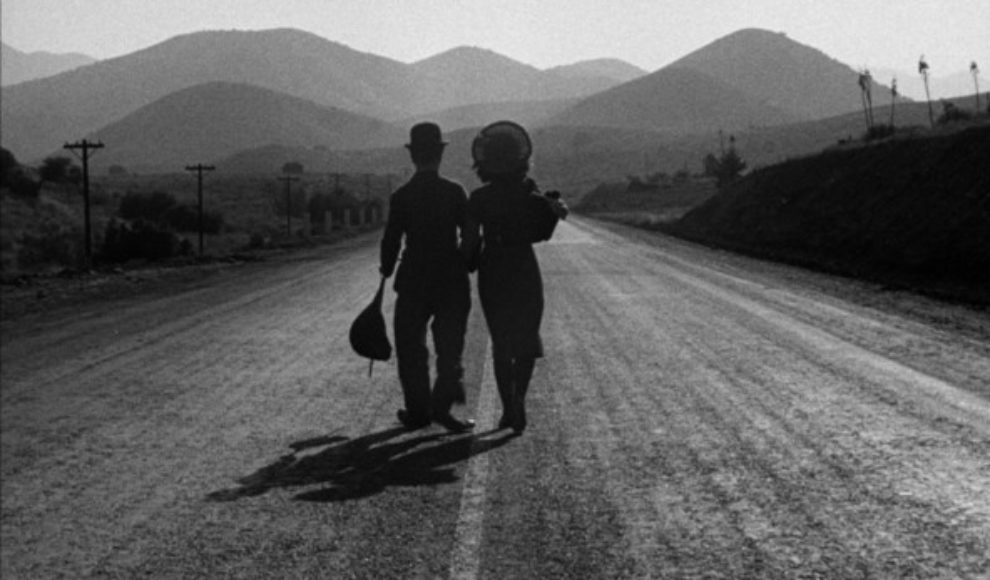
Zatoichi’s Cane Sword (1967)

Zatoichi’s Cane Sword (Zatoichi tekka tabi)
Directed by Kimiyoshi Yasuda
Written by Ryozo Kashahara/story by Kan Shimozawa
1967/Japan
Daiei Studios
First viewing/Criterion Channel

[box] “Living is easy with eyes closed.” ― “Strawberry Fields”, John Lennon[/box]

Like a fine bag of Lay’s potato chips, a Zatoichi movie never disappoints.

As usual, Zatoichi is forced to fight off scores of gangsters, expose a gambling scam, rescue a damsel in distress, etc.  The apprentice of the master who made our hero’s cane sword informs him that it will likely break the next time he uses it for a kill.  Thus the sword is out of commission for about half the movie resulting in a relatively low body count.

I don’t know what more I can say after my previous reviews of this series.  Shintaro Katsu has less bad-assery in this one but more chance to demonstrate his talent at wry comedy. The cinematography is excellent.

While doing research on this review I learned there are movies called “Zatoichi Meets Yojimbo” and “Zatoichi Meets the One-Armed Swordsman” coming up.  Can’t wait!

Clip

La Collectionneuse (1967)

La Collectionneuse
Directed by Eric Rohmer
Written by Eric Rohmer with dialogue by some of the actors
1967/France
Les Films de Losange/Rome Paris Films
Repeat viewing/Netflix rental


[box] Adrien: I found a definition for Haydée. She’s a collector! Haydée, if you sleep around without premeditation you are the lowest of the low. The atrocious ingenue. But, if you collect in a consistent way, with obstinacy, it’s a plot, things are entirely different.[/box]

Eric Rohmer, the anti-Jean-Luc Godard.  I love him so.

Adrien, a pretentious self-absorbed art dealer, declines an invitation by his girlfriend to vacation in London.  Instead, he heads for the Riviera where he plans to think great thoughts in the company of Daniel, a painter, in a villa loaned them by a friend.  To their surprise, they find it occupied by Haydee, a friend of their friend.  They expect her to be frightful.  Instead, she is a sexy teenager and free-spirit who spends her evenings with various assorted men.  She is also straight-forward and  authentic.

Although Adrien disapproves of Haydee, he finds himself increasingly obsessed by her.  Instead of indulging his lust, he resorts to trying to get Daniel and a fellow art dealer to sleep with her.  Much game playing precedes the thoroughly satisfying ending.

Rohmer has a special understanding of women that speaks to me in all his films.  I also love the way he skewers pretension wherever it appears.  At the same time, his filmmaking is as sunny and happy as Agnes Varda’s.  I haven’t seen all his films yet but this journey should take me there.  This movie is early in Rohmer’s career and already so, so good. Highly recommended.

Unfortunately no sub-titles

The Jungle Book (1967)

The Jungle Book
Directed by Wolfgang Reitherman
Written by Larry Clemmons, Ralph Wright, et al inspired by the Mowgli stories by Rudyard Kipling
1967/USA
Walt Disney Productions
Repeat viewing/Netflix rental
One of 1001 Movies You Must See Before You Die

[box] Oh, oobee doo/ I wanna be like you/ I wanna walk like you/ Talk like you, too/ You’ll see it’s true/ An ape like me/ Can learn to be human too. – “I Wanna Be Like You”, words and music by Richard M. and Robert B. Sherman[/box]

Swinging Disney feature has lost none of its charm since original release.  And what a cast of voice actors!

Baby Mowgli is discovered in the jungle by soon to be mentor Bagheera the Panther (Sebastian Cabot) and turned over to the tender loving care of wolves.  Years pass and Bagheera worries that soon Mowgli will draw the attention of Shere Khan the Tiger (George Sanders) whose only enemy is man.  So Bagheera attempts to guide the Man Cub back to the Man Village.  Mowgli has no interest in leaving the jungle so it is a bit of a struggle.  Along the way, the pair encounter Baloo the Bear (Phil Harris), Kaa the Snake (Sterling Holloway) and King Louie of the Apes (Louis Prima).

I distinctly remember last seeing this at the drive-in in the back of my parents’ station wagon.  It has held up extremely well.  Love the music and the vibe.  Minimal scary bits compared to Disney’s other animated features,  Highly recommended family film.

Walt Disney died during the production of this film.  Its enormous success kept the animation department of the studio open for business.

Bonus version by my beloved Los Lobos

Belle de jour (1967)

Belle de jour
Directed by Luis Buñuel
Written by Joseph Kessel, Luis Buñuel, and Jean-Claude Carriere
1967/France
Robert and Raymond Hakim/Paris Film Productions/Five Film
Repeat viewing/Netflix rental
One of 1001 Movies You Must See Before You Die


[box] Madame Anais: You look a bit nervous. Relax. You’ll be out at 5:00. Don’t worry. You have someone waiting for you? A boyfriend? A husband? Oh, don’t think I’m prying. Kiss me.[/box]

Odd that one of Buñuel’s most mainstream films is also one of his most sexually explicit.

Severine Serizy (Catherine Deneuve) leads an apparently idyllic life with adoring husband Pierre.  But she just cannot warm up to him in bed.  She was molested as a child and now all her sexual fantasies involve masochism and humiliation.  One day, Severine hears about an acquaintance who is now working in a brothel.  The friend does it for money.  Severine looks into it not for money but for sexual gratification.  The Madame calls her “Belle de jour” since she must depart for home no later than 5 pm.

We see both Severine’s real life trysts and her fantasies.  Pierre appears in many of the latter meting out punishment and calling her names.  I will not spoil the deliciously ambiguous ending.  With Michel Piccoli as a friend who discovers Severine’s secret.

This certainly qualifies as a must-see in my book.  Love the black humor and all the acting.

Dragon Inn (1967)

Dragon Inn (Long men kezhan)
Directed by King Hu
Written by King Hu
1967/Taiwan
Union Film Company
First viewing/Criterion Channel


[box] Wuxia (武俠 [ù.ɕjǎ]), which literally means “martial heroes”, is a genre of Chinese fiction concerning the adventures of martial artists in ancient China. Although wuxia is traditionally a form of fantasy literature, its popularity has caused it to spread to diverse art forms such as Chinese opera, mànhuà, films, television series and video games. – Wikipedia[/box]

This seminal entry in the wuxia genre of cinema delights with non-stop action and extravagant use of color, design, and score.

The plot is intricate but following it is definitely not essential.  Basically, an evil cabal headed by an Imperial Eunuch succeeds in assassinating a government minister.  Now they are after the minister’s children.  The children attract their own set of loyalists. Although the good guys are far outnumbered, they do boast incredible swordsmen and a fierce female warrior who needs no help, thank you very much.

The lack of plot exposition or character development just leaves more time for the brilliantly choreographed fights.  These have a fairy tale quality due to the copious use of wire work and some editorial trickery.

I really enjoyed this.  If anything about it appeals, I would say go for it.

Son of Godzilla (1967)

Son of Godzilla (Kaijuto no kessen:Gojiro no musuko)
Directed by Jun Fukuda
Written by Shinichi Sekizawa and Kaue Shinba
1967/Japan
Tojo Company
First viewing/Criterion Channe


[box] Tagline: Japan’s Greatest Foe Delivers an Heir![/box]

This was perfectly entertaining fluff for a day mostly spent packing.

Japanese scientists seem to be attracted to isolated tropical islands for their experiments despite every time they go to one Godzilla shows up.  Messing around with radiation to control the weather?  Bad, bad idea.  Soon the originally huge preying mantis population mutates even bigger.  Something (unexplained) drives the mantises to dig up an egg.  Preparatory to devouring it baby Godzilla emerges.  Initially, the bugs get the better of the infant but soon Daddy emerges from the watery depths where he is hibernating ready to kick ass.

We get a bunch of baby cuteness – the son moves around much like a human baby, except when he wags his tale.  There is the obligatory tame romance between a scientist and a girl who has been stranded on the island for years.  A giant spider shows up in the second half to add to the fun.

All you Godzilla completists, I’m curious to know if this ranks as the most ridiculous entry in the series. If it isn’t it surely isn’t far behind.  Had quite a few chuckles.  And checkout that 60’s TV soundtrack music!


********************************

I am leaving for vacation in Finland today.  I hope to come back in a couple of weeks with renewed enthusiasm for finishing up 1967.

Japan’s Longest Day (1967)

Japan’s Longest Day (Nihon no ichiban naga hi)
Directed by Kihachi Okamoto
Written by Shinobu Hashimoto from a book by Soichi Oya
1967/Japan
Toho Company
First viewing/Netflix


[box] “… We call upon the government of Japan to proclaim now the unconditional surrender of all Japanese armed forces, and to provide proper and adequate assurances of their good faith in such action. The alternative for Japan is prompt and utter destruction.” – Potsdam Declaration signed by Franklin D. Roosevelt, Winston Churchill, and Chang Kai-shek[/box]

It takes real talent to make a nailbiter when the entire audience knows the eventual outcome.  Tension and suspense along with a phenomenal cast combine for a terrific movie.

The Japanese Cabinet is at loggerheads over how to respond to the Potsdam Declaration.  Military leaders are so indoctrinated with the “no surrender” code that they would actually prefer one last glorious battle losing a million people to surrender under any terms at all.  Unconditional surrender is completely out of the question.  Then, after the destruction of Hiroshima and Nagasaki, Emperor Hirohito takes matters into his own hands and orders any and all measures that will prevent any more Japanese deaths.  You would think a man who was worshiped as a deity could get his own way, but no, at least not right away.

The Government continues to bicker over terms but the Emperor is determined to have his way.  Finally, the Cabinet agrees on a statement which the Emperor will record and broadcast to the people.

In the meantime, the fiercely militaristic War Minister (Toshiro Mifune) struggles between his beliefs and training and his loyally to the Emperor.  Some officers in the Imperial Guard decide that they must take over the Palace and prevent the Emperor’s broadcast.  They spend much of the movie trying to win their superiors over to their side.  Then things get very bloody indeed.  With Chisu Ryu as the Prime Minister and Takashi Shimura as the Director of the Information Bureau.  Tetsuya Nakadai narrates.  Also with just about every great male supporting player from the golden days of Japanese cinema.

This grabbed me for its entire 2 1/2 hour running time.  I didn’t know what to expect and I really loved the movie.   I hadn’t known about the coup angle to the surrender and thought it was pretty darned fascinating.  And those actors!  And that score!  Recommended.


Scattered Clouds (1967)

Scattered Clouds (Midaregumo)
Directed by Mikio Naruse
Written by Nobuo Yamada
1967/Japan
Toho Company
First viewing/Criterion Channel


[box] “my feet will want to walk to where you are sleeping/ but/ I shall go on living.” ― Pablo Neruda[/box]

A beautiful tearjerker that earns every one of its tears.

Yumiko and her husband have an idyllic life.  They are madly in love and newly pregnant. He works for the Trade Ministry and has just received a prestigious appointment to the embassy in Washington, DC.

Suddenly he is killed in a car accident.  Although he is entirely innocent, driver Shiro Mishima is determined to pay the widow monthly as amends.  Yumiko can hardly stand the sight of him.  Since he is an employee of a company that has close ties to the Ministry he is exiled from Tokyo to the provinces for a few years.  His new post is near the widow’s home town.

Poor Yumiko is stripped of her child, her married name and her widow’s pension by her husband’s greedy parents.  Everyone tries to exploit her in some way.  As the years pass, Mishima gradually falls in love with her.  She is determined to cut ties with the past, including Mishima, to get past her grief.  I won’t reveal any more of the plot.

I can’t even count the number of times I teared up.  This is a bit of a misery sandwich but is so downright sincere and sensitively made that I believed every minute.  It is also gorgeous to look at.  Warmly recommended.

This was Mikio Naruse’s final film in a career that spanned 47 years in the industry.  He added a lot of beauty to this world.  Farewell, sensei.

dTrailer (no subtitles)

Playtime (1967)

Playtime
Directed by Jacques Tati
Written by Jacques Tati and Jacques Lagrange
1967/France
Specta Films/Jolly Film
Repeat viewing/Netflix rental
One of 1001 Movies You Must See Before You Die

[box] [on Playtime] The images are designed so that after you see the picture two or three times, it’s no longer my film, it starts to be your film. You recognize the people, you know them, and you don’t even know who directed the picture. — Jacques Tati[/box]

Since the days of Mon Oncle (1958), Paris has become one huge mid-century modernist nightmare that might have been designed by Hulot’s crazy sister.  The chairs are torture devices, all the buildings are dominated by plate glass windows that destroy privacy, and the people spend their money on the useless gizmos relentlessly advertised.

It might as well be a distant planet for the hapless Hulot, who innocently continues to create chaos wherever he goes.  At the same time, an American tourist searches for her version of the city without finding it.  Somehow human connection triumphs after all.

This movie has so much going on that I think you could see it 50 times without catching all the gags, many of which are occurring simulateously on the packed screen.  I laughed out loud many times.  The art direction is spectacular.  Somehow I prefer the more intimate earlier films but if you’ve already seen them, this remains a must see

Re-issue trailer

Warrendale (1967)

Warrendale
Directed by Allan King
Canada/1967
Allan King Associates for Canadian Broadcasting Corp.
Repeat viewing/Criterion Channel


[box] Tagline: Adults think it’s about kids. Kids know it’s about adults.[/box]

Sans voice over narration, this documentary examines seven weeks at Warrendale, a home for emotionally disturbed children outside Toronto, Canada.  Along with TLC, the main treatment method seems to be physically restraining the children, who fight back vigorously, when they act out.

I am rarely in favor of talking heads but here I could have used a lot more explanation.  Not to be told what to think but to know some of the rationale behind the experiments.  Do the kids get better?  Or is this torture for them? We don’t know.  You have to admire the dedication of the therapists, who must have sustained numerous bruises every day.