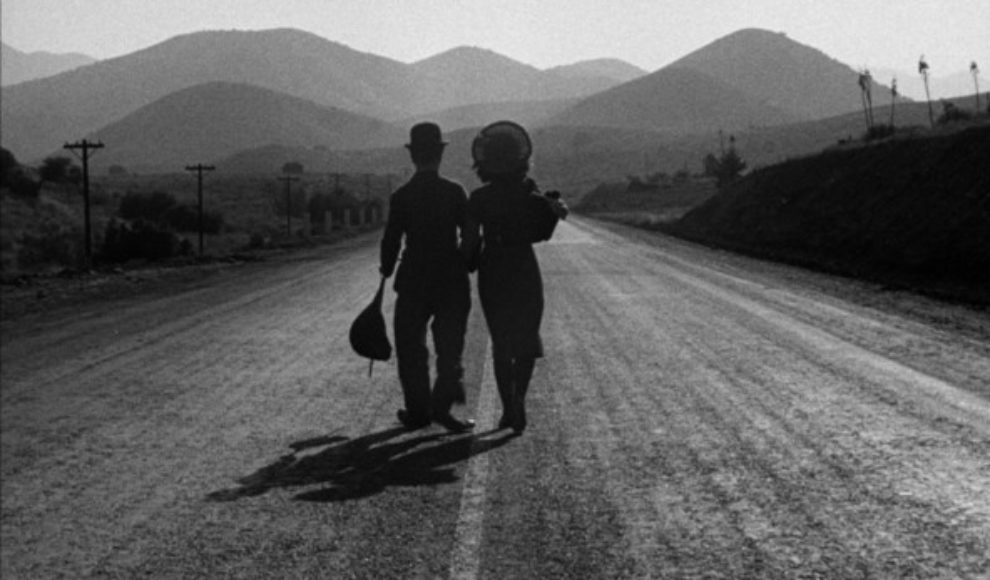
Condemned! (1929)

Condemned!
Directed by Wesley Ruggles
Written by Sidney Howard from a book by Blair Niles
1929/US
The Samuel Goldwyn Company
IMDb page
First viewing/Amazon Instant

Jean Vidal: Did you or did you not give my wife a monkey?

A decent action/adventure for the sound era.

Jean Vidal (Dudley Digges), the sadistic and gross warden of Devils Island, made a loveless marriage with the pious, timid, and much younger Madame Vidal (Ann Harding). She throws herself into her housework to take her mind off Jean and her extreme homesickness.  Jean thinks household chores beneath the dignity of a warden’s wife and insists on hiring a prisoner to help her.  He thinks he has found the perfect candidate in Michel Oman (Ronald Colman), a gentleman thief recently sent to the island.

Michel and the Mme. form a close emotional attachment and the pair soon become the talk of the town despite the chaste nature of their relations.  This makes Jean a laughing stock and he is determined to get to the bottom of the stories.  His treatment of both lovers ends only in their declaring themselves and plots for Michel to escape.  The second act of the movie is devoted to the escape through the fever-torn jungles of Guyana.  With Louis Wolford as Michel’s tough convict buddy.

This drags at times but is entertaining mostly due to Colman’s debonaire performance.  I like Ann Harding but I thought she overdid it a bit in this one.  She certainly looked lovely.

Colman received an Oscar nod for Best Actor.

Montage of clips from Colman’s films – what an actor! what a face!

The Single Standard (1929)

The Single Standard
Directed by John Robertson
Written by Josephine Lovett from a novel by Adela Rogers St. John
1929/US
Metro-Goldwyn-Mayer
IMDb page
First viewing/Amazon Instant

Opening Title Card: For a number of generations men have done as they pleased–and women have done as men pleased…

Greta Garbo was still making silent movies in 1929.  Her loveliness makes them worth watching for fans.

Arden Stuart (Garbo) is a wealthy young socialite.  Polite society is beginning to bore her. After refusing the proposal of Tommy (Johnny Mack Brown), an eligible young man, Arden takes off on a romantic moonlight drive with the family chauffeur.  She is caught in a passionate embrace and the chauffeur loses his job.

Several years later she meets ex-boxer painter Packy Cannon (Nils Asther).  He believes love should be free and equal.  This makes him a soul mate to Arden and they sail off in his yacht the “All Alone” where they pursue an idyllic affair.

Packy eventually dumps Arden on the grounds that their love is interfering with his work. Arden goes home in disgrace.  She eventually agrees to marry Tommy and they have a child.  What will happen when Packy turns up again eager to rekindle their romance?

Despite all the posing Garbo does in this film, she is completely mesmerizing and makes one half of an absolutely gorgeous couple with Asther.  The story is kind of average and predictable.

Alibi (1929)

Alibi
Directed by Roland West
Written by Roland West and C. Gardner Sullivan from a play by John Griffith Wray et al
1929/US
Feature Productions
IMDb page
First viewing/Amazon Instant

Joan Manning Williams: Law! Is bull-dogging, third-degreeing people into confessing crimes they didn’t commit, is that law?
Buck Bachman: No, but… Oh, I don’t understand.
Joan Manning Williams: Of course you don’t. You’re a policeman. And you’ll never understand!

This precursor to the great gangster films of the early thirties is atmospheric but suffers from early talkie-itis.

Straight-arrow Detective Sgt. Buck Bachman (Harry Stubbs) is in love with Joan Manning (Eleanor Griffith), a policeman’s daughter and wants to marry her.  She rejects him in favor of recently released gangster Chick Williams (Chester Morris), whom she thinks was wrongfully convicted. They marry.

But Chick is unrepentant and is soon back to his evil ways.  He takes Joan to the theater and uses her as an alibi for a robbery committed during the intermission.  A policeman is killed and soon an intense police investigation begins to corner him.  With Regis Toomey in his film debut as a police double agent.

This movie has its merits.  It looks good, with plenty of atmospheric lighting, and Chester Morris makes an excellent charismatic anti-hero.  On the other hand, it suffers from the slow pacing and stilted dialogue style that mars many of the very early talkies.  Regis Toomey hams it up to the max as my least favorite film character the “comic” drunk.  On balance, I’m glad I saw it.

Alibi was Oscar-nominated for Best Picture, Best Actor (Morris), and Best Art Direction.

Restoration Demonstration

Where East Is East (1929)

Where East Is East
Directed by Tod Browning
Written by Tod Browning Henry Sinclair Drago, et al
1929/US
Metro-Goldwyn-Mayer
IMDb page
First viewing/Amazon Instant

Tiger Haynes: Your heathen tricks have broken enough men! You’re going to leave this boy alone!

The last of the ten films Tod Browning made with Lon Chaney was this OK melodrama.

The setting is somewhere in Southeast Asia, possibly Laos. Tiger Haynes (Chaney) is a wild game trapper who sells the tigers and other animals he captures to circuses. Tiger dotes on his daughter Toyo (Lupe Velez) and is very protective of her. Toyo falls in love with cute white boy Bobby and they get engaged. Tiger is skeptical but eventually warms to the young man. He asks him to escort one of his tigers to Singapore.

On his journey, Bobby is seduced by vamp Mme. de Sylva (Estelle Taylor), unaware that she is Toyo’s estranged mother.  High melodrama ensues.

This is an OK way to spend an hour but nothing great.

Can somebody explain to me why grown daughters in early cinema are always flirting with their fathers, sitting on their laps, kissing them on the mouth etc.?  I don’t think that it is meant to be as creepy as it seems to me now.

Bulldog Drummond (1929)

Bulldog Drummond
Directed by F. Richard Jones
Written by Herman C. McNeile
1929/US
The Samuel Goldwyn Company
IMDb page
First viewing/Amazon Prime (free to Members)

No matter where she’s a hiding
She’s gonna hear me a comin’
Gonna walk right down that street
Like Bulldog Drummond
‘Cause I’ve been searchin’  – “Searchin”, The Coasters (1957)

This was the first talking Bulldog Drummond picture though it may be among the last I have yet to see.  Ronald Coleman is perfect in the title role.

Bulldog Drummond (Coleman) is bored to tears after serving in WWI so he places an ad in a newspaper and begins his work as a private eye being hired by Phyllis (a young, blonde Joan Bennett) whose uncle has been kidnapped by extortionists.  Phyllis will become his long-suffering and eternal fiancee in the remainder of the series.  The other running character is Algy, Bulldog’s friend and sidekick.  The actors change many times but the characters remain the same.

These are consistently entertaining mystery/private eye movies with a twinkle in the eye and a bit of excitement.  Ronald Coleman may be the ultimate Bulldog Drummond though The role would also fit Ray Milland like a glove later on.

The film was nominated for Best Actor (Coleman) and Best Art Direction.


The Broadway Melody (1929)

The Broadway Melody
Directed by Harry Beaumont
Written by Edmund Goulding, Norman Houston and James Gleason
1929/US
Metro-Goldwyn-Mayer
IMDb page
First viewing/Amazon Instant

Queenie Mahoney: Oh, dear, I’m just shaky all over!
Hank Mahoney: Oh, Queenie, will you stop. You’re gettin’ me nervous now. It ain’t gonna be a bit different than it was in Reading, PA and we’re going over just as big!
Queenie Mahoney: Oh… do you think so?
Hank Mahoney: Why, it’s cream in the can, baby.

This was better than I expected, which frankly wasn’t much.

Sisters Queenie (Anita Page) and Hank Mahoney (Bessie Love) have their hearts set on getting in a Broadway show and luck smiles on them.  Only problem is they both love the songwriter/star of the review Eddie Kearns (Charles King).

All the usual misunderstandings ensue before the happy ending.  The plot is but a framework to hang the songs of Nacio Herb Brown and Arthur Freed on.

Is this the worst Academy Award winner ever?  I don’t think so.  It’s got a kind of charm that sucked me in.  We know this is pre-Code because the sisters need to change clothes frequently, displaying their lacy lingerie.

The Broadway Melody won the Best Picture Oscar.  It was nominated in the categories of Best Director and Best Actress (Bessie Love).

That’s Nacio Herb Brown on the piano.


Sunny Side Up (1929)

Sunny Side Up
Directed by David Butler
Written by Buddy G. DeSylva, Lew Brown and Ray Henderson
1929/US
Fox Film Corporation
IMDb page
Repeat viewing/YouTube

And keep your sunny side up, up,
Hide the side that gets blue.
If you have nine sons in a row,
Baseball teams make money, you know!

Could anything be more adorable than Janet Gaynor singing the title song?  I don’t think so!

The story is set in the Gay Nineties but the clothes are strictly 1929.  Molly (Gaynor) lives with roommate Bea (Marjorie White) in an apartment above a grocery store.  Bea has a songwriter boyfriend named Eddie (Frank Richardson).  They squabble constantly and will perform several novelty numbers throughout the film.  The grocery store owner Eric (El Bendel) is close friends with the young people.  Molly’s dream lover is millionaire Jack Cromwell (Charles Farrell) who lives in Southhampton.

Jack’s girlfriend and intended bride is not ready to give up her flirtations so he takes off in his car, destination unknown.

Jack and Molly meet cute just before the Fourth of July block party.  The neighborhood celebrates by entertaining each other with song.  After Jack catches Molly’s act, he proposes that she come to Southhampton to perform in an upcoming charity gala.  Her friends accompany her dressed as servants.  Jack also hopes to make his fiancee jealous so she will marry him.  We see several of the acts at the gala.  There are numerous misunderstandings.  If you don’t know how this will wind up, you haven’t been paying attention.  Jackie Cooper has a small uncredited part as a kid reciting a poem.

This is a very old-fashioned story but I found it charming.  Betraying its pre-Code roots we even get to see Janet Gaynor (!)  in lacy lingerie.  The songs are catchy.  Recommended to fans of musicals or the stars.


The Kiss (1929)

The Kiss
Directed by Jacques Feyder
Written by Hans Kräly and Marian Ainslee from a story by George Saville
1929/US
Metro-Goldwyn-Mayer
IMDb page
First viewing/YouTube rental

André: Irene – we can’t go on meeting like this.

The last silent film made by MGM and by Greta Garbo was this OK melodrama/courtroom drama

The story takes place in France.  Irene Guarry (Garbo) is unhappily married to a cranky, jealous old man.  She has been meeting young attorney Andre Dubail (Conrad Nagel) on the sly.  They have even kissed.  But she has remained faithful to her husband.  To complicate things further eighteen-year-old Pierre LaSalle (Lew Ayres in his film debut) has a massive crush on her.

Pierre is leaving for college and begs for a last goodbye kiss.  Irene humors him but a peck on the lips leads to an unwanted passionate embrace.  The husband walks in on this.  The confrontation moves to another room behind closed doors.  Shots are heard.  Hubby is the one that doesn’t  emerge.  Irene is accused of the murder.  She is defended in court by Andre.  Who killed Mr. Guarry?

MGM and Garbo moved into the sound era with less a bang than a wimper.  The plot is pretty trite and the Tchaikovsky score is way too much for the subject matter. Actually, though, the movie is quite watchable especially for Garbo’s beauty and gorgeous gowns and the art deco design.  And I love Lew Ayres. It is only 62 minutes long.

Hallelujah! (1929)

Hallelujah!
Directed by King Vidor
Written by Wanda Tuchock, Richard Schayer et al
1929/US
Metro-Goldwyn-Mayer
IMDb page
Repeat viewing/YouTube rental

Chick Admirer #2: Oh, she’s chocolate to the bone!

The plot may be ancient and melodramatic but oh that music!

Zeke (Daniel L. Haynes) is the eldest son in a large family of honest hard-working sharecroppers.  His father is also a preacher.  The cotton harvest is over and Zeke and second son Spunk are sent to the city to sell the crop. Zeke gets $100 for it.

He meets up with Chick (Nina Mae McKinney) who has attracted a large audience with her hoochie coochie dancing near the mill.  Zeke, who will be fighting a more or less unsuccessful battle with the Devil throughout the film, tries to get her to go off with him.  It is only after he flashes his wad of bills that she agrees.  She determines to make him spend that $100 on her before the night is over.

She lures him to a saloon where she continues to dance and drink.  Then she introduces Zeke to her con-man boyfriend and the inevitable happens.  Spunk, who had gone looking for Zeke and the money, is killed in the gunfire following the reveal of boyfriend’s rigged dice.

Zeke returns to his family who welcome him as a prodigal son.  It is then Zeke gets a calling to become a revival preacher.  He also proposes to Missy Rose, a good girl who loves him.  Then the whole troop heads off on the revival circuit.  Unfortunately, Chick shows up to be baptized …

This is a morality play and is melodramatic to the max.  The acting is adversely affected by early sound technology which apparently required everybody to speak very slowly and clearly.  What does shine is the music, which ranges from gospel to jazz.  Haynes had a beautiful bass-baritone and Nina Mae McKinney was called the “Black Clara Bow” for a reason. Worth seeing.


The Love Parade (1929)

The Love Parade
Directed by Ernst Lubitsch
Written by Ernest Vadja and Guy Bolton from a play by Leon Xanrof and Jules Chancel
1929/US
Paramount Pictures
IMDb Page
Repeat viewing/Criterion Channel

Queen Louise: Count. Count Alfred, I understand you’ve been seriously involved in a disgraceful affair with a woman.
Count Alfred Renard: No, Your Majesty – with several.
Queen Louise: Aren’t you ashamed of yourself.
Count Alfred Renard: [Shaking his head no] Yes, Your Majesty.

The first of the Lubitsch musical/operettas featuring Maurice Chevalier is a lot of fun, if a little creaky around the seams.

Ladies man Count Alfred Reynard (Chevalier) has gotten into one scrape too many with married women on his assignment in Paris so he is ordered to return to his home country of Sylvania.  The people of the land are anxious to see their young queen Louise (Jeanette MacDonald in her film debut) marry but she doesn’t seem to be in any hurry.  Instead, she enjoys her ideal lover in her dreams.  Then she meets the Count and they fall in love.

They marry and then the Count discovers that he is Prince Regent and that he must obey the Queen in everything.  He soon becomes bored and threatens to return to Paris. Things work out as one might imagine.  With Lupino Lane and Lillian Roth as a comic counterpart to the lovers and Eugene Pallette in a small part as Minister of War.

MacDonald shows what a sexy and funny lady she could be in her first film.  The Hayes Code and Nelson Eddy did her no favors in that regard.  The songs aren’t particularly good but the dialogue is wonderful, with plenty of double entendres.  The production is appropriately lavish and Lubitsch works magic with his famous “touch”.  Recommended and one of my favorite films of its year.

The Love Parade was nominated for Academy Awards in the categories of Best Picture, Best Director, Best Cinematography, Best Art Direction, and Best Sound, Recording.