Category Archives: 1936

Dodsworth (1936)

DodsworthDodsworth Poster
Directed by William Wyler
1936/USA
The Samuel Goldwyn Company

Repeat viewing
#101 of 1001 Movies You Must See Before You Die


Sam Dodsworth: Love has got to stop some place short of suicide.

This intelligent drama is one of my favorite movies of any time.  I always forget just how much I love it until I see it again.

Sam Dodsworth (Walter Huston) has made a fortune as an automobile tycoon.  He retires and his somewhat younger wife Fran (Ruth Chatterton) has her heart set on beginning life over on a long European holiday.  Sam plunges into playing tourist but Fran is more interested in putting on airs, hobnobbing with people she thinks are “society”, and proving her continued desirability to men.  Sam loves Fran dearly but clearly this state of affairs cannot continue indefinitely.  When Fran decides to throw in with a young Austrian baron, Sam finds solace with expatriate Edith Cortright (Mary Astor).  With Maria Ouspenskaya as the baron’s mother and David Niven and Paul Lukas as two of Fran’s “conquests.”

Dodsworth 1

This is a fairly straightforward domestic drama but it is richly rewarding.  There is an undercurrent that explores the differences between manners in the Old and New Worlds, with the New World coming off pretty well for a change.  It is also one of the few movies of the Golden Age to explore the breakdown of a long marriage.  The acting is all brilliant.  I don’t think Ruth Chatterton gets enough credit.  Her role is unsympathetic and fairly ridiculous. It must have been difficult to play a deluded woman past her prime but she gave it her all.  I don’t think Mary Astor was ever more beautiful than in this picture.  I always root for her Edith — she is so smart and sensible.  Highly recommended.

Dodsworth was nominated for seven Academy Awards, including for Best Picture, and won for Best Art Direction.  In 1990, it was selected for preservation in the United States National Film Registry.


Clip

Camille (1936)

CamilleCamille Poster
Directed by George Cukor
1936/USA
Metro-Goldwyn-Mayer

First viewing
#99 of 1001 Films You Must See Before You Die


Marguerite: When one may not have long to live, why shouldn’t one have fancies?

I wasn’t particularly looking forward to this but it won me over almost immediately.  I wonder whether Garbo was ever lovelier or more appealing than in MGM’s glossy adaptation of the La Traviata story.

Marguerite Gautier (Greta Garbo) is a carefree Parisian courtesan, trading on her beauty to live an extravagant lifestyle between bouts of consumption.  One night at the theater, dressmaker Prudence (Laura Hope Crewes – Aunt Pittipat in Gone with the Wind) introduces her to fabulously wealthy Baron de Varville (Alan Mowbray) who can keep her well supplied with gowns and jewels.  At the same time, Marguerite is coincidentally introduced to Armand (Robert Taylor), an adoring young lawyer.  Marguerite starts a liaison with the Baron but her path crosses that of Armand repeatedly.  Finally, Marguerite falls hopelessly in love with Armand and accompanies him for some idyllic weeks in the country.  She must decide between Armand’s long-term prospects and her own happiness when Armand’s father (Lionel Barrymore) comes to beg her to leave his son.  With Jessie Ralph as Marguerite’s faithful maid.

CAMILLE1

 I am often quite resistant to Garbo’s acting but she captivated me here.  The gorgeous gowns only accentuated her stunning beauty and her smile was all the acting chops she really needed.  This movie also benefitted by an outstanding supporting cast, lavish set decoration, and beautiful score.  I think if the leading man had been a tad bit more sympatico – not that Taylor was bad – this film would have been just about perfect for the type of film it is.  As it was, I had tears in my eyes at the end.  Quite an achievement for Cukor.

Clip – second meeting

Things to Come (1936)

Things to ComeThings to Come Poster
Directed by William Cameron Menzies
1936/UK
London Film Productions

First viewing
#102 of 1001 Movies You Must See Before You Die


Raymond Passworthy: Oh, God, is there ever to be any age of happiness? Is there never to be any rest?

I have mixed feelings about this lavish but heavy-handed anti-war science fiction yarn.

The story begins in Everytown (evidently London) at Christmas, 1940.  The population is blithely celebrating while the headlines scream warnings of war and John Cabal (Raymond Massey) worries that another war will destroy civilization.  Suddenly the air raid sirens go off and an unprovoked aerial bombardment and gas attack of the city begins.  The enemy is unnamed.

A montage follows the war through its conclusion in 1966.  By 1970, the people of Everytown are living in medieval conditions.  A plague spread by enemy bombs causes a fatal contagious “Wandering Sickness” to break out.  A man becomes The Boss (Ralph Richardson) by insisting that sufferers be shot.  He consolidates power by continuing war against his neighbors.

John Cabal has gone on to become the leader of a technocracy in the Mediterranean called Wings of the World.  Cabal visits Everytown in his modern airplane, vowing to “cleanup” the city if it does not forsake war.  The Boss imprisons him.  The Boss cannot conceive of the might of Cabal’s organization or its “peace gas.”

Fast forward to 2036, when people live in sleek underground cities and prepare for space travel.  Scientists must still face the forces of reaction and jingoism in the form of Theotocopulos (Cedric Hardwicke) who incites the masses to revolt against any further progress.

Things to Come 1

Director Menzies was much better known as an art director and the design of this film (by Vincent Korda) is certainly striking.  His work with actors was not as successful.  Much of H.G. Wells’s dialogue sounds like it is being read from a book of sermons and the usually reliable Massey and Hardwicke are not able to do much with it.  Only Richardson manages to bring life to his character.  His Boss is a foolish bombastic bully and a lot of fun.

As usual with H.G. Wells’s material, I had a hard time following the logic.  This is supposed to be an anti-war story and yet the beginning of the war in the film would seem to be an argument for a strong army of defense.  “Peace gas” also seems somewhat oxymoronic.

This is a unique film and prescient of the catastrophe that was to overtake Europe a year earlier than predicted by the story.  I’m glad I saw it but I don’t see any reason to revisit it.

Trailer


The Crime of Monsieur Lange (1936)

The Crime of Monsieur Lange (“Le crime de Monsieur Lange”)crime of monsieur lange poster
Directed by Jean Renoir
1936/France
Films Óberon

Repeat viewing


“A director makes only one movie in his life. Then he breaks it up and makes it again.” ― Jean Renoir”

Jean Renoir made three films in 1936.  This one is a well-acted political piece with witty dialogue by the great Jacques Prévert, better known for his work with Marcel Carne, including in Children of Paradise.

It is 1901.  Hapless Amédéé Lange (René Lefévre – Le Million) and his girlfriend Valentine (Florelle) are taken to an inn near the Belgian border, which they hope to cross in the morning.  The patrons of the inn soon recognize Lange as a wanted murderer.  Valentine says they can turn him in if they still want to after hearing his story.

Lange worked for a debt-ridden publishing house owned by the crooked, lecherous Batala (Jules Berry).  In his spare time, he wrote a kind of Western/fantasy serial called “Arizona Jim”.  Batala tricks Lange into signing over the rights and then uses the serial to advertise a quack medicine.  Batala also leeches money from anyone gullible enough to give it to him and seduces and/or rapes innocent girls.

Finally Batala’s debts catch up with him and he feels forced to leave town.  He is believed dead after a train wreck that left many unidentifiable victims.  The workers at the publishing house form a cooperative with the support of an idealistic creditor.  “Arizona Jim” is a big hit and everyone is happy.  Then Batala reappears on the scene.

crime_de_monsieur_lange 1

The movie is directed with a very light hand despite its heavy sounding plot.  It is clearly a polemic in support of a worker’s revolution, however.  So some of the subtlety and humanism characteristic of Renoir is absent in order to make its villain thoroughly bad. Nonetheless, I would rate this in the top tier of Renoir’s films.  The dialogue is thoroughly enjoyable and the acting is very good, particularly that of Berry who makes a charming but despicable villain.

The film is not easily available on DVD in the U.S.  I watched it on Amazon Watch Instant.


Libeled Lady (1936)

Libeled LadyLibeled lady 1936
Directed by Jack Conway
1936/USA
Metro-Goldwyn-Mayer

Repeat viewing


Warren Haggerty: Gladys, do you want me to kill myself?
Gladys: Did you change your insurance?

Four of MGM’s biggest stars shine in this newspaper comedy.

Managing editor Haggerty (Spencer Tracy) stands up his fiancee Gladys (Jean Harlow) at the altar for the umpteenth time when he finds out Constance Allenbury (Myrna Loy) is suing the paper for $5 million for libel.  Unable to talk Constance or her father (Walter Connelly) out of suing, Haggerty plots to bring Bill Chandler (William Powell), famed libel fighter, to his rescue.  The idea is that Bill will marry Gladys and then put Constance in a compromising position in which she can truthfully be accused of alienation of affections. The only problem is that Bill is perhaps more of a charmer than Haggerty had reckoned with …

Libeled Lady 1

This movie is just as fun as the cast makes it sound.  All are in top form and Powell is particularly good.  It is fun to see him do some slapstick.  It’s also nice to see Powell and Loy at the beginning stages of a relationship for a change.  Powell was dating Harlow at the time the picture was made and I thought I saw true love in her eyes in some scenes. Recommended.

Trailer

My Man Godfrey (1936)

My Man GodfreyMy Man Godfrey Poster
Directed by Gregory La Cava
1936/USA
Universal Pictures

Repeat viewing
#97 of 1001 Movies You Must See Before You Die


Alexander Bullock: All you need to start an asylum is an empty room and the right kind of people.


This wacky comedy still makes me laugh out loud after numerous viewings.

The wealthy Bullock family is full of eccentrics.  The females of the group are participating in a scavenger hunt in which they must bring back a “forgotten man”.  Cornelia Bullock (Gail Patrick) takes the search to a city dump where she offers a tramp named Godfrey (William Powell) $5 to be her prize.  He refuses and pushes her into an ash heap.  Nutty sister Irene (Carole Lombard) chats Godfrey up and he agrees to go with her.  This leads to the smitten Irene inviting Godfrey to be the family’s butler and her protegé.  Mass hilarity ensues.  With Eugene Palette as Alexander Bullock, the father; Alice Brady as Angelica Bullock, the mother; and Mischa Auer as Angelica’s protegé.

My Man Godfrey 2

I don’t think any of the cast members involved ever did better work.  Powell and Lombard were nominated for Best Actor and Actress Oscars and Brady and Auer were nominated for Best Supporting Actor and Actress – the first time a film was nominated for acting awards in all four categories and the only time such a film failed to win an award.

I can imagine that the comedy might be over the top for some but I love it.  Once again, the part where Auer imitates an ape to cheer Lombard up had me howling.  Eugene Palette is also fantastic as the harassed pater familias.  Patrick makes a great villainess.  Powell and Lombard had been married and were now apparently amicably divorced as Powell insisted Lombard was the only actress to play the part of Irene.  The chemistry between the two is certainly there in spades.

Clip – the scavenger hunt


Say hello to 1936

1936 Olympics

1936 Olympic Games long jump medal ceremony – on the podium from left to right are Naoto Tajima (Japan – bronze), Jesse Owens (USA – gold), and Luz Lang (Germany – silver)

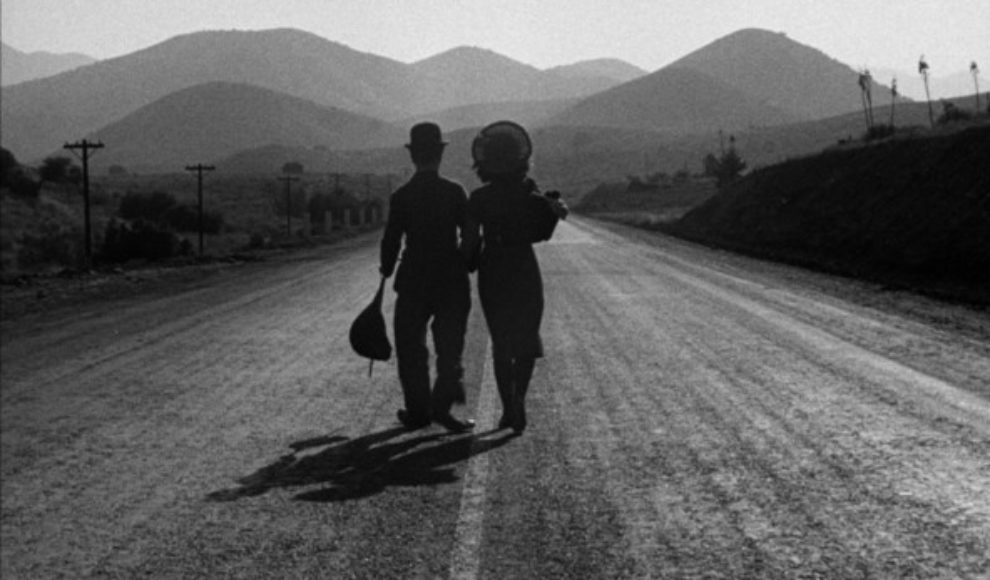
1936 was another wonderful year for movies.  Screwball comedies were getting into gear with some timeless classics like Our Man Godfrey.  Fred and Ginger were offering up some of their best work in Swing Time and Follow the Fleet and Yasujiro Ozu and Charlie Chaplin made their first sound films, The Only Son and Modern Times.

Producer Irving Thalberg died at age 37 and Deanna Durbin made her her first feature film at age 14.  The Trail of the Lonesome Pine  was the first three-strip Technicolor feature shot entirely on location.  Beggar’s Wedding (Italy) (aka Nozze Vagabonde) was the first 3-D talkie film to encourage the use of 3D polarizing glasses by its viewing audience.  Sir Arthur Bliss’s score to Things to Come became the first official soundtrack to be issued on LP records to the public. The British Broadcasting Corporation launched the world’s first regular television service, broadcasting 2 hours a day, 6 days a week.

In the USA, Franklin Roosevelt was reelected by a landslide.  A record heat wave struck North America, already suffering from the Dust Bowl, killing thousands and destroying crops.  The average price for a movie ticket was 25 cents and a gallon of gasoline cost around 20 cents.  There was no universal federal minimum wage legislation and the unemployment rate was about 17%.

Astaire and Rogers dancing to "Pick Yourself Up" in Swing Time

Astaire and Rogers dancing to “Pick Yourself Up” in Swing Time

Edward the VIII  was King of the United Kingdom and the Dominions of the British Commonwealth, and Emperor of India from January 20 to December 11, when he abdicated and was succeeded by his younger brother Albert who chose the regal name George VI.

Nazi troops enter the Rhineland

Nazi troops enter the Rhineland

Elsewhere, the world appeared inexorably headed toward calamity.  Pro-democratic militarist Keisuke Okada stepped down as Prime Minister of Japan and was replaced by radical militarist Koki Hirota.  War continued between Japanese and Chinese forces in Manchuria.  The Rome-Berlin axis was formed.  Italy annexed Ethiopia. In violation of the Treaty of Versailles, German troops marched into the Rhineland.  The Spanish Civil War began.  The first of the Moscow show trials was held as part of Joseph Stalin’s Great Purge.

The films I hope to get to for 1936 can be found here:  http://www.imdb.com/list/eBl1zIKZCOA/

Jesse Owens at 1936 Olympic Games to “Time” by Hans Zimmer