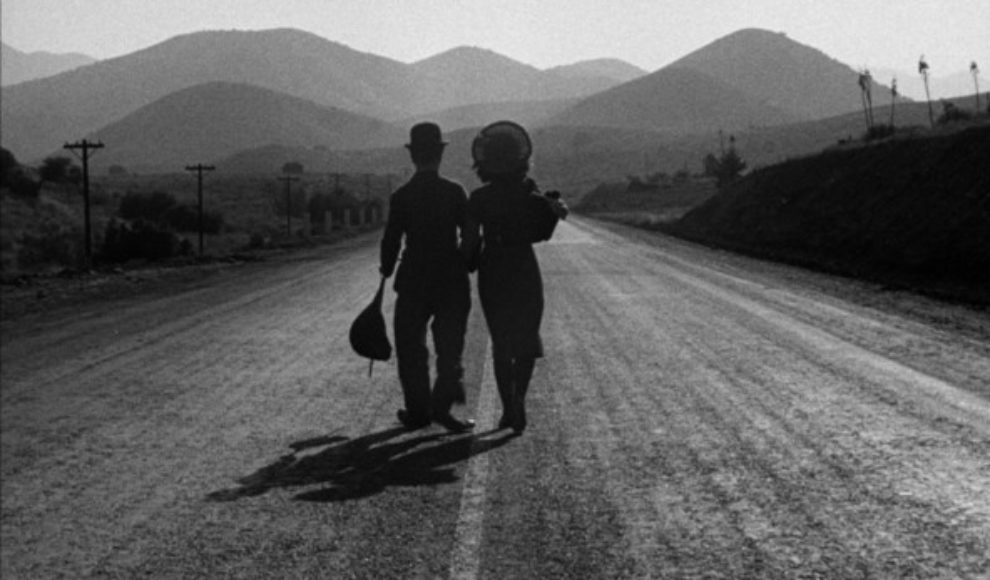
The Ox-Bow Incident (1943)

The Ox-Bow Incident
Directed by William A. Wellman
Written by Lamar Trotti from the novel by Walter Van Tilberg Clark
1943/USA
Twentieth Century Fox Film Corporation
Repeat viewing/Netflix Rental
Number 168 of 1001 Movies You Must See Before You Die

[box] Major Tetley: This is only slightly any of your business, my friend. Remember that.

Gil Carter: Hangin’ is any man’s business that’s around.[/box]

This tightly wound morality play is only nominally a Western.

Gil Carter (Henry Fonda) and Art Croft (Harry Morgan) ride into town to find the place abuzz about some cattle rustlers who have been operating in the area over the past few months.  Then they learn that the rustlers have shot a rancher that is a close friend of the local tough guy.  The townsfolk are quick to assemble a lynching party to apprehend the culprit and administer justice at the end of a rope.  All the admonitions of local elder Mr. Davies (Harry Davenport) to leave the matter to the law fall on deaf ears.  Davies sends Gil to appeal to the sheriff but he is out at the ranch and his deputy is one of the more rabid advocates of vigilante justice.  Though Gil has little use for the mob leaders or sympathy for their cause, he and Art join them out of fear that they, as outsiders, may become suspects.

The hastily and illegally sworn-in “posse” goes up into the high mountains to search for the men.  No one is dressed for the intense cold.  The group stumbles upon three men sleeping around a camp fire – their leader, family man Donald Martin (Dana Andrews), a half-witted old man, and a Mexican desperado type (Anthony Quinn).   Although all protest that they have done nothing, they are found in the possession of the victim’s cattle and gun and the townspeople, under the leadership of a self-styled Confederate colonel, are not about to spend much time listening to explanations.  With Jane Darwell as a cackling old vigilante and Leigh Whipper (uncredited!!!?) as a preacher who comes along to pray over the culprits.

This film is an ensemble piece like Stagecoach that follows the character arcs of a number of different types as they face a dilemma together.  Henry Fonda is great, as usual, as the voice of conscience and stand-in for the audience.  This time, however, he starts from a place of seething resentment that makes it all the more resonant when he sees the light. We also get to know the “cowardly” son who can’t quite bring himself to do the wrong thing despite his tormenting macho father, the local clown who finds the situation quite funny, etc.  Dana Andrews is touching as he pleads for someone to look after his wife and small children in one of his better performances.  The black preacher and his reference to his own brother’s lynching bring the film’s moral into its modern American context.

The sense of doom is unrelieved during the 75-minute running time.  There is little action but it is unnecessary.  Donald’s letter to his wife serves as the coda of the piece.  While the text seems totally unlike anything one would expect, it does underscore the film’s powerful message about the reasons we have law to temper the blind fury of the mob mind.

The Ox-Bow Incident was the last film to be nominated for a Best Picture Oscar and in no other category.

Trailer


Le Corbeau (1943)

Le Corbeau (The Raven)
Directed by Georges-Henri Clouzot
Written by Louis Chavance and Georges-Henri Clouzot
1943/France
Continental Films
Repeat viewing/Netflix rental


[box] Dr. Vorzet: You think that people are all good or all bad. You think that good means light and bad means night? But where does night end and light begin? Where is the borderline? Do you even know which side you belong on? [/box]

This brilliant thriller managed to make all sides mad in Occupied France.

Dr. Remy Germain (Pierre Fresnay) came not so long ago to practice in a small French town and specializes in difficult deliveries.  He has performed a few where he saved the mother at the cost of the baby, not always the orthodox outcome.  He is also very friendly with the elderly local psychiatrist’s young wife, a friendship which her sister roundly disapproves.

People start recieving ugly poison pen letters signed by “The Raven”.  They start out as a campaign against Germain, calling him an abortionist and adulterer.  The letters build to the point where all the dirty secrets of the townspeople are revealed, escalating to a climax when a patient at the hospital is told by The Raven he has terminal cancer and commits suicide.  The town is driven to a kind of mass hysteria.  The investigation, led by the psychiatrist who is also a handwriting expert, turns up many suspects.  Is it the psychiatrist’s sister-in-law, a cold Puritanical nurse?  Is it the young postal clerk who regularly dips into the till?  How about the crippled woman Germain has a one-night stand with?  Clouzot keeps you guessing until the final five minutes of the story.

Clouzot is a genius at portraying the dark underbelly of life.  It’s just a marvel to watch how he can take a simple prop and make it look completely sinister.  Although I thought the film dragged a bit in parts, it remained suspenseful.  I love Fresnay and all the other performances are appropriately menacing.

According to Wikipedia, Le Corbeau generated controversy from the right-wing Vichy regime, the left-wing Resistance press and the Catholic Church. The Catholic Church considered the film “painful and hard, constantly morbid in its complexity”.  The Vichy press dubbed it the antithesis of the Révolution nationale and demanded it be banned due to its immoral values. The anti-Nazi resistance press considered it Nazi propaganda because of its negative portrayal of the French populace. Two days before the release of Le Corbeau, the German-owned Continental films fired Clouzot.

Personally, I consider this film less an allegory than entirely consistent with the tenor of misanthropy present in all of Clouzot’s work. Somehow that misanthropy only adds to the delicious thrills delivered by the European Master of Suspense.  Recommended.

Trailer (no subtitles)

Sahara (1943)

Sahara
Directed by Zoltan Korda
Written by John Howard Lawson, Zoltan Korda, and James O’Hanlon based on an incident in the Soviet Photoplay, “The Thirteen”
1943/USA
Columbia Pictures Corporation
Repeat viewing/Netflix rental

[box] Giuseppe: But are my eyes blind that I must fall to my knees to worship a maniac who has made of my country a concentration camp, who has made of my people slaves? Must I kiss the hand that beats me, lick the boot that kicks me, no! I rather spend my whole life living in this dirty hole than escape to fight again for things I do not believe against people I do not hate. As for your Hitler, it’s because of a man like him that God – my God – created hell![/box]

Made almost contemporaneous with the events surrounding it, this solid if unbelievable combat movie features some good performances only slightly marred by some heavy-handed speechmaking.

Career Army Sgt. Joe Gunn (Humphrey Bogart) and his men are one of the few American outfits training with the British army in desert combat early in the North Africa campaign  The three survivors and their tank have been left behind by the retreating British army and are short on water.  They meet up with the survivors of a British unit, likewise out of water.  Later they pick up a Sudanese British army soldier (Rex Ingram) who is escorting his Italian prisoner (J. Carol Naish) through the desert.  The tank manages to shoot down a German plane and when the pilot parachutes out they take him prisoner and the party is complete.

The group slowly warms to the Italian, who is a simple family man, but the German is an unrepentant Nazi who is looking for every opportunity to make trouble.  The water situation gets more dire until the Sudanese finally leads them to an old fort with a well.  Although there is only a trickle left, this is barely sufficient to keep the group going.  Then the well runs dry.

An advance team from a battalion of Germans comes scouting for water.  Instead of taking these guys prisoner and hitting the road,  Sgt. Gunn asks his men to stay put and try to bog down the Germans to play for time for the British.  Despite the 100 to 1 odds, Joe sends the German scouts back to tell their leader that there is plenty of water and the men are willing to trade it for food.  When the Germans get there, Joe tells them he will only trade water for their guns and a ferocious battle ensues.  With Dan Duryea as a GI, Bruce Bennett as the ranking Brit and Lloyd Bridges as a British soldier who bites the dust shortly after he pulls out his sweetheart’s photo.

Humphrey Bogart is really good in this as a crusty cavalry veteran who treats his tank like he used to treat his horse, calling it Lulubelle and babying it constantly.  J. Carol Naish gives the Italian a warm and human portrayal in a role that could have been just a vehicle for some anti-Nazi speeches.  The filmmakers made the Sudanese human and heroic as well.  I didn’t believe the story for a minute but must admit that it was fairly thrilling anyway.  I’m just getting started seeing combat films but I can believe that this is one of the better ones.

Sahara received Academy Award nominations in the categories of: Best Supporting Actor (Naish); Best Cinematography, Black-and-White (Rudolph Maté); and Best Sound, Recording.

Clip

Shadow of a Doubt (1943)

Shadow of a Doubt
Directed by Alfred Hitchcock
Written by Thornton Wilder, Sally Benson, and Alma Reville
1943/US
Skirball Productions/Universal Pictures
Repeat viewing/DVD Collection
#173 of 1001 Movies You Must See Before You Die

This story of evil in small town America was reportedly Alfred Hitchcock’s favorite of his films.  While I prefer others to this one, it is nonetheless excellent.

The film opens with shots of Charles Oakley (Joseph Cotten)  lying impassively on his hotel room bed surrounded by wads of money.  He is being pursued by police on suspicion of being a serial killer of widows he seduces for their money.  He decides to flee to the home of his sister Emmie (Patricia Collinge) across country in Santa Rosa, California.

The family greets news of his impending arrival with joy.  This is especially true of “Uncle Charie’s” namesake Charlotte, known as Young Charlie (Theresa Wright).  Charlie had been down in the dumps about her family’s boring existence and feels that her uncle’s arrival will liven things up.  This is more true than she could possibly foresee.

The family, especially his sister, is extremely proud of Uncle Charlie, thinking him to be some kind of business man.  He starts to integrate himself into their community.  He also starts to act very secretive and make dark pronouncements about the rottenness of the world and the people in it.  Soon detective Jack Graham (Macdonald Carey) and a policeman (Wallace Ford), posing as a journalist and photographer looking for the typical American family, start trying to insinuate themselves into the picture.

Naturally, it is love at first sight when Jack talks to Charlie.  She is resistant to believe that he could have done anything wrong.  Then she begins to put a number of disturbing clues together.  After that, she is not safe from her psychopathic, paranoid uncle.  With Henry Travers as Charlie’s father and Hume Cronyn as his murder-obsessed pal.

This is classic Hitchcock with plenty of suspense and great performances from all involved. I believe this to have been Wright’s career best.  I greatly prefer it to her Oscar-winning role in Mrs. Miniver.  Cotten transitions beautifully between a family man persona and evil personified.  I could have done without the romantic sub-plot but the era obviously could not.  Truly a must-see.

Shadow of a Doubt was nominated for an Academy Award for Best Original Story.

Trailer

Five Graves to Cairo (1943)

Five Graves to Cairo
Directed by Billy Wilder
Written by Billy Wilder and Charles Brackett based on the Lajos Biró play Hotel Imperial
1943/USA
Paramount Pictures
Repeat viewing/TCM DVD


[box] Lt. Schwegler: Our complaints are brief. We make them against the nearest wall.[/box]

[box] On the first day that director Billy Wilder’s hero, Erich von Stroheim arrived on set, Wilder ran to the wardrobe department to welcome him. He said: “This is a very big moment in my life . . . that I should now be directing the great Stroheim. Your problem, I guess, was that you were ten years ahead of your time.” Von Stroheim replied: “Twenty.” — from the IMDb trivia[/box]

Billy Wilder’s second directorial effort has little of his characteristic humor or cynicism.  It is, however, a very well-made and entertaining spy story, light on the propaganda for its period.

Cpl. John Bramble (Franchot Tone) has fallen behind the retreating British Army in his tank. He is the sole survivor and manages to stagger to The Empress of Britain hotel in the Egyptian Desert.  The last occupants of this hotel are its Egyptian owner Farid (Akim Tamiroff) and French chambermaid Mouche (Anne Baxter).  Everyone else has either fled or been killed in a recent German bombing raid.  Farid takes pity on the soon unconscious Bramble over the strong objection of Mouche, who resents the British for  “leaving behind French soldiers when they evacuated Dunkirk.” Then the German army arrives escorting Field Marshall Rommel (Eric von Stroheim) whose men commandeer the hotel as a headquarters.  They are well-informed on the staff of the hotel.

Bramble manages to hide himself.  Then, somewhat miraculously (given his strong American accent), he manages to convince the Germans that he is the Alsatian waiter Davos.  Davos just so happened to have been a German spy, now laying under a ton of rubble in the cellar, and is accepted by the High Command with open arms.

More Germans arrive with some British POWs, including high officers.  A la von Rauffenstein in Grand Illusion, Rommel dines with his prisoners and goads them with lots of information about his strategy.  Bramble has previously overheard talk about the five graves to Cairo.  He had planned to assassinate Rommel with a stolen gun but the British tell him that dead men have no secrets and he should try to ascertain the German battle plan instead.

So begins Bramble’s dangerous quest for the story of the five graves.  In the meantime, Mouche is trying to get her wounded younger brother out of a German POW camp. Rommel refuses her but his lying, idealogue aide-de-camp promises to try to help her in exchange for her favors.  While there is any chance that her wish be granted, Mouche is decidedly unhelpful to Bramble.

Despite the fact that the story relies heavily on the naiveté of the Germans and some incredible coincidences, it is exciting and enjoyable.  The stand-out performance is given by the fiery Baxter, who manages to maintain her French accent admirably unlike the other actors who either don’t try (Tone) or try and fail (von Stroheim).  I always like to watch Tamiroff.  I think by the time he was through he portrayed every nationality possible. The production is top-notch with beautiful low-key lighting.  The Germans, especially Rommel, are extremely reasonable for a movie of this era though we do get some patriotic, morale-boosting speeches out of Bramble by the end.

Five Graves to Cairo was nominated for Academy Awards in three categories:  Best Cinematography, Black-and-White (John F. Seitz); Best Art Direction-Interior Decoration, Black-and-White; and Best Film Editing.

Trailer

When Harry Met Sally (1989)

When Harry Met Sally
Directed by Rob Reiner
Written by Nora Ephron
1989/USA
Castle Rock Entertainment/Nelson Entertainment
Repeat viewing/DVD collection
#830 of 1001 Movies You Must See Before You Die

[box]Marie: Tell me I’ll never have to be out there again.

Jess: You will never have to be out there again.[/box]

Generally one would expect me to prefer a romantic comedy from 1943 over one from 1989.  This movie was the clear winner in yesterday’s double feature.  I consider it the most perfect film in its genre since It Happened One Night (1934).

Sally Albright’s (Meg Ryan) girlfriend talks her into giving her boyfriend Harry (Billy Crystal) a ride from Chicago to New York where both will live after their graduation from college.  The trip does not go well.  The persnickety Sally and crude Harry don’t hit it off at all and then he comes on to her.  She rejects his advances but suggests that they be friends.  But Harry contends that a man and woman can’t be friends because sex will get in the way.  So Harry and Sally part ways for another 6 years.


When they meet by chance in an airport, Sally is being seen off by her new boyfriend and Harry is about to get married.  Sally rejects Harry’s invitation to dinner in the city where both have landed on business.

Segue to a few years later, and they meet by chance in a bookstore.  Sally has broken up with her live-in boyfriend and Harry going through a divorce.  In their loneliness, they finally become good friends … until sex does in fact get in the way.  And doesn’t.

I have seen this movie and it never fails to make me cry.  (I am a sucker for a good happy ending.)  I love the framing device of the old married couples describing how they met.  I love how the costumes and hairstyles perfectly pick up style over the years.  I love that Harry and Sally know each other long and well before they fall in love.  I love the very funny dialogue and the two performances.

When Harry Met Sally was nominated for an Academy Award for Best Writing, Screenplay Written Originally for the Screen.  I think it definitely got robbed.  (I hated Dead Poet’s Society, which won.)

Trailer

The More the Merrier (1943)

The More the Merriermore the merrier poster
Directed by George Stevens
Written by Robert Russell, Frank Ross, Richard Flournoy, and Lewis R. Foster
1943/USA
Columbia Pictures Corporation
Repeat viewing/Netflix rental

Benjamin Dingle: [singing] In love or war, with people like us, we’ve got to work fast or we’ll miss the bus. If you straddle a fence and you sit and wait, you get too little and you get it too late./ What’ll you say if we see it through, you stick by me and I’ll stick by you. And our 18 children will be glad we said… / “Damn the torpedoes, full speed ahead, damn the torpedoes, full speed ahead, damn the torpedoes, full speed ahead./ And our 18 children will be glad we said, “Damn the torpedoes, full speed ahead, damn the torpedoes, full speed ahead, damn the torpedoes, full speed ahead!”

Any film in which my heartthrob Joel McCrea either takes off his shirt or is in love is going to get my vote.  This one has that and much, much more.

The war has created a huge housing shortage in Washington, DC.  Connie Milligan (Jean Arthur) feels it is her duty to rent out a room in her apartment.  At the same time, wealthy Benjamin Dingle (Charles Coburn) has arrived in the city to discuss his plans to build additional housing units.  He gets there two days before his hotel reservation and is without a place to stay – until he sees Connie’s ad in the paper.  Although there is a crowd of applicants waiting on the doorstep for Connie’s return from work and although Connie had firmly decided on a female roommate, the crafty Dingle manages to muscle his way into her apartment for a week.  He promptly decides she need a clean-cut top-drawer young man and is unimpressed with Connie’s description of her middle-aged bureaucrat fiancé.

more the merrier 3

So when Sgt. Joe Carter (McCrea) shows up with the for-rent ad in his hands, Dingle rents half of his room to him.  After meeting Connie’s stuffy fiance, and despite the fact that Joe has orders to leave for Africa in two days, Dingle uses his “damn the torpedos” attitude to get him together with Connie.  It doesn’t hurt that the two are clearly ga-ga for each other.

more the merrier 2

The kissing scene in this movie cemented my love affair with Joel McCrea.  It is remarkably sexual for something from the Code years.  The way Coburn manages to make a basically pushy and obnoxious character endearing is marvelous.  Added to that is a very witty screenplay and Steven’s characteristic skill in humanizing a story.  So what that people are falling in love at the drop of a hat.  I’m completely ready to suspend my disbelief for this one.  Highly recommended.

Charles Coburn won the Academy Award as Best Supporting Actor for his wonderful performance in this film.  The More the Merrier was nominated for five additional Oscars:  Best Picture; Best Director; Best Actress; Best Writing, Original Story; and Best Writing, Screenplay.

Clip – Connie’s system breaks down


Edge of Darkness (1943)

 Edge of Darkness
Directed by Lewis Milestone
Written by Robert Rossen from a novel by William Woods
1943/USA
Warner Bros
First viewing/Errol Flynn Adventure Collection DVD


[box] Gerd Bjarnesen: What sacrifice? What are you giving up? Your life? Maybe they’ll take that from you whether you fight or not? Your farm? It isn’t yours anyway until you fight for it. Your peace? What peace is there when a body of troops can come in the middle of the night and arrest you as a hostage. To be shot, for something you never did or never even thought of. To live in constant fear. Have blackings at your windows. Talk in whispers. Have guards at your church doors.[/box]

The plight of Norway under Nazi occupation apparently was especially moving to audiences of this time.  This is the second film on the topic I’ve seen in the past few days. See my review of Commandos Strike at Dawn with Paul Muni, also a Warner Brothers project.

The opening shot reveals a town square filled with the dead bodies of Nazi soldiers and local residents.  The story is told in flashback as a couple of other Nazis investigate.

A Norwegian coastal village has suffered under Nazi occupation for a couple of years.  The only resistance the villagers have been able to muster is to contaminate fish processed at the cannery, which is owned by Karen Stensgard’s uncle, a true Quisling.  Karen’s father (Walter Huston) is the town doctor and doesn’t want to get involved in politics.  Her brother collaborated with the Nazis when he was in Oslo.  Karen (Ann Sheridan) herself is a proud patriot and is in love with fisherman Gunnar Brogge (Errol Flynn), who is the “leader” of the group meeting in secret to plot against the Nazis.

Then the English supply villages up and down the coast with arms.  The plotting gets more definite as the conduct of the soldiers under their ideologue commander gets more and more brutal.  The story builds up to some satisfying action scenes of the revenge of the villagers.  The film ends with President Roosevelt’s words exhorting Americans to “look to Norway” if they are wondering if war could have been averted.  With Ruth Gordon as Karen’s gentle mother and Judith Anderson as a patriot.

This movie captured my interest and is a above-average Hollywood drama.  When I am watching these things sometimes I think the portrayal of the Nazis is over-the-top for propaganda purposes.  Then I remember that they were actually far worse than anyone imagined even at the time.

I didn’t know until doing research for this film that Errol Flynn was rejected as 4-F from every branch of the service due to previous bouts with malaria and TB and a weak heart.  He saw the several war pictures he made during the conflict as a way to contribute to the war effort, according to a biographer.

Clip

Day of Wrath (1943)

Day of Wrath
Directed by Carl Theodor Dreyer
Written by Carl Theodor Dreyer, Poul Knudsen, and Mogens Scot-Hansen (all uncredited) from the play “Anne Pedersdotter” by Hans Wiers-Jenssen
1943/Denmark
Palladium Productions

Repeat viewing/Hulu Plus

[box] Anne Pedersdotter: I see through my tears, but no one comes to wipe them away.[/box]

Director Carl Th. Dreyer didn’t make many films but he made masterpieces.  This is one of them.

The action takes place in 17th Century Denmark.  Anne Pedersdotter is the young second wife of Rev. Absalon Pedersson, a middle-aged devout cleric in their small town.  The couple lives with Absalon’s mother Merete who views the May-September pairing as “scandalous” and freely admits that she hates Anne.  Absalon has a grown son, older than Anne, named Martin that is expected to come home and meet his new stepmother for the first time.

On the day Martin is to arrive, the local council of clerics announces that it is arresting Herlofs Marte as a witch.  We see the old woman selling herbs gathered under the gallows as a remedy before she runs off into hiding.  She shows up at Absalon’s house and begs Anne to hide her.  She informs Anne that she protected Anne’s mother from a witchcraft charge herself.  But Marte was spotted entering the house and is dragged out of the attic kicking and screaming.

Apparently part of the deal is that the witch must confess.  We move on to some non-graphic but nonetheless horrific torture scenes. Poor Marte is defiant but terrified and demands to talk to Absalon.  She tells him she knows he falsely ruled that Anne’s mother was not a witch in exchange for permission to wed Anne and threatens to disclose this if he does not likewise protect her.  But Absalon only exhorts Marte to repent and save her soul.  Marte replies that she is not afraid of heaven or hell, only of dying.  The torture proceeds and Marte finally confesses.  She refuses to name anyone else as a witch however.

In the meantime Anne and Martin are getting acquainted.  All this talk of Anne’s mother being a witch with the power to invoke the living and the dead gets Anne wondering whether she has any powers herself.  Sure enough, she can “invoke” Martin to her side and the two begin an affair.  It is a troubled union due to Martin’s great guilt.  Anne, however, is transformed into a laughing, defiant girl who stops taking orders from her awful mother-in-law.  She admits she has speculated on the happiness that could be hers if Absalon were dead.  She resents the fact the loveless marriage has robbed her of her youth.

As Herlofs Marte awaits her execution at the stake she curses Absalon, Anne, and another clerical torturer.  These curses rapidly seem to take effect.

I don’t know how to convey the beauty of the images and compositions Dreyer creates except to say each frame seems to me to resemble a great Dutch Master painting.  He didn’t allow his actors to wear any makeup at all, saying that he would paint their faces with light. He certainly did do that.

Another thing I love about Dreyer is that his films are so thought-provoking.  They always leave me with more questions than answers. What I find intriguing about this story is that every character in it actually believes in witchcraft.  The accusations are not cynically made.  In fact, the plot development seems to suggest that something more than coincidence is at work.  But, equally, this film is about man’s terrible inhumanity to man in the name of religion.  I also find Anne’s submission at the end intriguing.  She may believe herself to be a witch but just as likely she might feel she has nothing else to live for.

Some people see this as an allegory for Nazi persecution but Dreyer always denied having any such intention.

If you have patience for a slow, sedate pace, this is truly not to be missed.

Clip – opening

Time Marches on into 1943

Hollywood, despite wartime restrictions, managed to put out some excellent films across all the genres, movie making continued at a slower pace in Europe, and Akira Kurosawa made his first movie in Japan.

In Hollywood, 20th Century Fox began distributing three million pinups of leggy actress Betty Grable mostly to GIs serving in armed forces overseas. She was declared their favorite pinup and by 1946-47 she was the highest-salaried American woman. Clark Gable as a US Army Air Corps Lieutenant was awarded the Distinguished Flying Cross and Air Medal after participating in five combat missions in 1943.

50 year-old British actor Leslie Howard was killed when onboard a DC-3 plane that was shot down by German Luftwaffe fighters over the Bay of Biscay near Lisbon, Portugal (considered by the Nazis a war zone).  There are numerous theories, never proven and later denied by Germany, that the plane was specifically targeted a) in the mistaken belief that Churchill was aboard or 2) to assassinate Howard who was active in anti-Nazi propaganda and suspected of being a British intelligence agent.

Supported by the Screen Actor’s Guild (SAG), Olivia de Havilland filed a far-reaching lawsuit against her studio, Warner Bros, eventually winning in a 1945 ruling called the DeHavilland Law. It declared that a studio could not indefinitely extend a performer’s contract past the time stated due to suspensions.

In U.S. news, President Roosevelt froze prices, salaries, and wages to prevent inflation caused by booming war production.  Income tax withholding on wages was introduced. The Chinese Exclusion Acts of 1888 and 1902 were repealed allowing the free immigration of Chinese to the U.S.  Construction of the Pentagon was completed, making it the largest office building in the world.  Dragon’s Teeth by Upton Sinclair won the Pulitzer Prize.  “Paper Doll” by the Mills Brothers spent the most time on the top of the charts.

American troops on Guadalcanal

While heavy fighting continued everywhere, 1943 proved to be the beginning of the end for Hitler, Mussolini and Tojo.  The German 6th Army surrendered to the Soviets at Stalingrad in early February.  The public announcement of the defeat marked the first time the Nazis had acknowledged a failure during the war.  The United States VI Corps arrived in North Africa and in May the remaining Axis forces there had surrendered.  Allied forces invaded Sicily in July and advanced northward, reaching Naples by the end of the year.  Mussolini was dismissed and arrested In July.  Germans rescued him from jail in September and made him head of the puppet Italian Social Republic.  In the Pacific Theater, the Japanese defeat on Guadalcanal was followed by a slow American advance through the Solomon Islands and a combined American and Australian campaign in New Guinea.

Montage of stills from the Oscar winners of 1943

Montage of stills from all Oscar nominees of 1943