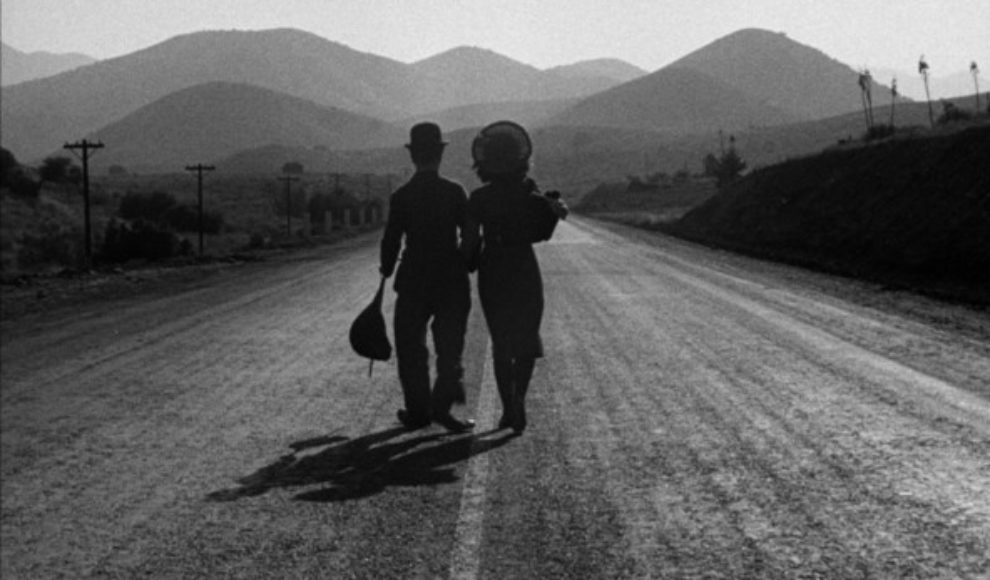
Stormy Weather Directed by Andrew L. Stone Written by Frederick J. Jackson, Ted Koehler et al 1943/USA Twentieth Century Fox Film Corporation
First viewing/Netflix rental
[box] It’s not the load that breaks you down, it’s the way you carry it. — Lena Horne[/box]
Bill Robinson … Lena Horne … Fats Waller … Cab Calloway … the Nicholas Brothers … Dooley Wilson. Does this wonderful musical really need a review?
The plot is very slight. Bill Williamson (Robinson) is being honored for his contribution to the entertainment industry. He looks back on his career.
Williamson gets his start after he comes home from Europe at the end of WWI. He meets up-and-coming singer Selina Rogers (Horne) who was close to one of his army buddies. They hit it off immediately. Williamson struggles to get a break as a hoofer. Finally Selina convinces her manager to hire him for the show she is starring in. But the manager is very jealous and will only let Williamson play native drums in a African number. Williamson turns the tables on him by dancing on those very drums when his back is turned.
Time marches on and Selina and Bill become an item. But singing is her life and Selina refuses to settle down and raise a family. With Dooley Wilson as Williamson’s con-man friend.
The framing story allows one glorious musical number after another. We get the title song, Horne’s signature tune; Fats Waller doing a couple of numbers; Cab Calloway and His Orchestra doing another couple of numbers; and tons of fantabulous dancing, including a tap routine from the Nicholas Brothers and of course Robinson at his best. I didn’t realize that Robinson was a pretty fair singer as well as one of the great dancers. Recommended.
Cabin in the Sky Directed by Vincente Minnelli Written by Joseph Schrank based on the book of the musical play by Lynn Root 1943/USA Metro-Goldwyn-Mayer
Repeat viewing/Netflix rental
[box] Sometimes the cabin’s gloomy and the table’s bare,/ But then he’ll kiss me and it’s Christmas everywhere. /Troubles fly away and life is easy go./ Does he love me good? That’s all I need to know. /Seems like happiness is just a thing called Joe. – “Happiness is a Thing Called Joe” – lyrics by Yip Harburg[/box]
If one can look past the racial attitudes of the era, Vincent Minnelli’s debut film is a cornucopia of riches starting with its all-star African-American cast.
Little Joe Jackson (Eddie ‘Rochester’ Anderson) is a bit of a scamp and an unlucky gambler. His backbone comes from his wife Petunia (Ethel Waters), who has a direct line to the Lord. One day, instead of confessing at church like he promised he is lured to a gambling den where he is shot. As he lies in bed in delirium with his life in the balance, Lucifer Jr. (Rex Ingram) comes to take him below. An angel, The General, hears Petunia’s prayers. Although Little Joe is not fit for the Cabin in the Sky, he is granted another six months to change his ways.
Little Joe seems to see the light so Lucifer Jr. and his men cook up a scheme to make him rich and as added insurance send a temptress in the form of Georgia Brown (Lena Horn). The devil’s wiles appear to work. Can Petunia defeat them? You know the answer to that one. With Louis Armstrong as one of the demons and Duke Ellington and His Orchestra entertaining at the gambling den.
Vincente Minnelli would get more skillful at integrating musical numbers with his stories but this is a brilliant start. As soon as any singing or dancing begins the film swings into high gear and becomes a total delight. Standouts include Waters’s two renditions of “Taking a Chance on Love” and both the leading ladies singing “Honey from the Honeycomb” in a kind of competition. Who would have guessed Eddie Anderson was so multi-talented? Recomended.
Harold Arlen and E. Y. (‘Yip’) Harburg were nominated for an Oscar for their Original Song “Happiness Is a Thing Called Joe,”
Clip – Dancing at Jim Henry’s Paradise nightclub to the music of Duke Ellington.
Destination Tokyo Directed by Delmer Daves Written by Delmer Daves and Albert Maltz from an original story by Steve Fisher 1943/USA Warner Bros
First viewing/Netflix rental
[box] Sparks: How come they picked you?
Wolf: I don’t know. Strong arm, strong back, weak mind![/box]
This goes way overboard in the propaganda department at times. Â Cary Grant is solid in a dramatic role and it is always a treat when John Garfield is around.
Captain Cassidy (Grant) welcomes his crew back on the submarine U.S. Copperfin which has secret orders to be opened only at sea.  We see a mixed bag of seasoned men and new recruits getting to know each other and life in confined spaces under the sea. (Don’t think Das Boot here.  This sub was made in Hollywood).  There are a number of stock characters such as the loveable cook (Alan Hale); wise-guy ‘Wolf’ (Garfield) who is always talking about his adventures with dames, a family man (whose days are clearly limited), a very nervous rookie, etc.
Captain Cassidy learns that the sub is to pick up an expert in the Aleutians and deliver him to Tokyo. Â Once there, Wolf and the expert scour Tokyo in commando gear to get information on its defenses. Â The film ends with the 1942 Doolittle raid on the city.
This one goes beyond hatred of the Japanese military for trying to kill Americans to downright demonization of the Japanese people.  It is said they have no concept or word for love of a man for a woman, they give their children daggers at age 5, etc.
But more than that, this movie consists of action sequences separated by long interludes of cliches – the atheist who learns the value of prayer, the family man, the appendectomy by a pharmacist’s mate, the banter, etc.  This material does not justify the film’s 2 hour and 15 minute running time.  Maybe something resembling this happened but I did not believe the spying scenario for one minute.  There is nothing at all wrong with any of the performances.
Destination Tokyo was nominated for an Oscar for Best Writing, Original Story.
The Life and Death of Colonel Blimp Directed by Michael Powell and Emeric Pressburger Written by Michael Powell and Emeric Pressburger 1943/UK The Rank Organization/The Archers/Independent Producers
Repeat viewing/Netflix rental
[box] Hoppy: They told me in Bloemfontein that they cut off your left leg.
Clive Candy: [Examines leg] Can’t have, old boy. I’d have known about it.[/box]
How Powell and Pressburger managed to put together this grand and opulent film in 1942 England boggles the mind.
This is the story, told in flashback from the perspective of 1942, of the life of career British Army Officer Clive Wynne-Candy (Roger Livesy in a bravura performance) from his time as a young officer in the Boer War through his work for the Home Guard as a retired general.
As the film begins, Wynne-Candy is orchestrating war games for Home Guard recruits. “War” is to begin at midnight. The opposing “army” decides to mount a surprise attack many hours before midnight and captures Candy and several other older officers at their club. They clearly think Candy is way behind the times. He launches into the story of his life beginning with his youth when he was as impulsive as they.
On leave from the Boer War, Candy gets a letter from an English governess in Berlin complaining about the way the British military is being portrayed in the media by a German army officer. Although he is more or less ordered not to go, he uses his leave to visit Miss Edith Hunter (Deborah Kerr in the first of her three roles in the film). One way or another, he gets challenged to a duel. His opponent is Officer Theo Krestchmar-Schuldorff (Anton Walbrook). While they are recovering from their wounds in a nursing home Candy and Theo become fast friends and Theo and Miss Hunter fall in love and marry. Candy misses his own chance at romance with her.
We segue forward about 15 years and Candy is a Brigadier in WWI just as Armistice has been signed. He glories that, despite the duplicity and barbarity of the Germans, British fair play has won out. (This is a running thread throughout the film.) On his way home for leave, Candy has dinner at a French convent and spots a young nurse (Deborah Kerr again) from afar who reminds him of Edith. He can’t learn her name but does learn where she is from. He goes to Yorkshire to locate and marry her. He looks up Theo at an English prisoner-of-war camp. Theo refuses to speak to him but later relents. Candy and his kind extend him and Germany the hand of friendship. Theo thinks they are fools.
Candy and his wife spend the intervening years serving in all the corners of the British Empire. He is called out of retirement to active duty at the outbreak of WWII. He handpicks a driver, “Johnny” (Kerr again), for her resemblance to his lost loves. He reconnects with Theo who is now an “enemy alien” living in the homeland of his wife due to his disgust with the Nazis. But Candy still believes in fair play in war and is now out of step with the times. He is again retired but continues to be useful in the Home Guard.
Powell and Pressburger came into their own with this lavish color production. Not only is it gorgeous to look at but interesting in its themes and very moving, especially as one looks back at one’s own life. Powell and Pressburger compress time masterfully through various montage techniques. Although this is very light on the propaganda, it is does emphasize the message that Britain must hit back at Germany with equivalent force and ruthlessness if it is to win the war.
The other theme is the cycle of life. I love that Kerr plays all the women in Candy’s life. How often do we fall in love with the same people in different guises? Kerr, who was cast when Wendy Hiller could not take the part and was only 21, performs like an old pro. Walbrook is just fantastic as the very military but warm German. This clocks in at over 2 1/2 hours. There is never a dull moment.
Meshes of the Afternoon Directed by Maya Derrin and Alexander Hamid Written by Maya Derrin 1943/USA First viewing/YouTube
#170 of 1001 Movies You Must See Before You Die
A young woman comes home to her apartment in Hollywood. She falls asleep in an armchair and has a dream in which the objects around her turn sinister. Eventually, a man joins her and he is relatively sinister as well. It is difficult to ascertain when the dream begins and ends.
Meshes of the Afternoon was not made for someone like me. I have to admit that some of the images were beautiful and the effects were impressive for the time and circumstances of its making.
I watched this with soundtrack by Seaming that was commissioned by BIrds Eye View, for ‘Sounds and Silents’, and was performed live at the Queen Elizabeth Hall, South Bank, London, in 2011, and later performed again live at Latitude Festival 2011, and in 2012 at Opera North Howard Assembly Rooms in Leeds, supporting Hauschka. I don’t know if that was cheating.
Clip – music here not what I listened to, fortunately
This Land Is Mine Directed by Jean Renoir Written by Dudley Nichols 1943/USA Jean Renoir-Dudley Nichols Productions/RKO Radio Pictures
First viewing/Warner Archive DVD
Mrs. Emma Lory: Why don’t they bomb Germany, young woman?
Louise Martin: Every factory and railroad in Europe is Germany, Mrs. Lory, until the Germans are driven out.
In Jean Renoir’s universe even the Nazis have their reasons. People ought to fight to the death to stop those reasons from spreading.
Albert Lory (Charles Laughton) is a mild-mannered schoolteacher in an unnamed Nazi-occupied country. His mother (Una O’Connor in a rare meaty role) has him tied around her apron strings via feigned illness, etc. He is secretly in love with beautiful fellow teacher Louise Martin (Maureen O’Hara). Louise is an outspoken patriot who is engaged to George Lambert (George Sanders), the local railway superintendent , who, unbeknownst to her, is a Nazi collaborator and informant. Louise’s brother Paul (Kent Smith) also appears to be very friendly with German soldiers. The mayor of the town works hand in glove with the highest local Nazi official, the smiling and seemingly reasonable Major von Keller (Walter Slezak).
When the school gets orders to rip pages out of its history texts, Albert and Louise cooperate. During a bombing raid, Albert reveals the depths of his cowardice. Then a couple of German soldiers are killed by a home-made bomb. Paul Martin arrives at a dinner Albert has been invited to late. He asks Albert and Louise to say he has been there since before the bombing. They comply. Then the Germans start rounding up hostages, including the beloved liberal headmaster of the school. Albert is next. His incensed mother looks up everyone she knows from the mayor to George Lambert in an attempt to free her son.
Not to spoil too much of the plot but Alfred eventually stands trial for a murder he wanted to commit but did not. His courage now invigorated by the execution of the headmaster, the trial gives Alfred a platform to conduct his defense via a pair of inspiring speeches.
In the universe of this story, the Nazis and their collaborators are basically businessmen who would like to see a better world, one with no unions or unruly children, when the war is over. Von Keller even excuses an act of apparent sabotage because he does not want to have to take hostages. He would like nothing better than to cut Albert some slack. But by the time this is necessary, Albert is having none of it.
This may be the wordiest propaganda of 1943. On the other hand, with Charles Laughton delivering it, tears came to my eyes. Renoir got beautiful performances out of all his actors. O’Connor who usually goes straight over the top has a rather large and convincing turn as the dominating mother and Sanders is touching. It’s not a great film but very interesting. If you are willing to suspend your disbelief for the last twenty minutes or so and can tolerate some beautifully written patriotic speechmaking, it’s worth a watch.
This Land Is Mine won the Academy Award for Best Sound, Recording.
Clip – Charles Laughton teaches one last lesson on The Declaration of the Rights of Man
Heaven Can Wait Directed by Ernst Lubitsch Written by Samson Raphaelson from a play by Leslie Bush-Fekete 1943/USA Twentieth Century Fox Film Corporation
Repeat viewing/Netflix rental
[box] His Excellency: If you meet our requirements, we’ll be only too glad to accomodate you. Uh, would you be good enough to mention, for instance, some outstanding crime you’ve committed?
Henry Van Cleve: Crime? Crime? I’m afraid I can’t think of any, but I can safely say my whole life was one continuous misdemeanor.[/box]
This story of a married man with a weakness for the ladies is notable for its lavish production values and the Lubitsch touch.
When he dies, Henry van Cleve (Don Ameche), who considers himself to have been a wicked roué, reports directly to Hell. The Devil (Laird Cregar) is not entirely convinced he is in the right place and asks him to tell his story. Segue into flashback.
Henry was a scamp of a boy, clearly taking after his waggish grandfather (Charles Coburn) and is a constant amazement to his doting mother (Spring Byington) and straight-laced father (Louis Calhern). As a young man, Henry has his parents wrapped around his little finger, cadging $100 loans every day so he can live the high life and entertain chorus girls. Then he sees the lovely Martha (Gene Tierney) on a street, tries to woo her in a book store, and decides to locate and win her. Finding her again works out to be easy as his stuffy cousin Albert (Allyn Joslyn) introduces her as his fiancee at his birthday parting that evening along with her feuding parents (Eugene Palette and Marjorie Main). The naughty, romantic Henry sweeps her off her feet, though, and elopes with her that very evening.
The rest of the movie follows the ups and downs of their mostly happy married life as Martha learns to look at Henry’s various indiscretions with tolerance and humor. Then she dies shortly after their 25th anniversary and Henry resumes his career as a stage-door Johnny in his later years. Are Henry’s sins enough to earn him a place in Hell?
As usual, Charles Coburn is the highlight of this movie and some of the zest goes out of it when he (and Martha’s parents) leave it about two-thirds of the way through. Ameche is appealing, though, and Tierney looks good enough to be a proper object of life-long adoration. The gay nineties sets and costumes are amazing, especially considering this was made under wartime restrictions. Fox must have been able to get good value out of its existing sets. Lubitsch keeps everything light and fun.
Heaven Can Wait was nominated for Academy Awards in the categories of Best Picture, Best Director, and Best Cinematography, Color (Edward Cronjager). I don’t see how it missed at least a nod for its Art Direction.
So Proudly We Hail Directed by Mark Sandrich
Written by Allan Scott
1943/USA
Paramount Pictures
Repeat viewing/Netflix rental
[box] Kansas: I never get killed.[/box]
Uneven but ultimately powerful movie about the loves, work, and sacrifices of nurses near the front lines in the last days of Bataan and Corregidor.
As the movie begins, we see a group of nurses being unloaded from a plane in Australia. Looking tired and broken, they are one of the last groups of people to be evacuated by the military from Corregidor. Among their number, Lt. Janet ‘Davy’ Davidson (Claudette Colbert) is carried out on a stretcher. The group heads home by ship. The rest of the nurses are soon fixed up with some food and rest but Davy remains essentially catatonic. The navy doctor asks the nurses to tell their story so he can get some insight into how to treat her. Segue into flashback with voice over narration largely from Lt. Joan O’Doul (Paulette Godard).
The nurses were scheduled to go to Pearl Harbor by ship but the Japanese attacked midway en route so they got shipped to Bataan instead. Davy was the senior officer of her group. Nurse Olivia D’Arcy (Veronica Lake) is a sullen problem child whom no one likes. Davy finally gets her to open up and tell her story. It turns out she witnessed her fiancé’s death at Pearl Harbor and now is going to the Philippines specifically to “kill Japs”. She becomes much more friendly after her secret is out.
The nurses get down to long shifts of work at Bataan. At first this is done at a hospital, but later they work right in the jungle or in makeshift quarters. They struggle with short rations and dwindling medical supplies. Then they are bombed and the U.S. is pushed off Bataan onto Corregidor. The only reason the nurses manage to escape is due to the heroic act of one of them.
On Corregidor, the nurses are slightly safer due to the massive tunnels that the military previously constructed on the island base but the supply problem and overcrowding of the wards continues. Finally they learn that no relief is coming and that MacArthur has left for Australia. Our nurses are in the first, and almost the last, group to get evacuated amid horrific shelling.
The romances of Davy with a medical technician (George Reeves) and Joan with an enlisted marine (Sonny Tufts) are important running sub-plots.
Those that don’t like rather corny patriotic speeches should know going in that there are several of them, mostly coming in a religious context from the Chaplin. The romances are rather routine stuff, though heightened by the dangerous situation. The scenes showing the camaraderie and tireless work of the nurses and the combat scenes are really gripping, however. It’s like a window into another world and a beautiful tribute to some courageous women who face terrifying conditions, unarmed and with tremendous responsibility for the lives of other, largely helpless, people. The acting is excellent across the board. Veronica Lake gives, by far, the standout performance of her career in this film. Recommended.
So Proudly We Hail was nominated for Oscars in the following categories: Best Supporting Actress (Goddard); Best Writing, Original Screenplay; Best Cinematography, Black-and-White (Charles Lang); and Best Effects, Special Effects.
Hangmen Also Die! Directed by Fritz Lang
Written by Fritz Lang, Berthold Brecht, and John Wexley
1943/USA
Arnold Pressburger Films
Repeat viewing/Amazon Instant Video
[box] Czech Patriot: Your mothers were slimy rats! Their milk was sewer water![/box]
Lang and Brecht bring their special understanding of and hatred for Nazis and their genius to this exciting thriller about the Czech resistance. Although the story kind of gets away from them in the last act, this is a compelling and beautifully shot movie.
The story is a fictional account of the real-life assassination of Reichsprotektor Reinhard Heydrich by Czech resistance fighters.
Masha Novotny (Anna Lee) is quietly buying some turnips when she sees a man scurrying through the street. Some Gestapo officers question her and she points them in the wrong direction. So begins a nightmare for her entire family and the city of Prague. The man, who calls himself Karel Vanek, (Brian Donlevy) has just assassinated Heydrich, better known to the Czech populace as The Hangman. “Vanek”, who has nowhere else to hide, makes his way to Masha’s apartment with roses saying he met Masha at the symphony. It is turning curfew and, being careful not to ask any questions, Masha’s father Stephen (Walter Brennan), a prominent history scholar, invites Vanek to stay the night.
The next day, the Gestapo rounds up 400 hostages, saying that it will execute ten per day until the assassin is caught. Stephen is caught up in this net. Masha puts some remarks Vanek made together and locates him in his real identity, Dr. Franticheck Svoboda, a surgeon at the hospital. She castigates him for not giving himself up. She is so outraged that she goes to the Gestapo to try to get her father out of jail by revealing Svoboda as the assassin. The things she witnesses at Gestapo Headquarters, however, cause her to make a vain attempt to flee. Now she is well and truly in the soup as crafty Gestapo investigator Gruber gradually begins suspecting her and her family’s connection with the case.
Patriotism wins out and Masha starts assisting Svoboda in his cat and mouse game with the authorities. In the meantime, we get a subplot about the Czech resistance cell Svoboda works with and Gestapo informer Emil Czaka (Gene Lockart). The third act deals with an elaborate resistance plot to eliminate Czaka and free the hostages in one masterful stroke. With Dennis O’Keefe as Masha’s fiancé and a score of fantastic character actors, many of them foreign born.
Lang’s Nazis are anything but stupid, a refreshing change from other patriotic movies of the period. They are piggish, thuggish, and merciless, though. They don’t even have to talk. The way Lang shoots them tells the whole story. The plot, which unfortunately gets more and more incredible toward the end, never stops being suspenseful. The tension in the first part gets almost unbearable in places. The performances are all top-notch. Donlevy is wonderful and the supporting players are even better. Walter Brennan plays his part without tics and lends a quiet dignity to the proceedings. The look of film is enhanced by the beautiful lighting of James Wong Howe. Highly recommended.
Some might say that this is “propaganda”. Given the life-and-death struggle for survival that was going on at the time, I am prepared to cut the patriotic impulses of filmmakers a lot of slack. The recently restored print looks fantastic.
Hangmen Also Die! was nominated for Oscars in the categories of Best Sound, Recording and Best Music, Scoring of a Dramatic or Comedy Picture (Hanns Eisler)
Old Acquaintance Directed by Vincent Sherman Written by John Van Druten and Lenore J. Coffee from a play by Van Druten 1943/USA Warner Bros
First viewing/Netflix rental
[box] Kit Marlowe: It’s late, and I’m very, very tired of youth and love and self-sacrifice.[/box]
Compared to Miriam Hopkins, Bette Davis looks like a method actress.
Kit Marlow (Davis) and Millie Drake (Hopkins) have been best friends since childhood, though one would be hard pressed to explain why. As the movie opens, Kit, a young “literary” novelist, visits the newly married Millie. We find out that Millie is also expecting a baby. Millie swiftly shows off her personality by throwing tantrums whenever she doesn’t get her way. Kit, who knows her well, can make the tears go away merely by saying she envies her something. Millie’s hen-pecked husband Preston (John Loder) takes a liking to Kit right away. Millie gives Kit her first manuscript, a romance novel, to read. As the story proceeds, we will see that Kit will get the critical acclaim but Millie will be the one who gets rich from her writing.
The years pass. Kit becomes a friend and companion to Millie’s daughter Deirdre, whose mother has no time for her. Preston falls in love with Kit and she with him but she is too loyal a friend to even listen to Preston’s declarations. Preston gets enough of catering to Millie’s self-centered lifestyle and leaves her.
More years pass. Kit is having a romance with a younger man (Gig Young). Diedre is interested in him too. I think most readers will see where this is going.
It is worth seeing this movie just to witness the much-anthologized clip of Davis shaking Hopkins in its proper context. It is really satisfying to see this after spending most of the story wanting to shake, or slap, Hopkins oneself. Millie is supposed to be a self-dramatizing, skittish, bigger-than-life character and Hopkins milks every last bit of juice out of it, bordering on camp. Davis on the other hand is in her self-sacrificing career-girl mode, and quite natural for her. It is fascinating to see her change as her character ages throughout the movie.
The Warner Home Video DVD I watched had an excellent commentary by director Vincent Sherman and a Davis biographer. It was fun to listen to Sherman’s war stories about shooting this film and his saga with the lovelorn Davis, which he takes almost, but not quite, to what happened after he took her home from dinner.
I’ve been a classic movie fan for many years. My original mission was to see as many movies as I could get my hands on for every year from 1929 to 1970. I have completed that mission.
I then carried on with my chronological journey and and stopped midway through 1978. You can find my reviews of 1934-1978 films and “Top 10” lists for the 1929-1936 and 1944-77 films I saw here. For the past several months I have circled back to view the pre-Code films that were never reviewed here.
I’m a retired Foreign Service Officer living in Indio, California. When I’m not watching movies, I’m probably traveling, watching birds, knitting, or reading.
Photographs and videos found in this blog, unless indicated, are not owned by me and are here only for the purpose of education and discussion. Media found here are not intended for any commercial purpose. Copyright infringement is not intended.
Written material belongs to me and is copyrighted by flickersintime.com