Captains Courageous (1937)

Captains Courageous
Directed by Victor Fleming
Written by John Lee Mahin, Marc Connelly, and Dale Van Every based on a novel by Rudyard Kipling
1937/USA
Metro-Goldwyn-Mayer
First viewing
#104 of 1001 Movies You Must See Before You Die

[box] Manuel Fidello: Wake up, Little Fish. Hey, wake up, wake up! Somebody think you dead, they have celebrations.[/box]

I thought this one was very moving, with some great performances.

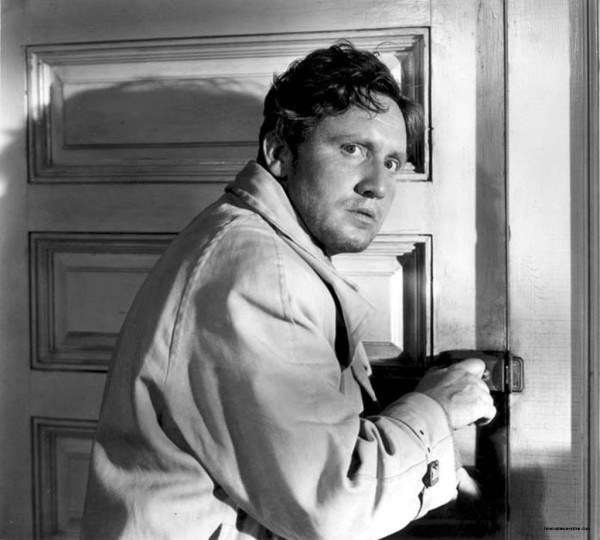
Harvey Cheyne (Freddie Bartholomew) has been spoiled rotten by his wealthy widower father (Melvyn Douglas) and terrorizes the servants and his classmates at school.  He has developed bad habits such as bribery, threats, and bullying.  These eventually get him suspended from school.  So his father takes Harvey with him on a voyage to England on business where Harvey continues to be naughty.  As the result of one of his escapades, he is swept overboard.  He is rescued by Portuguese fisherman Manuel (Spencer Tracy) in a dory and taken back to his cod fishing vessel helmed by Captain Disko (Lionel Barrymore).  Harvey continues to try to lord it over the crew but finds it gets him nowhere. Harvey eventually develops a close bond with Manuel.

This is by far the most nuanced performance I have seen Freddie Bartholomew give.  It was really great seeing him be a rotter – but a thinking rotter if you know what I mean.  This made the more vulnerable parts near the end twice as poignant.  Spencer Tracy was also splendid as the happy-go-lucky Manuel.  The scenes at sea are quite good and the music by Franz Waxman is rousing.  This is heart-tugging material and it worked on my heart exactly as intended.

Spencer Tracy won the first of his two Best Actor Oscars for his work on this film. Captains Courageous was also nominated for Academy Awards for Best Picture, Best Writing (Screenplay), and Best Film Editing.

Re-release trailer


Topper (1937)

TopperTopper poster
Directed by Norman Z. McLeod
Written by Jack Jeyne, Eric Hatch, and Eddie Moran based on the novel by Thorne Smith
1936/USA
Hal Roach Studios
Repeat viewing


Cosmo Topper: So I’m a ditherer? Well, I’m jolly well going to dither, then!

I was thoroughly entertained by this sophisticated comedy.

George (Cary Grant) and Marion (Constance Bennett) Kerby are a madcap wealthy young couple somewhat in the mode of Nick and Nora Charles but without the crime solving. One night they go on a spree and then visit the office of stuffy banker Cosmo Topper (Roland Young).  George is speeding back when the brakes on their fancy convertible fail and they crash into a tree. Their ghosts emerge from their dead corpses at the scene of the accident.  They cannot meet their maker without doing a good deed and they decide it should be showing the henpecked Topper how to have a good time.  With Billie Burke as Topper’s wife, Alan Mowbray as the Toppers’ butler, and Eugene Pallette as a hotel detective.

Topper 1

Cary Grant and Constance Bennett are just the epitome of urbane charm in this escapist fable.  Roland Young is at his whimsical best, too.  I thought it was refreshing that everybody could see the ghosts when they materialized, not just Topper.  It was just that they had to conserve their ectoplasm so didn’t materialze unnecessarily.

Clip – George, I think we’re dead

Pépé Le Moko (1936)

Pépé Le Mokopepe le moko poster
Directed by Julien Duvivier
Written by Henri Le Barthe, Julien Duvivier et al based on a novel by Henri Le Barthe
1937/France
Paris Film

Repeat viewing
112 of 1001 Movies You Must See Before You Die

Pépé le Moko: Blame it on the Casbah.

Jean Gabin made two must-see movies in 1937.  This is one of them.

The French authorities are baffled by the inability of the provincial police to capture master criminal and jewel thief Pépé Le Moko (Gabin) in Algiers.  The police explain that while Pépé remains within the walls of the Casbah where he lives with his Algerian mistress, he is perfectly safe.  Algerian detective Slimane prefers to wait for just the right moment to pounce but the French insist on moving right away.  They hatch a play to entrap Pépé using informer Régis (the superb Fernand Charpín) but he is too smart for them.  In the meantime, sensing his moment is near, Slimane introduces Pépé to the beautiful bejeweled Gaby.  With Dalio in a small but choice part as an Arab informer.

Pepe Le Moko 1

Jean Gabin is on screen for 95% of this film, virtually guaranteeing that I would adore it. He’s not just there, though.  He is very effective as the suave criminal whose haven in the Casbah is becoming a prison, including in a most convincing drunk scene.  Director Duvivier masterfully stages the action.  I love the scene where Pépé and his gang are holding and playing with the terrified Regis while they wait for the return of another character.

This was the first time I noticed how really beautiful those diamonds were.  You can see the clips Gaby is wearing on her silk blouse in the photo above.

This film was remade in 1938 by Walter Wanger as Algiers with Heddy Lammar and Charles Boyer.

Photo Slideshow with song from film

Easy Living (1937)

Easy LivingEasy-living poster
Directed by Mitchell Leisen
Written by Preston Sturges and Vera Caspary
1937/USA
Paramount Pictures

Repeat viewing


Mr. Louis Louis: I don’t know what I’m gonna do, but I better start doin it.

Writer Preston Sturges includes all the elements in Easy Living that would make the films he directed in the 40’s such classics.

International banker J.B. Ball (Edward Arnold) is in a chronically bad mood.  It gets even worse when he discovers his wife has purchased a $58,000 sable coat.  He gets so mad he throws it off the roof.  The coat lands on working girl Mary Smith (Jean Arthur) ruining her hat.  When Mary tries to return the coat to Ball, he not only lets her keep it but buys her a new hat.  A series of people misunderstand their relationship, including eventually Ball’s son John (Ray Milland), who has fallen for Mary.  With a number of the character actors who would later appear in the Sturges stock company including Franklin Pangborn, Luis Alberni, and William Demerest.

Easy Living 1Although this does not have quite the sparkle of the films Sturges directed, I enjoy it a lot. Jean Arthur is delightful and who would imagine Edward Arnold would be so accomplished at performing pratfalls.

Clip

Lost Horizon (1937)

Lost HorizonLost Horizon Poster
Directed by Frank Capra
Written by Robert Riskin based on the novel by James Hilton
1937/USA
Columbia Pictures Corporation

Repeat viewing


[first lines]Book Pages: In these days of wars and rumors of wars – haven’t you ever dreamed of a place where there was peace and security, where living was not a struggle but a lasting delight?

I think it is very hard to make a compelling movie about big ideas.  Capra tried and failed with this one in my opinion.

Diplomat Robert Conway (Ronald Coleman), who is looking forward to being named as the next British Foreign Secretary, is working to evacuate expatriates from China during a local revolution. He and a few others manage to get out on the last plane but it starts flying west instead of east and crashes in the Himalayas.  There, the group is rescued and taken to a community called Shangri La in the beautiful Blue Valley where all is moderation and peace and there is no illness or death.  The founders of the lamasery at Shangri La are devoted to collecting art and literature so it will be saved when mankind destroys itself. This is right up Robert’s alley but the other passengers, particularly Robert’s volatile brother George (John Howard), smell a plot. With Sam Jaffe as the High Llama, H.B. as a high official; Thomas Mitchell as a passenger on the lam; Edward Everett Horton as a paleontologist passenger; and Jane Wyatt as the woman who has dreamed of Robert from her haven in Shangri La.

Lost Horizon 1

This film was apparently over three hours long when it premiered (and bombed).  Capra then cut it to 135 minutes.  Over the years it was further cut until the commonly viewed version was 108 minutes.  I watched the AFI/UCLA restored version that reinstates all 135 minutes of the original release print (some with sound but no footage).  This was a noble work but, by reinstating some of the speechifying, accentuates the basic problems with the picture.  I just didn’t care about any of the characters.  All of them seemed to stand for something or other rather than being real people.  The cinematography and music are nice, though, and the action sequences are pretty good.

Clip


Favorite Films of 1936


I watched 65 films that were released in 1936.  I had a hard time singling out just ten of these!  The complete list of films I watched can be found here:  http://www.imdb.com/list/eBl1zIKZCOA/

1. Dodsworth (William Wyler)

dodsworth2.  My Man Godfrey (Gregory La Cava)

My_Man_Godfrey_1936-1024x765

3.  Show Boat (James Whale)

show-boat-1936-02-g

4.  Fury (Fritz Lang)

fury

5.  César (Marcel Pagnol)

cesar-1936-07-g

6.  The Lower Depths (Jean Renoir)

lower depths

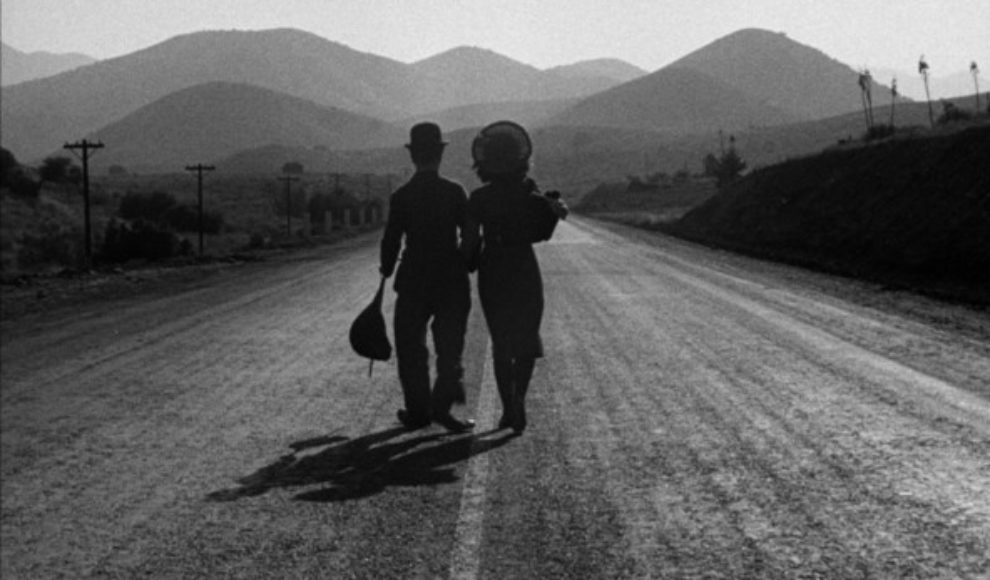
7.  Modern Times (Charles Chaplin)


modern-times-1936-charlie-chaplin-feeding-machine

8. The Only Son (Yasujiro Ozu)

the only son

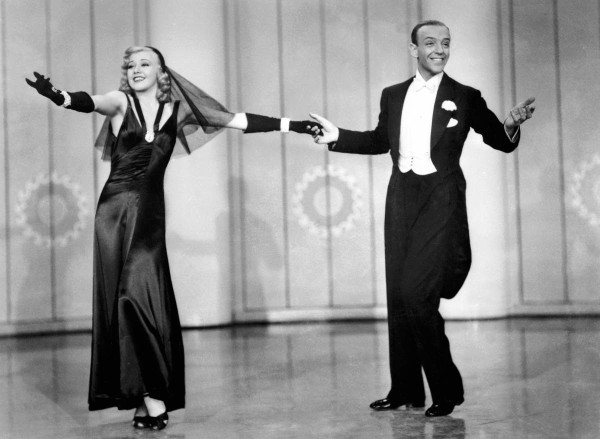
9.  Swing Time (George Stevens)

swing time 2

10.  Sisters of the Gion (Kenji Mizoguchi)

sisters of the gion

Honorable mentions to:  The Crime of Monsieur Lange; The Charge of the Light Brigade; The Prisoner of Shark Island; Mr. Thank You; Osaka Elegy; Libeled Lady and Mayerling.

Stage Door (1937)

Stage Door
Directed by Gregory La Cava
Written by Morry Ryskind and Anthony Veiller from the play by Edna Ferber and George S. Kaufman
1937/USA
RKO Radio Pictures

Repeat viewing

Jean Maitland: [to Linda Shaw as she is leaving for a dinner date] Don’t chew the bones and give yourself away!

I love me some snappy one liners and this movie about the residents at a women’s theatrical boarding house is full of them.  And what a cast!

Stage Door is not an extremely plot-driven movie but the central story concerns wealthy cultured newcomer Terry Randall (Katharine Hepburn) who moves into the Footlight Club where she is surrounded by hardened, struggling Broadway performers.  She shares a room with  wise-cracking Jean Maitland (Ginger Rogers).
Among the many colorful characters at the boarding house is serious actress Kay Hamilton (Andrea Leeds) who hasn’t worked in a year and is now going hungry while dreaming of being cast in a new play. There is a subplot about various girls’ adventures with womanizing producer Anthony Powell (Adolphe Menjou).  With Gail Patrick, Lucille Ball, Eve Arden, Constance Collier, and Ann Miller.

Stage Door 1

The plot summary above doesn’t sound too scintillating and it sort of descends into predictable melodrama at the end.  The interplay of the catty female characters is simply priceless, however.  These ladies were firing on all cylinders and apparently having a marvelous time.  I had a big smile on my face for most of the running time.  Warmly recommended.

Stage Door was nominated for Oscars for Best Picture, Best Director, Best Supporting Actress (Andrea Leeds), and Best Writing (Screenplay).

Clip – Hepburn and Rogers – new roommate


Snow White and the Seven Dwarfs (1936)

Snow White and the Seven DwarfsSnow White Poster
Directed by David Hand et al
Written by Ted Sears et al based on a story collected by the Brothers Grimm
1936/USA
Walt Disney Productions
Repeat viewing

#110 of 1001 Movies You Must See Before You Die


Doc: Why, the whole place is clean.
Grumpy: There’s dirty work afoot.

Disney spent an unheard of $1.8 million dollars on his first animated feature and every penny of it shows on the screen.

Everyone should know the fairy tale about the evil queen who tries to kill the beautiful little princess because she is the fairest in the land and how the princess escapes to live with some kindly dwarfs in the woods.

1937 - Snow White And The Seven Dwarfs - Moviestills

My affection for this film is unbounded.  This time I noticed all the little details – the faces in the furniture, for example.  One can see the overflowing creativity and joy with which this project was approached.  I also loved the cinematic thinking behind the film – all  those close-ups, tracking shots, and interesting angles.  It may just be my favorite of the Disney cartoons, though Fantasia is way up there.

Does Dopey remind anybody else of Mad Magazine’s Alfred E. Newman?

Clip – “Heigh-Ho”

On to 1937

Golden Gate Bridge 1937

Golden Gate Bridge, 1937

1937 was another year of firsts at the movies, giving viewers the first full-length animated feature, Disney’s Snow White and the Seven Dwarfs.  Snow White was the top money maker in 1938 and was also the first film with an official soundtrack, and the first film to release a motion picture soundtrack album.  The year also saw the first film pairing of Mickey Rooney and Judy Garland in Thoroughbreds Don’t Cry and the first appearance of Daffy Duck in animator Tex Avery’s “Porky’s Duck Hunt”.  Louise Ranier won the first back-to-back acting Oscar for her performance in 1937’s The Good Earth, following her Best Actress win in 1936’s The Great Ziegfeld.

Blonde bombshell Jean Harlow died at age 26 due to uremic poisoning on June 7, 1937, before the completion of filming for Saratoga with Clark Gable.  Clark Gable and Myrna Loy were crowned the King and Queen of Hollywood and Gable and Shirley Temple were the two top box-office stars.

snow-white-poster-1937

In the United States, the average cost of a new house was $4,100.00 and the average wage per year was $1,780.00.  The average unemployment rate was 14.3 percent.  A gallon of cost about 10 cents.

In the the news, the Golden Gate Bridge opened to pedestrian and vehicular traffic.  Amelia Earhart and navigator Fred Noonan disappeared after taking off from New Guinea during Earhart’s attempt to become the first woman to fly around the world.  American popular composer George Gershwin died in Los Angeles of a brain tumor, age 38.   The German airship Hindenburg burst into flame in Lakehurst, New Jersey killing dozens on board..

Guernica 2

Guernica by Pablo Picasso, completed June 1937

The rumblings of war continued to intensify in the rest of the world.  The Condor Legion of the Nazi German Luftwaffe, in support of the Francoists in the Spanish Civil War, bombed Guernica, destroying three-quarters of the town and killing hundreds.  The Soviet Union commenced one of the largest campaigns of the Great Purge to “eliminate anti-Soviet elements.”   During the seige of Nanjing, Japanese soldiers killed over 300,000 Chinese in 3 months.  This is remembered as  the “Nanking Massacre”.  Germany, in a note to Brussels, “guaranteed” the inviolability and integrity of Belgium so long as the latter abstained from military action against Germany.  In the Reich Chancellery, Adolf Hitler held a secret meeting and stated his plans for acquiring “living space” for the German people (recorded in the Hossbach Memorandum).

The 1937 movies I will try to watch are listed here:  http://www.imdb.com/list/YQrx2nQOaQg/

Hindenburg Disaster – British Pathe newsreel footage

Sisters of the Gion (1936)

Sisters of the Gion (“Gion no shimai”)
Directed by Kenji Mizoguchi
Written by Kenji Mizoguchi and Yoshikata Yoda based on the novel “The Pit” by Aleksandr Kuprin
1936/Japan
Daiichi Eiga

First viewing

O-Mocha: If we do our jobs well they call us immoral. So what can we do? What are we supposed to do?

This sad but beautiful film by Kenji Mizoguchi is quite thought-provoking.

O-Mocha (Isuzu Yamada) and Umekichi are sisters.  They barely make ends meet working as geishas in the Gion, the pleasure district of Kyoto.   The gentle Umekichi’s patron has gone bankrupt and she feels an obligation to take him in and look after him.  O-Mocha’s philosophy is that men are the enemy and should be taken for everything that can be gotten out of them. She plots to rid the household of Umekichi’s patron and find rich patrons for both of them.  Like a Japanese Scarlett O’Hara she will stop at nothing to get her way.  Ultimately, neither sister’s philosophy of life emerges victorious.

Sisters of the Gion 1

I thought this was fantastic.  Isuzu Yamada was even better than she was in Osaka Elegy and the cinematic storytelling is stunning.  Once again, there are few sympathetic characters here.  O-Mocha in particular is heartless in the extreme.  However, the film really made me think.  What, indeed, were they supposed to do?  O-Mocha finds herself in a tragic state of affairs at the end and her sister says she would not have suffered her fate if she had been nicer to men.  But O-Mocha says, even when she is broken, that being nice would mean giving in and she will never give in.  And Mizoguchi makes it clear that the nice sister doesn’t get anything for her pains either.  The system is stacked against the geisha and by implication against women in general.

And that concluded my viewing for 1936!