Oh! What a Lovely War (1969)

Oh! What a Lovely War
Directed by Richard Attenborough
Charles Chiton based on Joan Littlewood’s Theatre Workshop Production by, and the members of the original cast
1969/UK
IMDb page
First viewing/Netflix rental


Field Marshal Sir Douglas Haig: Grant us victory, O Lord, before the Americans get here.

This, Richard Attenborough’s directorial debut, is unique among legit anti-war movies in being playful, theatrical, and full of good music.

Takes place from just before the First World War to its dismal end in 1918.  The production includes many songs of the era.  These range from the sentimental and patriotic to the graveyard humor of the songs sung in the trenches.  The style moves fluidly between frankly stylized theatrical sets and presentation to vivid realism several times.  Death is portrayed by the appearance of red poppies.  Not a drop of blood is shed.

The plot, such as it is, has at its center the patriotic Smith family and their three enlistment-age sons.  In Britain’s homes, streets and popular culture, there is great enthusiasm and enlistment is seen as heroic. The boys eagerly sign up and only too soon are exposed to the horrors of war.

Maggie Smith sings “I’ll Make a Man Out of You” while transitioning from an elegant chanteuse to a common prostitute.

Throughout the film vingnettes follow the fates of our heroes while teaching bigger history lessons along the way.  With performances by:  Michael, Corin, and Vanessa Redgrave; Ralph Ricardson; Ian Holm; Edward Fox; Dirk Bogarde; Jack Hawkins; John Gielgud; Kenneth More; Laurence Olivier; Susannah York; and Maggie Smith among others

I liked this quite a lot.  The unique storytelling style worked well with the equally unique staging.  The songs, which are all original to the period, are wonderful.  The relevance to the Vietnam War raging at the time was laid on with a very light touch, I thought.  Recommended.

Topaz (1969)

Topaz
Directed by Alfred Hitchcock
Written by Samuel A. Taylor from the novel by Leon Uris
1969/US
IMDb page
First viewing/Netflix rental


Michele Picard: Oh, the Cubans. I love the Cubans. They are so wild!

Oh, how the mighty have fallen!  Any one in search of the Master’s suspense or style will be sorely disappointed.

The story is set during the 1962 Cuban Missile Crisis.  The plot is quite convoluted.  Any way, a Russian defector tells the CIA about his country’s plans to deploy medium-range ballistic missiles in Cuba.  He also informs CIA agent Michael Nordstrom (John Forsythe) that the USSR has infiltrated French Intelligence and is leaking secret NATO documents to the KGB.  Nordstrom enlists French intelligence agent Andre Devereaux to ferret out the mole.  Devereaux has special insider access at the highest levels of Castro’s regime.  He also has a very troubled home life and is having an affair with a double agent.

A lot of skullduggery and a little romance ensues.  The investigation takes Deveraux to the highest levels of the French Embassy in Washington.  With John Vernon as a revolutionary and Phillippe Noiret and Michel Piccoli as French diplomats.

Poor Hitch got a decent amount of money to make this movie but didn’t attract one single Hollywood star.  Maybe the studio had premonitions of disaster — the film was a box-office flop.

The production seems to have been an unhappy one.  As a spy thriller it is mediocre.  It has just lacks what made Hitchcock great – his style, his mastery of suspense, and his black humor.  The script didn’t do him any favors.  I didn’t care about the characters and even less about the McGuffin mole.  Recommended to Hitchcock completists only – like me.


Friends and Readers

I don’t have as good a reason as the above but I’m smiling today because people can get on my blog and my comments are now working!  I have missed you a lot.  Hope to hear from you again.

No movie today.

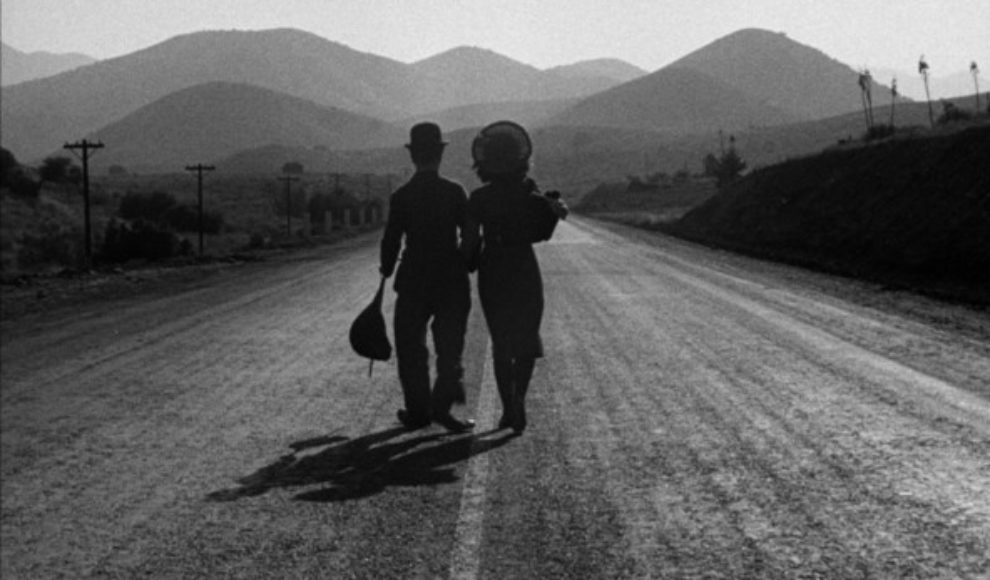
To the velvet voice of Nat King Cole and clips of the Little Tramp.

Double Suicide (1969)

Double Suicide (Shinjû: Ten no Amijima)
Directed by Masahiro Shinoda
Written by Masahiro Shinoda, Toru Takemitsu, and Taeko Tomioka from a play by Monzaemon Chikamatsu
1969/Japan
IMDb page
First viewing/Criterion Channel

I think love isn’t doomed, of course, but in real life, love doesn’t always work out. — Makoto Shinkai

Classical Japanese tragedy is elevated by Shinoda’s sublime and unique filmmaking style.

The story is set in the 18th Century.  Jihei is a samurai.  He has a sweet and adoring wife named Osan and two small children.  Koharu is a courtesan.  She is more or less a slave who is on sale to the first man who can meet her price.  Jihei and Koharu are having an affair.

Both our principals know their love is doomed.  They agree to commit double suicide in the event that Koharu is sold to another.  Osan is desperate to get her husband back. There can be no happy ending for this Japanese Romeo and Juliet.

The plot is straight-forward.  The filmmaking is definitely not.  The film starts off with people preparing to perform the story as a puppet drama, its traditional format.  Shortly thereafter, the real actors start.  The theatrical elements are captured in the art direction.  Surfaces are covered with scenes looking like old Japanese woodprints or calligraphy and some of walls look like modern art drip paintings.  The B&W cinematography is sensational.  I enjoyed this.

Opening

Easy Rider (1969)

Easy Rider
Directed by Dennis Hopper
Written by Dennis Hopper, Peter Fonda, and Terry Southern
1969/US
IMDb page
First viewing/Amazon Instant
One of 1001 Movies You Must See Before You Die

Billy: That’s what it’s all about, man, I mean, like, you know. You go for the big money, man, and you’re free! You dig?
Captain America: We blew it. Good night, man.

Somehow I waited this long to see this film.  It did not disappoint my expectations.

Wyatt – AKA Captain America (Peter Fonda) = and Billy are best buds and spend much of their time smoking buds as well.  They sell cocaine to Mexicans at a handsome profit. Their next goal is to reach New Orleans in time for the start of Mardi Gras the following week.  In a haze of good vibes and drugs, they drive though the beautiful Southwest.

Their fortunes turn sour when they reach the American South.  Red-necks have no love for drugged-out hippie long hairs.  Wyatt and Billy are forced to spend a night in jail.  There they meet George Hansen (Jack Nicholson) who is drying out from his latest drunk. George, a lawyer,  evidently comes from money and is treated with deference. Nonetheless, George is game for whatever is thrown at him and experiences a new world as the journey continues.

I have been following Jack Nicholson’s career since his appearance in The Cry Baby Killer (1958). The intervening years saw him act in many B genre pictures, lots of them produced and/or directed by Roger Corman.  He was a pleasant juvenile.  He is in this picture for seventeen minutes – during these he demonstrates an astonishing depth and star quality that are miles ahead of his previous work. One of the great breakout performances.

Other positives are Lazlo Kovac’s  gorgeous cinematography of desert vistas and the awesome soundtrack featuring the druggie hits of the era.   I’m not as enamored of the script.  Nonetheless, this was a seminal film of the era and earns its must-see status.

Easy Rider was nominated  by the Academy for Best Supporting Actor (Nicholson) and Best Writing, Story and Screenplay Based on Material Not Previously Published or Produced.

“Born to be Wild” begins at approx 1:25

Boy (1969)

Boy (Shonen)
Directed by Nagisa Oshima
Written by Tsutomu Nomura
1969/Japan
IMDb page
First viewing/Criterion Channel


Everything will change. The only question is growing up or decaying, — Nikki Giovanni

Nagisa Oshima gives something different from the usual sex-fueled violence fest.  His technical mastery is evident throughout this downer of a film.

Takao Omura is an abusive con-artist with a wife and two sons, Toshio aged around ten and the other around three.  The family’s scam is for the wife to thrown herself by the side of a moving car and feign being struck.  Takao then extorts money from the driver by threatening to call the police.  The ten-year-old later switches roles with his mother.  Both Mom and Toshio sustain real injuries in the process.

The real injury is to Toshio’s soul.  Neither parent is loving in any way.  Toshio dreams of becoming an alien from Andromeda sent to earth to kill all evil-doers.

I am always impressed by Oshima’s technique.  It reminds me of color work films of a much more recent vintage.  I’m not too keen on abused child movies in general so that was a minus.

Bob & Carol & Ted & Alice (1969)

Bob & Carol & Ted & Alice (1969)
Directed by Paul Mazursky
Written by Paul Mazursky and Larry Tucker
1969/US
IMDb page
Repeat viewing


Ted Henderson: First, we’ll have an orgy. Then we’ll go see Tony Bennett.

This sex comedy for the late 60’s could have been made at no other time.  It hasn’t aged well but is interesting as a time capsule of a time when the hippie ethic – at least the free love and drugs part – crossed over into the liberal middle-class.

Bob (Robert Culp) is a laid back documentary film maker.  His best friend Ted (Elliott Gould) is an uptight lawyer  Their beautiful wives Carol (Natalie Wood) and Alice (Dyan Cannon) are the kind that spend much of their time shopping, playing tennis, and having lunch.

Carol and Bob spend a weekend at a spa where they undergo New Age couples therapy.  When they come back they are expressing themselves like mad and start experimenting with extra-marital liaisons which they freely tell Ted & Alice about.  Their friends are both shocked and Alice is particularly disturbed by this revelation.

The foursome decide to spend a weekend in Las Vegas.  Alice decides to see if Bob and Carol will put their money where their mouths are.

I saw this on original release and remembered lots of it.  What seemed at the time to be pretty groovy comes across now as phony, which may even be what Mazursky intended.  My favorite part is the song.  Wonder why it wasn’t nominated.

Gould and Cannon steal the picture out from under the stars and were rewarded by Best Supporting Oscar nominations.  The film was also nominated for Best Writing, Story and Screenplay Based on Material Not Previously Published or Produced and Best Cinematography.

Clip – “What the World Needs Now Is Love” – written by Bert Bacharach & Hal David, sung by Jackie DeShannon

The Passion of Anna (1969)

The Passion of Anna (En passion)
Directed by Ingmar Bergman
Written by Ingmar Bergman
1969/Sweden
IMDb page
First viewing/Criterion Channel


Andreas Winkelman: It’s terrible not being fortunate. Everybody thinks they have the right to decide over you. Their benevolent contempt. A momentary desire to trample something living.

Sorry Ingmar, existential dread is not a good match for lockdown, police brutality and riots.

Four lonely people live on an isolated island in the Swedish Archipelago.  Divorcee Andreas Winkleman (Max von Sydow) lives as a recluse and bemoans his past humiliation.  Anna Fromm (Liv Ullmann) is a crippled widow who drops by to use Andreas’s phone.  Her deceased husband was also named Andreas adding to the confusion for this viewer.  Andreas and Anna begin living together but never really connect.

Elis Vergurus (Erland Josephson) is a cynical architect whose current work is a cultural center he says will be a “mausoleum to meaninglessness”.  His wife Eva (Bibi Andersson) suffers her own kind of emptiness.  These four couple and de-couple while some kind of a maniac mutilates the animals on the island.  Bergman breaks the fourth wall throughout with interviews of the actors about how they see their characters.  Snippets from his film Shame (1968) are seen in dream sequences.

Bergman and Sven Nyquist cannot help making a beautiful looking movie and this ensemble cast can be no less than flawless.  I could have done without the gimmicks. Many people love this movie but it is just too bleak and formless for me.


The Honeymoon Killers (1969)

The Honeymoon Killers
Directed by Leonard Kastle and Donald Volkman
Written by Leonard Kastle
1969/US
IMDb page
First viewing/Amazon Instant


Mother: [shouting at Martha from the window of the rest home she’s been dumped at] Goddamn you, goddamn you! I hope you end up like this! I hope someone does this to YOU!

i loved this darkly comic take on the classic ‘lovers-on-the-lam’ trope of film noir.

This is the “true story” of Raymond Fernandez (Tony Lo Bianco) and Martha Beck (Shirley Stoler), who are suspected to have killed more than 20 women in 1947 and 1949 when they were known as the “Lonely Hearts Killers”.  Raymond is a con-artist who makes his living ripping off wealthy widows he meets through newspaper ads.  Martha is an embittered, overweight nurse who advertises in the lonely-hearts column.  Somehow, they make the perfect couple.

Martha is perfectly willing to put up with Tony’s serial weddings so long as she can go along for the ride as his sister.

The director says that this was his response to Bonnie and Clyde (1967) but it reminds me more of noir films of the early 50’s.   All of it seemed fairly tongue in cheek and there is very little graphic violence.  I liked it.

The Learning Tree (1969)

The Learning Tree
Directed by Gordon Parks
Written by Gordon Parks from his novel
1969/US
IMDb page
First viewing/Amazon Prime

“The guy who takes a chance, who walks the line between the known and unknown, who is unafraid of failure, will succeed.”
Gordon Parks

The first major feature by an African-American director is a passionate story of his struggles as a black teenager in the rural American South.

Newt (Kyle Johnson) is an African-American high school student with dreams of going to university.  His mother, Sarah, works for the local judge.  They live in a small town t which has at least nominally integrated its schools but that continues to suffer from blatant individual and institutionalized racism.  Newt hangs out with of a group of friends his age.  One of these, Maurice, is the extremely angry son of a brutal alcoholic and has for some reason has sworn eternal hatred for Newt.

Newt falls for the beautiful, sweet new girl in town.  Their happiness is soon marred by the unwanted attentions of the son of the judge.  If Newt didn’t have bad luck he would have no luck at all and things continue to go sour throughout.  The third act is taken up with a courtroom drama at which Newt must testify.

Parks does a good job with his cast of unknown actors and Burnett Guffey’s color cinematography is splendid.  It’s a bit of a misery sandwich but the misery is earned, I think.  Recommended to those interested in the subject matter.