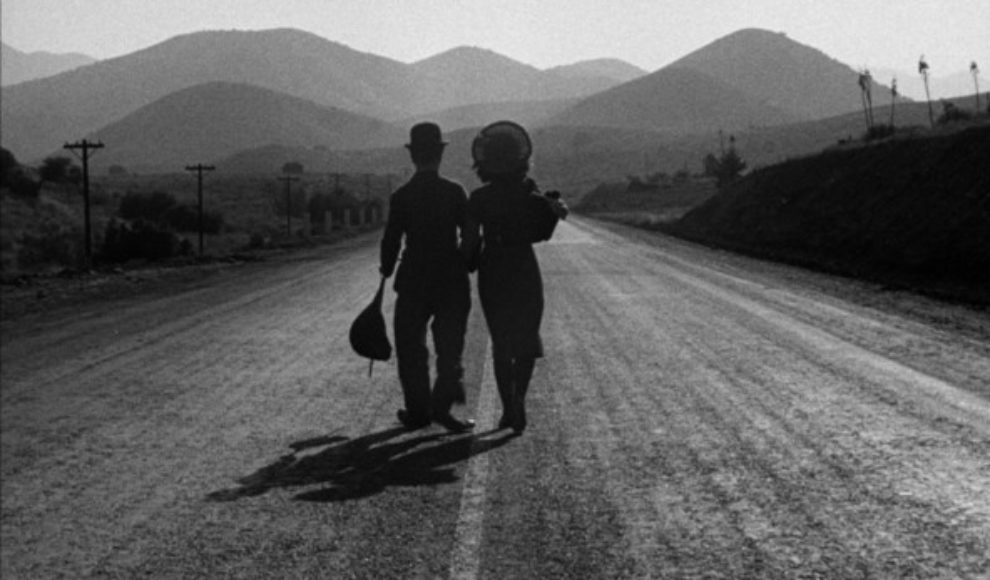
Mr. Klein (1976)

Mr. Klein
Directed by Joseph Losey
Written by Franco Solinas and Fernando Merandi
1976/France
IMDb page
First viewing/Criterion Channel


Films can illustrate our existence . . . they can distress, disturb and provoke people into thinking about themselves and certain problems. But NOT give the answers. — Joseph Losey

This is a beautifully made and acted film.  Unfortunately, I’m not a big fan of unsolved mysteries, especially those with so many distressing images of the persecution of Jews.

The film is set in 1942 Paris, France.  Robert Klein (Alain Delon) is an art dealer who lives a life of debauched luxury with his concubine,  Currently, he is profiting enormously from buying artwork offered by fleeing Jews at a deep discount.  One day, a copy of a Jewish newspaper is delivered to his door.

The police have the subscription list.  Robert goes to the police department and insists that a mistake has been made.  He is a life-long French Catholic.  The police are skeptical. Robert is required to provide certification that both sets of grandparents were not of Jewish blood.  Robert becomes convinced that there is a second Robert Klein who is trying to frame him.

So begins Robert’s investigation which takes him all over Paris and into the French countryside. He becomes completely obsessed with locating his doppleganger.  Too obsessed.  With Jeanne Moreau in a small role as a lover of the “other” Robert Klein.

My plot description does not adequately convey the twists and turns of this movie. There were many points where I was convinced that our Robert Klein and the other Robert Klein were the same person.  At other points it is equally clear the other Klein is setting up our Klein to take the fall for his Jewishness.  So, the story is a mystery within a mystery with a devastating unhappy ending.  I was certainly in no mood for this.

Anyway, Losey’s direction is spot on, the film looks great, and this has got to be one of Delon’s finest performances.  Delon produced the movie so it clearly meant a lot to him.  If the plot sounds intriguing, you might as well give it a chance.  There are parts that are not easy to look at.  (Such as the beginning where a naked woman is being examined like an animal to determine her “race”.)

Restoration Trailer

All the President’s Men (1976)

All the President’s Men
Directed by Alan J. Pakula
Written by William Goldman from a book by Carl Bernstein and Bob Woodward
1976/US
IMDb page
Repeat viewing/Amazon Prime rental
One of 1001 Movies You Must See Before You Die

John Mitchell: [on phone] All that crap you’re putting in the paper? It’s all been denied. You tell your publisher, tell Katie Graham she’s gonna get her tit caught in a big wringer if that’s published. Good Christ, that’s the most sickening thing I ever heard.

A true story that is as suspenseful as any thriller even when you know the ending.

The film begins when a security guard detects a break-in at the headquarters of the Democratic National Party at the Watergate complex in Washington, D.C.  He calls the police and five burglars are apprehended.  Papers on the burglars led to the arrests of Howard Hunt and G. Gordon Liddy both of whom had connections to the White House and the Committee to Re-Elect the President.

Carl Bernstein (Dustin Hoffman) and Bob Woodward (Robert Redford) are rookie reporters for The Washington Post.  Woodward is assigned to cover the arraignment of the men and discovers that high-powered attorneys are interested in the case.  This arouses his suspicions and he follows up.  Eventually Bernstein is assigned to partner with Woodward on the story.

The two form a powerhouse team after some initial friction.  They are getting nowhere when Woodward contacts an official that comes to be known as “Deep Throat” (Hal Holbrook). He speaks to him only on the condition that he is not quoted even as an anonymous source.  His advice is to “follow the money”.  This the two reporters do.  It is a frustrating but fascinating journey through Washington bureaucracy.  Most people are unwilling to talk but unwittingly make the reporters even more suspicious.

Eventually, the story gets so big that Washington Post Executive Editor Ben Bradlee (Jason Robards) is encouraged to put somebody more seasoned on the case.  He declines to do so.  In the end, a couple of honest insiders speak up and their info leads all the way to the top. The rest is history.  With Jane Alexander as a bookkeeper and Jack Warden and Martin Balsam as editiors.

I saw this in the theater when it came out.  It holds up beautifully all these years later.  It was so interesting to see all the location shots of Washington, D.C. where I was to work many years later.  The thoroughly engrossing screenplay is aided by a wonderful cast and meticulous production design.  Recommended.

All the President’s Men won Academy Awards in the categories of Best Supporting Actor (Robards); Best Adapted Screenplay; Best Art Direction-Set Decoration; and Best Sound. It was nominated in the categories of Best Picture; Best Supporting Actress (Alexander); Best Director; and Best Film Editing.

The Bad News Bears (1976)

The Bad News Bears
Directed by Michael Ritchie
Written by Bill Lancaster
1976/US
IMDb page
Repeat viewing/Amazon Prime rental

Engelberg: You’re not supposed to have open liquor in the car. It’s against the law.
Coach Morris Buttermaker: So is murder, Engleberg. Now put that back before you get me in real trouble.

Gee, I love this movie!  Along with everything else, I think this may be Walter Matthau’s best performance.

Morris Buttermaker (Matthau) is a beer-guzzling pool maintenance man.  In the old days, he was a second-rate minor league baseball player.  A local politician sued for the right to add an additional team to the area’s ultra-competitive Little League, one that would allow misfits who were never chosen to play.  He hires Buttermaker as coach.

The team is hopeless and Buttermaker is in it strictly for the money.  He half-heartedly trains the boys.  But something about the condescending attitude of the gung-ho parents and coaches of the other teams gets him interested in helping his hapless charges when the season starts.  He bribes Amanda (Tatum O’Neal), whom he taught to throw a mean curve ball when he was dating her mother, to pitch for the team.  Eventually she entices the local “bad boy” (Jackie Earle Haley), a cigarette-smoking motor-bike riding twelve-year old with a powerful swing, to join.

The fortunes of the team improve.  Will Buttermaker succumb to the winning-is-everything attitude of the other coaches?  And how will the Bears perform in their last game?

One need have no interest in baseball to enjoy this movie.  One just needs to remember what it was like to be a child.  I love it because all the kids have so much personality and the script is hilarious with plenty of heart. And Matthau is absolutely superb.  Warmly recommended.


Network (1976)

Network
Directed by Sidney Lumet
Written by Paddy Chayefsky
1976/US
IMDb page
Repeat viewing/Netflix rental
One of 1001 Movies You Must See Before You Die

Howard Beale: Things have got to change. But first, you’ve gotta get mad!… You’ve got to say, ‘I’m as mad as hell, and I’m not going to take this anymore!’ Then we’ll figure out what to do about the depression and the inflation and the oil crisis. But first get up out of your chairs, open the window, stick your head out, and yell, and say it: “I’M AS MAD AS HELL, AND I’M NOT GOING TO TAKE THIS ANYMORE!”

In 2021, this scathing critique of the TV ratings game seems less outrageous than prescient.

Howard Beale (Peter Finch) has been the evening news anchor at UBS (the “fourth network”) for eleven years.  The network is under new ownership by Communications Corporation of America (CCA).  CCA executive Frank Hackett (Robert Duvall) will no longer tolerate low ratings for any program, including the news.  News Bureau Chief Max Schumacher (William Holden) has the task of giving Howard, an old friend, two weeks notice.  The next night Howard gets on the air and announces his retirement and his intention of committing suicide on the air a week later.  He is summarily fired but soft-hearted Max allows him to make a formal farewell to his audience.  Howard, who has been hearing voices, takes advantage of this opportunity to launch into his famous populist rant and urge his audience to express their pent-up rage audibly.  When shouts are heard coming from windows all over America, the executives know they have a hit on their hands.  Max is disgusted.

In the meantime, a new ratings-obsessed entertainment programmer, Diana Christensen (Faye Dunaway), is in town.  She successfully pitches the idea of having a part reality TV, part drama called the “Mao Tse Tung Hour”.  A domestic terrorist organization will stage a real “happening” and the network will create a drama based on the event.  Diana also manages to move Howard from the news division to the entertainment division to capitalize on his rabid following.   He is now billed as the mad prophet of the airways.

Despite his contempt for Diana’s ideas about television, Max cannot escape his attraction to the much younger woman.  For Diana, the affair is strictly sexual.  She is all business all the time.  Meanwhile, Howard’s madness intensifies.  When he protests CCA’s acquisition by the Saudis, the management tries a couple of different tactics to stop him. With Beatrice Straight as Max’s wife and Ned Beatty as the CEO of CCA.

Network looked into the future, a future that looked far-fetched at the time but seems increasingly realistic as the years have gone on.  Paddy Chayefsky’s brilliant script anticipated both reality TV and sensationalist, politicized news programming.  Are we but one step away from the Q-Anon Show?  All the components of filmmaking come together to create something that perfectly achieves its intentions.  Highly recommended.

Network won Academy Awards in the Categories of Best Actor (Finch); Best Actress (Dunaway); Best Supporting Actress (Straight); and Best Original Screenplay.  It was nominated in the categories of Best Picture; Best Actor (Holden); Best Supporting Actor (Beatty); Best Director; Best Cinematography; and Best Film Editing.

Kings of the Road (1976)

Kings of the Road (Im Lauf der Zeit)
Directed by Wim Wenders
Written by Wim Wenders
1976/West Germany
IMDb page
First viewing/Criterion Channel

Originality now is rare in the cinema and it isn’t worth striving for because most work that does this is egocentric and pretentious. What is most enjoyable about the cinema is simply working with a language that is classical in the sense that the image is understood by everyone. I’m not at all interested in innovating film language, making it more aesthetic. I love film history, and you’re better off learning from those who proceeded you. — Wim Wenders

The final film in Wim Wenders’ “Road Trilogy” deals with existential loneliness and the death of cinema.  Sounds dreadful but it definitely works.

Bruno Winter (Rudiger Vogler) is a laid-back movie projector repair man, who drives from one small town’s decrepit theater to another in a huge old bus.  The current journey takes him through towns on the border between West and East Germany.

One day, he witnesses Robert Lander (Hanns Zischler) drive his VW beetle into a lake.  At the last moment, Robert changes his mind and swims to shore with one small suitcase. Bruno helps Robert dry off and offers him a sleeping place for the night.  Slowly there is a wordless agreement that Robert will stick around for the ride.  We learn later that Robert has just split up with his wife.

The two drive leisurely to the soundtrack of rock ‘n’ roll music.  At one stop, Bruno meets a woman who sells tickets at a porno theater he is servicing and has a one-night stand with her.  Bruno is quite willing to make detours and both men eventually visit their childhood homes.  Robert visits his father and forces him to finally listen to him and his views on how he never listened to his wife.  Bruno visits the now empty home he grew up in.

The two encounter a man whose wife crashed their car into a tree and killed herself.  They stay with him until the car can be towed.  Finally the journey is interrupted by the border. The two get drunk and indulge in some boozy soul-searching.

This is definitely a slow burn and the viewer spends a lot of time waiting for something to happen.  But the journey itself is interesting and there is a lot of wry humor to be enjoyed. The movie theaters that Bruno stops at all contain memorabilia of the Golden Age of Hollywood now lost and replaced by porn or sensationalist fare.  At the last theater, the proprietor says she is keeping her closed theater in working order in case movies that are worth seeing get made again.  The film probably would reveal even more on a rewatch. Fans of action need not apply but if you are looking to experience a leisurely road trip with some important points to make, I can recommend.

Taxi Driver (1976)

Taxi Driver
Directed by Martin Scorsese
Written by Paul Schrader
1976/US
IMDb page
First viewing/Amazon Prime rental
One of 1001 Movies You Must See Before You Die

Travis Bickle: You talkin’ to me? You talkin’ to me? You talkin’ to me? Then who the hell else are you talking… you talking to me? Well I’m the only one here. Who the fuck do you think you’re talking to? Oh yeah? OK.

Martin Scorsese’s first masterpiece is as relevant now as it was then, sad to say.

Travis Bickle (Robert De Niro) is a lonely Vietnam veteran who can’t sleep at night.  So he gets a job driving a cab for 12 hours a night.  Already preoccupied with the sin and corruption of New York City, his job as cabbie just provides him with more evidence that some kind of avenging rain should come and wash the trash, human and otherwise, off the streets.  Despite his hatred for vice, he spends much of his time in porno theaters, where he does not seem to be watching the movies.

His one vision of innocence comes when he sees Betsy (Cybill Shepherd) walking down the street in a white dress.  Betsy is a campaign worker for Senator Charles Palantine who is running in the primary for the Presidential nomination (party unstated).  Travis drops into NYC campaign headquarters and chats Betsy up.  Intrigued by his crazy adoration, she agrees to have coffee with him.  Then she agrees to a date.  He takes her to a porno movie and she drops him like a hot potato.

Travis gradually becomes more unhinged.  He decides it is he that has the mission to clean up the dirty city,  He encounters Iris (Jodie Foster),  a twelve-year-old prostitute, and it becomes his mission to save her as well.  The only way he can get to her is to pay so he does and gives her a lecture on how she should go home and have a normal teenage life.  Iris agrees to meet Travis for coffee and a conversation in which it is clear that the teenage hooker has it way more together than Travis does.

As part of his mission, Travis acquires an arsenal of weapons.  He spends much of his off-time at shooting ranges or at home practicing his draw.  He continues on his downwards spiral.  I will stop here except to note we get a bloody climax and a very interesting denoument.  With Albert Brooks in his film debut as a campaign worker; Harvey Keitel as a pimp; and Peter Boyle as a fellow cabbie.

This has it all: brilliant acting; a scathing and powerful script; stunning visuals; and a fantastic score by Bernard Herrmann. Ticks all the buttons for a time not so unlike our own: loneliness, isolation, paranoia, demagogues, ideological violence, political violence,  angry white men; etc., etc.  Not for the faint of heart but highly recommended.

Taxi Driver was nominated in the categories of Best Picture; Best Actor; Best Supporting Actress (Foster); and Best Music, Original Score.

Trailer


Rocky (1976)

Rocky
Directed by John G. Avildsen
Written by Sylvester Stallone
1976/US
IMDb page
Repeat viewing/Amazon Prime rental
One of 1001 Movies You Must See Before You Die

Apollo’s Trainer: He doesn’t know it’s a damn show! He thinks it’s a damn fight!

Americans have always loved a good rags-to-riches story.  Sylvester Stallone came up with a perfect one to celebrate the country’s 200th birthday.

Rocky Balboa (Stallone) is a small-time boxer on the Philadelphia scene.  He wins a few and he loses a few.  His day job is as a collection agent for a loan shark. He is scary enough physically to coerce payment but at heart he is a softie.  He has a crush on mousey pet store salesgirl Adrian (Thalia Shire).  He tries to chat her up but she is too shy to respond.  Rocky is also friends with her loser brother Paulie (Burt Young).  His trainer Mickey (Burgess Meredith) throws the clothes from his locker at the gym out into the street to give the locker to a better prospect.

Concurrently, heavyweight champion Apollo Creed (Carl Weathers) is determined to have a championship bout in Philadelphia on July 4, 1976 as a kind of bicentennial celebration. His intended opponent is injured and his management is unable to find a worthy opponent for that date.  Undeterred, Apollo flips through some photos and decides that Rocky “The Italian Stallion” would make an appealing underdog for the fight.  Apollo is basically Mr. Show Business and figures he will not even have to go into training.

Rocky, on the other hand, takes the matter deadly seriously.  Mickey is suddenly anxious to train him once again.  We watch as Rocky trains and visibly becomes more and more fit.  He also wins the heart of Adrian.  Paulie, feeling threatened with the loss of his live-in housekeeper, thinks this is his opportunity to cash in.  He provides access to the carcasses in the meat packing establishment he works at for use as punching bags and brings in the press.

The climactic fight is thrilling and unforgettable.  Well, actually I did forget the result, so I won’t spoil it here.  When I left the theater on original release, I felt pumped up with victory.

Rocky is a simple story that has been told umpteen times throughout film history.  Between the writing, directing, and acting, it works and it works perfectly.  And that music! Highly recommended.

Rocky won Academy Awards in the categories of Best Picture; Best Director; and Best Film Editing.  It was nominated in the categories of Best Actor; Best Actress; Best Supporting Actor (Meredith); Best Supporting Actor (Young); Best Writing, Screenplay Written Directly for the Screen (Stallone); Best Sound; and Best Music, Original Song (“Gonna Fly Now”).

Trailer

Clip

Harlan County U.S.A. (1976)

Harlan County U.S.A.
Directed by Barbara Kopple
1976/US
IMDb page
Repeat viewing/Criterion Channel

Where it’s dark as a dungeon, damp as the dew
Danger is double, pleasures are few
Where the rain never falls, the sun never shines
It’s a dark as a dungeon way down in the mine – Lyrics by Merle Travis

Barbara Kopple gives us the ultimate in political documentaries, with lots of Appalachian culture as a bonus.

The film depicts the 1973-74 strike by miners at the Brookside Mine in Harlan County, Kentucky against Eastover Mining Company and its parent Duke Power.  A strike in the 1930’s had resulted in the county being called “Bloody Harlan” for the violence involved.

This strike was also violent and seemingly everything was lined up against the workers. The local police force and judge were solidly behind the management.  People on the picket line were arrested, some hit by baseball bats, shot at, and struck by cars. Many of the most fervent and effective supporters of the strike were miners’ wives.

We also get inside the United Mine Workers union, where J.A. Boyle had held sway for years. He was known for caving in to management.  His opponent Joseph Yablonski was murdered in 1969.  Boyle was later convicted for ordering this crime.  In 1972, Arnold Miller ran as a reform candidate and won.  He  said that the rank and file would vote on any new contracts.  This promise was short-lived.

The strike lasted 13 months.  The murder of a young striking miner by strikebreakers was the catalyst that brought the two sides back to the negotiating table.

Along the way, we get some pretty fabulous mountain music written to inspire the strikers. We also learn about black lung disease.  Management claimed that it had not been scientifically shown the inhaling coal dust harmed miners’ lungs!  The company would not compensate a worker disabled by black lung until the diagnosis was confirmed by an autopsy!  We go inside the abysmal company housing provided to the workers.  The houses are little better than shacks and lack electricity or running water.

I can’t imagine worse work than toiling in a coal mine.  The strikers let Kopple into their lives and the result was a documentary as compelling as any fiction film.  I love a good documentary and this is one of the very best.  Highly recommended.

Harlan County U.S.A. won the Oscar for Best Documentary, Feature


1976

The “sleeper” film Rocky made its debut. It was filmed in twenty-eight days with a budget of about $1 million, and ultimately grossed well over $100 million.  Sylvester Stallone supposedly wrote the script for the sports comeback film over a three-day period.  He became the third person in Oscar history to be nominated in a single year as both an actor and as a screenwriter.  The other two were Charles Chaplin for The Great Dictator (1940), and Orson Welles for Citizen Kane (1941).

The Steadicam (a stabilizing device for hand-held cameras), developed by Garrett Brown, was used for the first time in director Hal Ashby’s Bound for Glory,  for which DP Haskell Wexler won the Oscar for Best Cinematography.  Marathon Man and Rocky also used the new device.

The first VHS cassettes and players, which cost about $885 each, were released by JVC in October. The system was designed to compete with Sony’s Betamax magnetic tape system, with a longer recording time.  By 1987, VHS had acquired about 90-95% of the consumer market. The new technology was considered a threat to the film industry but in subsequent years was re-evaluated as a boon when studios discovered videos to be a major source of income. By 1986, the home video industry’s annual gross rentals exceeded rentals paid for films by theatres.

For his performance in Network, Peter Finch became the first person to win a posthumous Best Actor Oscar.  Beatrice Straight won a Best Supporting Actress Oscar, the shortest role to win an acting Oscar, for her less than eight minutes of screen time in Network .  

Futureworld (1976) featured the first use of 3D CGI in a live-action film – it was a brief view of a computer-generated face and hand.

Sal Mineo was murdered.  We also lost Roger Livesy, Lee J. Cobb, Busby Berkeley, Luchino Visconti, Howard Hughes, Carol Reed, Fritz Lang, Alistair Sim, Dalton Trumbo, Edith Evans, Jean Gabin, and Rosalind Russell.  Albert Brooks, Amy Irving, Jessica Lange, Brooke Shields, and Deborah Winger made their film debuts.

“Silly Love Songs” by Wings spent 5 weeks atop the Billboard Charts making it the number one pop single of the year.  Humbolt’s Gift by Saul Bellow won the Pulitzer Prize for Literature.  A Chorus Line by Michael Bennett etal won for Drama.  Time Magazine’s Man of the Year was Jimmy Carter.

The United States celebrated 200 years of independence.  Jimmy Carter was elected President.  Steve Jobs and Steve Wozniak founded Apple.  The Viking 1 successfully landed on Mars. The first recognized outbreak of Legionnaires’ disease killed 29 at the American Legion convention in Philadelphia.

After the death of former leader Mao Zedong in September, Hua Guofeng was announced as the new leader of China. One of Hua Guonfeng’s first tasks was ordering the arrest of the so-called Gang of Four which consisted of party officials accused of treasonous actions.  Their arrest and Hua Guofeng’s leadership lead to the end of the Cultural Revolution.

Palestinian extremists hijacked an Air France plane in Greece with 246 passengers and 12 crew. They take it to Entebbe, Uganda, where Israeli commandos stormed the plane freeing the hostages. The first Concorde flights took off.

*************************************

The list of 1976 releases I will select from is here.  Suggestions or warnings will be appreciated!


1975 Re-cap and Favorite Films

My viewing for 1975 was truncated by real life.  I viewed 29 films that were released in 1975.  A list can be found here.   From the 1001 Movies List, I did not watch The Mirror (unavailable); Salo (no way in hell); India Song; Deewar; and Jeanne Dielman.  I have Cria Cuervos listed as a 1976 film. My Favorites List is in no particular order, though the three I rated 10/10 top the list.

One Flew Over the Cuckoo’s Nest – Directed by Milos Forman

Jaws – Directed by Steven Spielberg

Seven Beauties – Directed by Lina Wertmuller

The Story of Adele H. – Directed by Francois Truffaut

Mother Kusters Goes to Heaven – Directed by Ranier Werner Fassbinder

Dog Day Afternoon – Directed by Sidney Lumet

The Man Who Would Be King – Directed by John Huston

Grey Gardens – Directed by Ellen Hovde, Albert Maysles, David Maysles, and Muffie Meyer

The Magic Flute – Directed by Ingmar Bergman

Barry Lyndon – Directed by Stanley Kubrick