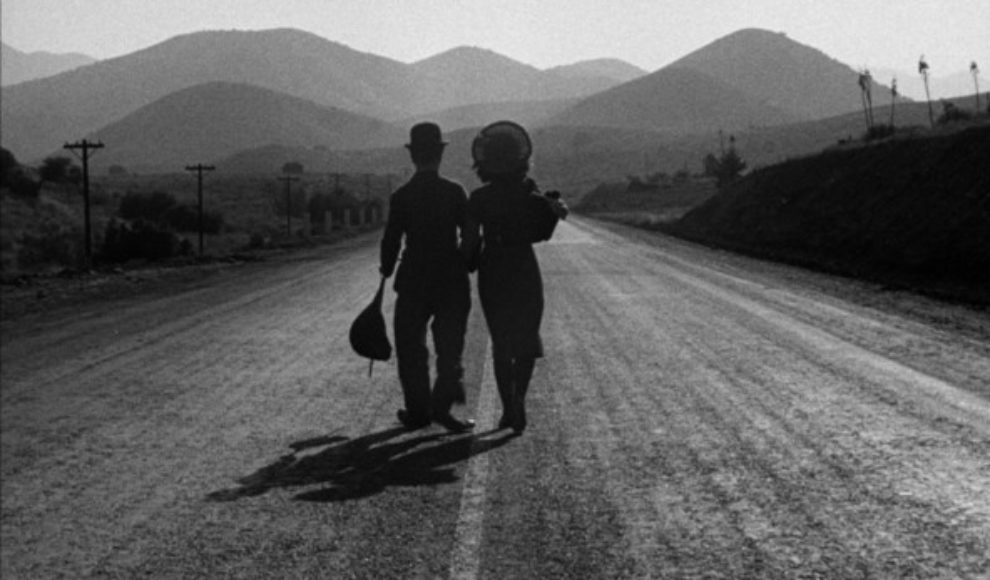
2013 in Review

One of the best things I did in 2013 was to start this blog which has brought me new on-line friends and an outlet for my love of cinema.  It also spurred me on to watch 432 total movies during the year, almost surely a lifetime record.  I joined the 1001 Movies You Must See Before You Die Club too and racked up 94 films from The Book.  I’m still enthusiastic about my chronological journey through cinema, though possibly my favorite exercise was Noir Month.  I’ll probably break away for another theme month sometime during 2014.

The very best films I watched during the year were old favorites.  These are already on a lot of lists so I thought I would single out ten films I saw and loved for the first time in 2013. The list could certainly be much, much longer and is in no particular order.

1.  Raw Deal (1948, directed by Anthony Mann)  This was my “find” from Noir Month.  An unsung little film with an unusual female narrator, this features some outstanding chiaroscuro cinematography from legendary film noir D.P. John Alton and a creepy villainous performance from Raymond Burr.

raw-deal-1948

2.  Les Misérables (1934, directed by Raymond Bernard)  In my mind, this lavish and comprehensive two-parter is the best adaptation of the Victor Hugo classic.  Harry Bauer makes a perfect Jean Valjean.

les miserables 4-tx

3.  Design for Living (1933, directed by Ernst Lubitsch)  This is not in The Book but I had been looking forward to seeing it for a long time and certainly was glad I saw it in 2013 while I had a lot of life left in me.

design-for-living

4.  Japanese Girls at the Harbor (1933, directed by Hiroshi Shimizu)  I will let this stand in also for the other two films – Mr. Thank You (1936) and The Masseurs and a Woman (1938) – that introduced me to the exquisite little gems by this formerly unexplored Japanese master in 2013.

japanese-girls-at-the-harbor-screenshot

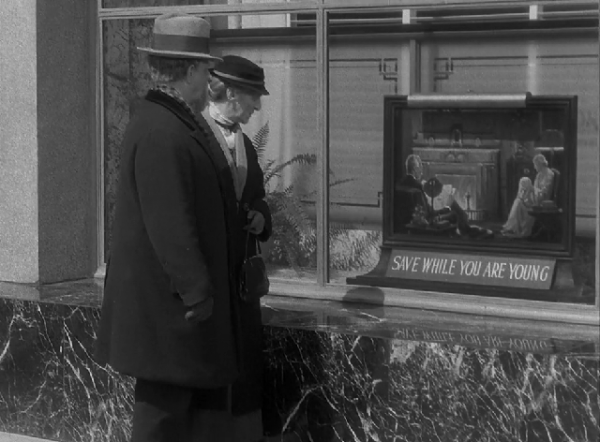
5.  Make Way for Tomorrow (1937, directed by Leo McCarey) – an absolute classic finally brought to me courtesy of 1001 Movies You Must See Before You Die and the Criterion Collection.
make_way_for_tomorrow_6

6.  Captains Courageous (1937, directed by Victor Fleming) – so glad I finally caught up to this wonderful performance by Spencer Tracy this year!!

Capitanes intrepidos 17.  Of Human Bondage (1934, directed by John Cromwell) … and that I now know how and why Bette Davis became a star

Of Human Bondage

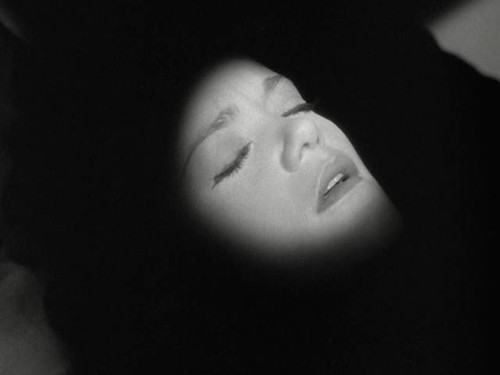
8.  Cat People (1942, directed by Jacques Tourneur) – Noir Month finally brought me this long-awaited collaboration by Tourneur and cinematographer Nicholas Musuraca
Cat People Signoret9.  César (1936, directed by Marcel Pagnol)  Although I didn’t know it, it would take me until 2013 before I really completed this fantastic trilogy.

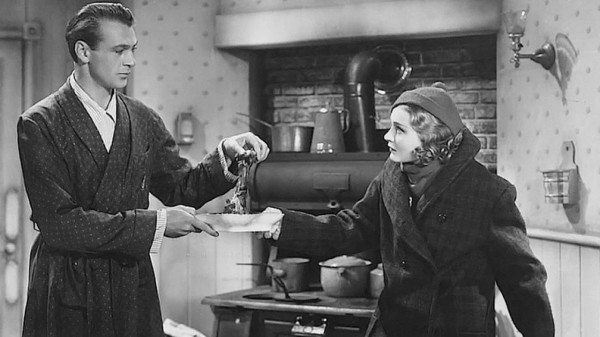
cesar_1936_portrait_w85810.  The Wedding Night (1935, directed by King Vidor)  This one stands in for all the films I had never heard of before researching films to watch for my chronological exercise that turned out to delight and inspire me.
Wedding Night

Monsoon Wedding (2001)

Monsoon Wedding 
Directed by Mira Nair
Written by Sabrina Dhawan
2001/India/USA/Italy/Germany/France
IFC Productions; Mirabai Films; Keyfilms Roma; Paradis Films

First viewing/Netflix rental
#993 of 1001 Movies You Must See Before You Die
IMDb users say 7.3/10; I say 8.5/10

[box] Pimmi Verma: This wedding is driving me nuts.[/box]

I’m a sucker for romances and domestic dramas and this delivers in a big way on both counts.

Devoted but irascible family man Lalit Verma is preparing for the big Punjabi wedding of his daughter Aditi at his home in New Delhi.  On hand is goofy, quasi-hip wedding planner P.K. Dubey.  Aditi’s marriage is semi-arranged and she has not yet broken off her affair with her married boss.  Lalit’s niece Rai is not pleased to see her uncle at the wedding or his attentions to one of the little girls.  Meanwhile, various flirtations and small conflicts go on within the large extended family.

While Aditi is deciding what to do with her life, P.K. becomes infatuated with the beautiful family domestic Alice.  It is not giving away too much to say that the whole thing ends with at least one glorious wedding in the rain.

A Punjabi wedding looks like so much fun, I was wondering how I could get invited to one! The film is a very interesting mash-up of traditional and Western influences   Many of the guests and the bridegroom are home from abroad for the wedding.  But the primary impulse is a celebration of “Indian-ness”.

The film could be faulted for one too many love at first sight sub-plots but not by me.  The subtitles I used translated the Punjabi and Hindi dialogue but not the English.  Since I could not quite catch a lot of the extensive English due to the accents, possibly I was missing out.  However, between the visuals and what I did understand the film played on my heart like a violin.  Recommended.

Trailer


And on to 1939 …

1939 was a very bad year for humanity but a great year for Hollywood movies.

Some of the most beloved films ever made were released in 1939, including Gone With the WindThe Hunchback of Notre DameMr. Smith Goes to WashingtonNinotchkaStagecoachThe Wizard of Oz and Wuthering Heights. In France, both Marcel Carné’s Daybreak (aka Le Jour Se Lève) and Jean Renoir’s The Rules of the Game were released. Other major classic films in 1939 included Beau GesteDark VictoryDestry Rides AgainLove AffairOnly Angels Have WingsGunga DinMidnightOf Mice and MenThe WomenYoung Mr. Lincoln, and many more.

In other entertainment news, television was formally introduced at the New York World’s Fair in Queens where The Radio Corporation of America (RCA) unveiled a display of its first TV sets for sale to the American public and CBS began broadcasting.  After his momentous radio adaptation of H.G. Wells’ The War of the Worlds on Halloween night 1938, Orson signed an unprecedented contract with RKO Pictures in 1939. It was a two-year, two-picture contract as producer-director-writer-actor, in which Welles reserved complete control over all aspects of two productions of his own choosing, including “final cut,” as long as he remained within the studio-approved schedule and budget.

In U.S. news, African-American singer Marian Anderson performed before 75,000 people at the Lincoln Memorial in Washington, D.C., after having been denied the use both of Constitution Hall by the Daughters of the American Revolution, and of a public high school by the federally controlled District of Columbia.  On September 5, President Roosevelt declared U.S. neutrality in World War II.  Albert Einstein wrote to the President about developing the atomic bomb using uranium. This leads to the creation of the Manhattan Project.

Lou Gehrig gave his last public speech, following a diagnosis of amyotrophic lateral sclerosis (ALS). In it, he says, “Today, I consider myself the luckiest man on the face of the earth.”  This would be memorably re-enacted in The Pride of the Yankees (1942).   Nylon stockings went on sale for the first time anywhere in Wilmington, Delaware.

The Spanish Civil War ended when Francisco Franco assumed power in March.  On August 23, the Molotov-Ribbentrop Pact was signed between Germany and the Soviet Union, a neutrality treaty that also agreed to division of spheres of influence (Finland, Estonia, Latvia, eastern Poland and Bessarabia (today Moldova), north-east province of Romania to the Soviet Union; Lithuania and western Poland to Germany).

World War II began when Germany and the Soviet Union attacked Poland and Britain, France, India, Australia and new Zealand declared war on Germany on September 3rd.   On November 30, Soviet forces attacked Finland and reached the Mannerheim Line, starting the Winter War.


Montage of stills from Oscar-Winning films of 1939

Montage of stills from all 1939 films nominated for Oscars


Room Service (1938)

Room Service
Directed by William A. Seiter
Written by Morry Ryskind from the play by John Murray and Allen Boretz
1938/USA
RKO Radio Pictures
First viewing/Warner Archives DVD

[box] Hilda Manny: If I don’t come back you’ll know it’s good news. Gordon Miller: And if you do come back bring four bottles of poison.[/box]

It’s pretty bad when the producers feel compelled to add another comedian to a Marx Brothers movie and this is a pretty bad movie.

Gordon Miller (Groucho Marx) is trying to put on a Broadway show together with his sidekicks Binelli (Chico) and Faker (Harpo).  His entourage and the entire company are seriously behind on the rent at a New York hotel.  They struggle to elude both starvation and the hotel manager (Donald MacBride).  With Lucille Ball and Ann Miller.

There is entirely too much talking in this picture.  In the Marx Brothers defense, they are funnier than Donald MacBride with his repeated “Jumping Butterballs!” schtick.  I wonder if that’s where they got the name for the turkey …

Clip

And on that note, I conclude my 1938 viewing.

Rage of Paris (1938)

Rage of Paris
Directed by Henry Koster
Written by Bruce Manning and Felix Jackson
1938/USA
Universal Pictures

First viewing/Streaming on Internet Archive


[box] The trouble with Douglas Fairbanks, Jr. is that he likes everything he sees – and he sees everything. — Clemence Dane[/box]

This is a pleasant enough romantic comedy.

Nicole (Danielle Darrieux) is down on her luck and can’t find work.  Her friend Gloria (Helen Broderick) tells her the thing for her to do is marry a rich man.  Gloria gets her pal head waiter Mike (Mischa Auer) to finance a swanky hotel room and clothes and Nicole pretends to be from high Parisian society.  Nicole sets her cap for wealthy Bill Duncan (Louis Hayward), but his friend Jim Trevor (Douglas Fairbanks Jr.) sees through her and tries to stop the match.

This is not bad and has the distinction of being one of Danielle Darrieux’s very few performances in a Hollywood movie.  The 21-year-old actress is absolutely charming and handles the dialogue well.

Photo montage with stills of Danielle Darrieux set to Darrieux singing “Premier rendez-vous” (“First Date”)


La Marseillaise (1938)

La Marseillaise
Directed by Jean Renoir
Written by Jean Renoir, Carl Koch and N. Martel-Dreyfus
1938/France
Compagnie Jean Renoir, Societé d’Exploitation et de Distribution de Films (SEDIF), Confédération Générale du Travail (CGT)
First viewing/Streaming on Amazon Instant (free to Prime members)


[box] Arise, children of the Fatherland,/ The day of glory has arrived!/ Against us tyranny/ Raises its bloody banner — “La Marseillaise”, French lyric by Claude Joseph Rouget de Lisle[/box]

I love Jean Renoir but the first time I heard of this film was in doing research for my 1938 viewing.  It did not disappoint though I would probably have appreciated it more if I knew more about French history.

Renoir tells the story of the first three years of the French Revolution through stories of common citizens of Marseilles who become soldiers of the Revolution, the French court, and French aristocrats in exile.  The birth and popularization of the French anthem are a running thread.  With Renoir’s brother Pierre as King Louis XVI, Louis Jouvet as a Parliamentary official, and Julien Carrette in a tiny role as a soldier.

I think Renoir excels with character-driven pieces so this does not reach the top-tier of his work for me.  However, he was a genius at choreographing large groups of people so that each one shines as an individual and this is fully in evidence here.  This was probably a patriotic boost for the French as war anxiety was reaching its peak.

Clip – The People’s army marches off to Paris to the first strains of “La Marseillaise” — the use of the details and camera in the first part of this are just masterful – subtitles unnecessary

Call the Mesquiteers (1938)

Call the Mesquiteers
Directed by John English
Written by Luci Ward and Bernard McConville based on characters created by William Colt MacDonald
1938/USA
Republic Pictures

First viewing/Streaming on Amazon Instant Video (Free to Prime members)

I try not to let a year go by without watching at least one of its “B” Westerns.  At only 55 minutes, this one made ideal bedtime watching.  I was surprised to find out The Three Mesquiteers were not traditional Western heroes.  The story is a contemporary one about some train robbers that carjack the Mequiteers’ truck and use it to attempt a getaway. After the robbers are killed and the truck is apprehended, the men must flee to clear their own names.

This one starts out strong but eventually gets bogged down with one too many badly choreographed fist fights and Max Trehune’s ventriloquism.

Clip – credits and opening

Heavenly Creatures (1994)

Heavenly Creatures
Directed by Peter Jackson
Written by Fran Walsh and Peter Jackson
1994/New Zealand/Germany
Wing Nut Films/New Zealand Film Commission/Fontana Productions

First viewing/Netflix rental
IMDb users say 7.5/10; I say 7/10

[box] Pauline Parker: [voiceover, from her diary] We have decided how sad it is for others that they cannot appreciate our genius.[/box]

Although I was impressed by many aspects of Heavenly Creatures, the whole was just not my cup of tea.

Pauline (Melanie Lynskey) and Juliet (Kate Winslet) are high-school girls in 1950’s New Zealand.  They find a common bond in their histories of childhood illnesses and love of Mario Lanza.  Together, they invent the fantasy Kingdom of Borovnia in which they rule as King and Queen and an afterlife populated by their movie star heroes acting as Saints. Their intense friendship develops into something more and both sets of parents get worried.  But trying to separate these girls could prove fatal ….

This film made Kate Winslet a star and her acting is quite wonderful as is that of the rest of the cast.  The use of color is also quite beautiful.  In this early effort, Peter Jackson shows his talent for fantasy and fantastical special effects.

The fantasy elements of the film were the problem for me.  Although they were impressive, I thought they swamped the plot and characters.  Paradoxically, this made the film less rather than more memorable for me.


Trailer


Four Men and a Prayer (1938)

Four Men and a Prayer
Directed by John Ford
Written by Richard Sherman, Sonya Levien, et al
1938/USA
Twentieth Century Fox Film Corporation

First viewing/Netflix rental


[box] I love making pictures but I don’t like talking about them. — John Ford[/box]

This is not one of the films that made John Ford an auteur.

In India, Col. Loring Leigh (C. Aubrey Smith) is accused of issuing an order that led a squadron of men to their deaths.  He is found guilty and dishonorably discharged.  Leigh gathers his four sons around him in England to start an investigation to prove his innocence.  Before they can start, Leigh is mysteriously shot and all his papers stolen. Although the coroner rules Leigh’s death a suicide, the sons are convinced it was murder and scatter to the four corners of the earth to apprehend the culprit.  I won’t give anything away but it all has something to do with arms dealing – a hot topic in 1938.  With George Sanders and David Niven as two of the sons, Loretta Young as the diplomat son’s girlfriend, Alan Hale as an arms merchant, and John Carradine as a Latin American general.

Another “OK” movie from the bottom of my 1938 To Watch list that didn’t really grab me. All the performances are good though Loretta Young got on my nerves more than she usually does.

Peace on Earth (1939)

Wishing everyone everywhere peace, love and understanding.

Cartoon short — 8 min. 45 sec.