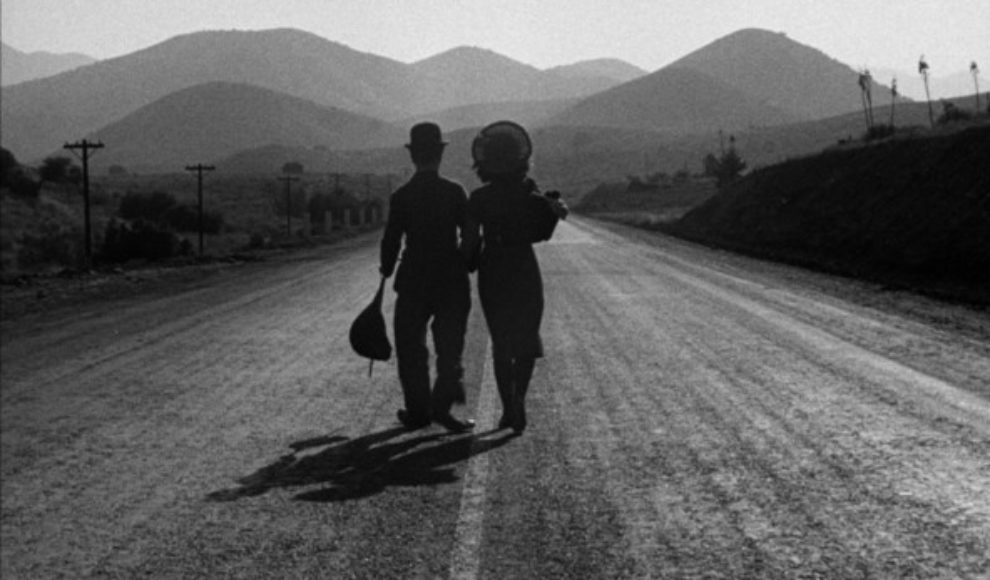
Blossoms in the Dust (1941)

Blossoms in the Dust
Directed by Mervyn LeRoy
Written by Anita Loos and Robert Wainwright
1941/USA
Metro-Goldwyn-Mayer

First viewing/Warner Archive DVD


[box] Edna: There are no illegitimate children. There are only illegitimate parents![/box]

I thought this well-made biopic was just OK.

The story is a dramatization of the work of Edna Gladney (Greer Garson) who ran an orphanage in Texas and pressed for repeal of laws including the designation “ïllegitimate” on birth certificates.

As the story opens, we meet Edna (Greer Garson) and her adopted sister (?) Charlotte as they happily discuss their impending weddings.  But Edna met a rude young man at the bank.  The man, Sam Gadney (Walter Pidgeon) took one look at her and told her she would be his wife.  He crashes the girls’ engagement party and tells Edna to see him off at the station from where he is returning to Texas the next day.

When Charlotte’s prospective in-laws discover that she was a nameless “foundling”, they call off the wedding.  Charlotte is so distraught she kills herself.  Charlotte’s death seems to torpedo Edna’s wedding as well and after some correspondence she marries Sam.  At the birth of her son, she learns she can no longer have children.  She eventually mends her breaking heart by starting an orphanage and honors Charlotte by campaigning to reform the law on illegitimacy.  With Felix Bressart as a kindly doctor.


There is nothing exactly wrong with this movie and Garson is always charming.  It didn’t grab me, however.

This was the first of eight pairings of Garson and Pidgeon.

Blossoms in the Dust won the Academy Award for Best Art Direction-Interior Decoration, Color and was nominated for Academy Awards in the categories of Best Picture, Best Actress (Garson), and Best Color Cinematography.

Trailer

Lady Be Good (1941)

Lady Be Good
Directed by Norman Z. McLeod
Written by Jack McGowan, Kay van Ripper, and John McLain
1941/USA
Metro-Goldwyn-Mayer
First viewing/Warner Archive DVD

[box] The last time I saw Paris/Her heart was young and gay/No matter how they change her/I’ll remember her that way — lyrics by Oscar Hammerstein II [/box]

This is a pleasant enough musical featuring a score full of standards by Gershwin, Kern, and more.

The story uses the framing device of the second divorce trial of songwriters Dixie (Ann Sothern) and Eddie Crane (Robert Young).  We move into flashback to see them teaming up when greeting card poet Dixie supplies the words to a song Eddie has been struggling to finish.  Dixie’s voice turns Eddie into a hit-maker and they marry.  But success goes to Eddie’s head and he starts partying, stops writing, and treats Dixie like a secretary/housekeeper.  She reluctantly divorces him.

The couple can’t seem to help inspiring each other though.  Awakened from his torpor, Eddie starts working again and Dixie is on hand the words.  They re-marry but end up in the divorce court a second time.  Dixie’s roommate Marilyn starts scheming to bring them back together yet again.  With Lionel Barrymore as the judge, Red Skelton as Eddie’s buddy, and the Berry Brothers doing a tap routine.

Although Sothern and Young are game, the plot kind of drags the movie down and we are left with long interludes between musical numbers.  Some of these are just odd – the Berry Brothers, deadpan singer Virginia O’Brien – but others are spellbinding, e.g. the finale with Eleanor Powell tapping to “Fascinating Rhythm”.

Jerome Kern and Oscar Hammerstein II won an Academy Award for Best Music, Original Song for “The Last Time I Saw Paris.” I don’t know that it was the best movie song of 1941 — and it was not original to the film —  but you can’t fault those who saw the Nazis occupying Paris from thinking so.  Kern himself lobbied the Academy to limit the category to songs written for the film in which they appeared.  He said he voted for “Blues in the Night” on his Academy Ballot.

Ann Sothern sings “The Last Time I Saw Paris”


The Little Foxes (1941)

The Little Foxeslittle foxes poster
Directed by William Wyler
Written by Lillian Hellman, additional scenes and dialogue by Arthur Kober, Dorothy Parker, and Alan Campbell
1941/USA
The Samuel Goldwyn Company
Repeat viewing/Warner Home Video DVD


Regina Giddens: I was lonely when I was young. Not in the way people usually mean. I was lonely for all the things I wasn’t gonna get.

This is a great film that should be on everyone’s Movies I Should See Before I Die list.

The story takes place in the Deep South in the year 1900.  The Hubbards produced a litter of “little foxes”, always out for themselves.  Ben, the eldest brother, is the ring leader.  He has put together a deal with a Northern cotton mill owner to build a mill in his home town in exchange for $225,000, low wages, and abundant water provided courtesy of a bribe to the governor.  Younger brother Oscar is on board, too.  The brothers need $75,000 from their sister Regina’s husband Horace Giddens (Herbert Marshall).  Regina (Bette Davis) is perhaps the most ruthless of the bunch.  She bargains for a 40% share to be taken from Oscar’s share on the understanding that his son, the shiftless Leo (Dan Duryea), will marry their daughter Alexandra (Teresa Wright).

The catch is that Regina must convince her emotionally estranged husband to invest his money and he is in a Baltimore hospital recovering from a heart attack.  She knows his weak spot and sends Alexandra to fetch him home.

little foxes 1

Horace returns home tired and ill, unable to exert himself enough to walk.  He has no appetite whatsoever for the investment.  But the siblings all have their own wicked ways of getting what they want. With Patricia Collinge in a heartbreaking performance as Oscar’s browbeaten, gentle wife Birdie and Richard Carlson as Alexandra’s free-thinking sweetheart David.

Wyler does such a fabulous job that one would never guess the film’s stage origins.  I just love the natural but intricate way he blocks groups of people.  The film looks splendid, too, amply deserving all those Oscar nominations.  If there had been a Best Costume Design award in 1941, this film would have been a shoe-in.

But it is the acting that is the true glory of the film.  I haven’t seen all of Bette Davis’s films yet but I am confident that she was never better than in this one.  She is like a harder, older version of Jezebel who married the Henry Fonda character and set about making his life miserable.  All the other actors rise to match her fire.

The Little Foxes was nominated for nine Academy Awards: Best Picture; Best Director; Best Actress; Best Supporting Actress (Collinge); Best Supporting Actress (Wright); Best Writing, Screenplay; Best Art Direction-Interior Decoration, Black and White; Best Film Editing; and Best Music, Scoring of a Dramatic Picture (Meredith Wilson) .

Trailer – cinematography by Gregg Toland

Dr. Jekyll and Mr. Hyde (1941)

Dr. Jekyll and Mr. Hyde
Directed by Victor Fleming
Written by John Lee Mahin based on the novel by Robert Louis Stevenson
1941/USA
Metro-Goldwyn-Mayer
Repeat viewing/Amazon Instant Video


[box] Dr. Henry Jekyll: [as Mr. Hyde] The World is yours, my darling, but the moment is mine![/box]

The Code watered down this version of Stevenson’s story from the more powerful 1931 Mamoulian version and apparently satisfied no one.

Dr. Jekyll (Spencer Tracy) is whatever the equivalent of a psychiatrist/psychologist would be in Victorian Engand.  He wants to spend all of his time experimenting on distilling the evil in every one in order to eliminate it.  (It is as unclear as in the previous version how this was supposed to work.)   This meets the violent objections of the very proper father (Donald Crisp) of Jekyll’s fiance Beatrix (Lana Turner).  He takes Beatrix on an extended trip to the Continent and leaves Jekyll to run amok in his lab.

A friend persuades Jekyll to take an night off from his experiments and he rescues Ivy Pearson (Ingrid Bergman) from ill treatment by a man she is walking with.  He resists her efforts to seduce him.  However, when his experimental potion turns him into the bestial Hyde he seeks her out and begins to terrorize her.  With Ian Hunter, Barton MacLane, C. Aubrey Smith, and Sara Allgood in supporting roles.

This film was a notorious critical flop and Tracy’s own least favorite performance.  It takes place in one of those movie Londons where everyone speaks with a different accent. Tracy is convincing as Hyde but no one could buy him as an upper-crust Harley Street doctor.  I thought Bergman was miscast as the streetwise Ivy.  There is something so sensual about Lana Turner’s mouth that I thought that she would have made a better bar maid, if she had the acting chops.  Apparently the film makers originally thought so too as Bergman had to persuade them to switch her with Turner in the Ivy part.  All that said, it’s not a terrible film and it’s nice to see Mr. Hyde without the ape-like make-up used in the 1931 version.  The Waxman score is effective.

Dr. Jekyll and Mr. Hyde was nominated for Academy Awards in the categories of: Best Cinematography, Black and White; Best Film Editing and Best Music, Scoring of a Dramatic Picture (Franz Waxman).

Trailer – cinematography by Joseph Ruttenberg

Best Song Nominees of 1941

1941 was a fantastic year for songs.  Here are some clips.  (I’ve included different versions where possible if I already included the movie clip in my review.) You can pick your favorite!

“The Last Time I Saw Paris” by Jerome Kern and Oscar Hammerstein II from Lady Be Good – performed by Kate Smith (the Academy’s choice)

“Baby Mine” by Frank Churchill and Ned Washington from Dumbo – sung by Bette Midler and set to clips from the film

“Be Honest with Me” by Gene Autrey and Fred Rose from Ridin’ on a Rainbow

“Blues in the Night” by Harold Arlen and Johnny Mercer from Blues in the Night – sung by Dinah Washington

“Boogie Woogie Bugle Boy of Company B” by Hugh Prince and Don Ray from Buck Privates – as performed in the Oscar-nominated cartoon of that name

“Chatanooga Choo Choo” by Harry Warren and Mack Gordon from Sun Valley Serenade – as sung by Frances Langford in The Glen Miller Story

“Dolores” by Louis Alter and Frank Loesser from Las Vegas Nights – as performed by Frank Sinatra and the Tommy Dorsey orchestra in 1941

“Out of the Silence” by Lloyd B. Norlin from All-American Co-Ed – as sung by Frances Langford in the film

“Since I Kissed My Baby Goodbye” by Cole Porter from You’ll Never Get Rich – as performed by The Four Tones in the film (with Fred Astaire tap dancing)

Ball of Fire (1941)

Ball of Fire 
Directed by Howard Hawks
Written by Billy Wilder and Charles Brackett from an original story by Wilder and Thomas Monroe
1941/USA
The Samuel Goldwyn Company
Repeat viewing/Warner Home Video DVD

[box] Professor Bertram Potts: Make no mistake, I shall regret the absence of your keen mind; unfortunately, it is inseparable from an extremely disturbing body.[/box]

I love this film.  Started smiling when I watched the trailer and didn’t stop until it was over.

The inventor of the electric toaster was miffed at his omission from the Encyclopedia Britannica so left a small fortune to a group of professors to compile a new and “improved” version.  One of the stipulations is that the professors be single.  The “leader” of the eight experts is linguist Bertram Potts (Gary Cooper), who realizes he is not up with the times on American slang.  He hits the streets to learn how American English is spoken in 1941 and to put together a “round table” on the subject.  One of his star finds is nightclub entertainer Katherine “Sugarpuss” O’Shea (Barbara Stanwyck).

It so happens that her gangster boyfriend Joe Lilac (Dana Andrews) has been picked up for murder and the police are looking for her.  She parlays Pott’s invitation to participate in the round table into a place to take cover for a few days.  All the old professors are gaga for her and Potts falls in love.  But Joe has decided that the best way to deal with his problem is to marry her so she cannot testify against him … With Oskar Homolka, Henry Travers, S.Z. Sakall, and Leonid Kinsky as a few of the professors and Dan Duryea as Duke Pastrami, Joe’s henchman.

One of the best kissing scenes ever

Based loosely on “Snow White and the Seven Dwarfs”, Wilder and Brackett’s screenplay is a hoot.  Stanwyck and Cooper carry over their great chemistry from Meet John Doe and the cast of sterling character actors is superb.  This is just a whole lot of fun and quite romantic to boot.  Hawks keeps the zingers flying.

Ball of Fire was nominated for Academy Awards in the categories of Best Actress; Best Writing, Original Story; Best Sound, Recording and Best Music, Scoring of a Dramatic Picture (Alfred Newman).

Trailer – cinematography by Gregg Toland


Charley’s Aunt (1941)

Charley’s Aunt
Directed by Archie Mayo
Written by George Seaton from a play by Brandon Thomas
1941/USA
Twentieth Century Fox Film Corporation
First viewing?/Netflix rental


[box] Babbs Babberley: I’m Charley’s nut from Brazil where the aunts come from.[/box]

Jack Benny’s English accent is ludicrous but that doesn’t stop him from being funny in this take on the old stage play.

The setting is 19th Century Oxford.  Charley Wickham and Jack Chesney are in love and need a chaperon for meeting their beloveds.  They had been counting on Charley’s aunt Donna Lucia from Brazil to do this duty.  When Lucia doesn’t show up, they blackmail Babbs Babberly (Benny), who already has the clothes from his role in a campus play, to take over.  Jack’s father Sir Francis (Laird Cregar) is broke and starts courting the “lady”, who is said to be worth millions.  Old Stephen Spettigue (Edmund Gwenn) isn’t far behind. Finally a client of Babbs’s father (Kay Francis) appears, and it looks like the jig is up.  With Anne Baxter as one of the young ladies.

This isn’t hilarious or anything but it is amusing and a pleasant way to spend 80 minutes. Jack Benny does quite well at a role that is outside his general miserly persona.

Promo – Jack Benny talking about Charley’s Aunt with Tyrone Power and Randolph Scott, who briefly plug their parts in A Yank in the RAF and Belle Starr

Crashout (1955)

Crashout
Directed by Lewis R. Foster
Written by Hal E. Chester and Lewis R. Foster
1955/USA
Standard Productions
First viewing/YouTube


[box] Van Morgan Duff: [to Quinn] I never did like you. You talk too fast and too much.[/box]

Noir Month ended with this violent prison break story.

Thirty-five convicts escape from prison.  Six of them survive to make it to a hideout near the prison known by their “leader” Van Morgan Duff (William Bendix).  All are serving life sentences for murder except Joe (Arthur Kennedy), who has been sentence to ten to twenty years for embezzlement.  Duff is wounded during the escape and close to death. He bribes the others to fetch a doctor and help him on the road by promising to share a large robbery take that he has hidden in the mountains.

The six are hardened criminals, with episodic soft spots in a couple of them.  The group does not hesitate to kill witnesses in acts of shocking brutality for the time.  Later, friction sets them against each other.  With Luther Adler, William Talman, Gene Evans, and Marshall Thompson as the the other convicts and Beverly Michaels and Gloria Talbot as women who cross the mens’  path.

There are few surprises in this routine jailbreak story except for the graphic (for the time) violence throughout.  The acting helps it along, though.  When will noir characters learn that you can’t trust a criminal even if he is a co-conspirator?  Especially if he is a co-conspirator.

Some 1941 comedies coming up!


Moonrise (1948)

Moonrise
Directed by Frank Borzage
Written by Charles F. Haas from a novel by Theodore Strauss
1948/USA
Republic Pictures/Marshall Grant/Chas. K. Feldman Group Productions, Inc.
First viewing/Amazon Prime Instant Video


[box] “It is unfortunate that in most cases when the sins of the father fall on the son it is because unlike God, people refuse to forgive and forget and heap past wrongs upon innocent generations.” ― E.A. Bucchianeri, Brushstrokes of a Gadfly[/box]

This is a poetic coming of age story, with touches of the Gothic.

The story is set in rural Virginia.  Danny Hawkins’s father was hanged for shooting a doctor who refused care to his mother. Danny was haunted by the execution in his childhood nightmares and relentlessly taunted by his schoolmates by day.  This has made Danny (Dane Clark) a bitter loner.  His one real friend is Mose (Rex Ingram) with whom he goes coon hunting in the mountains.

When he is grown, he gets into a fight with the local banker’s son Jerry (Lloyd Bridges) on the subject and during the fracas kills him with a rock.   Jerry is not a popular boy and at first investigators think his disappearance was due to embezzlement from his father’s bank.

That same night, he declares his love for schoolteacher Gilly Johnson (Gail Russell).  She initially resists him but eventually succumbs.  She does not understand why Danny wants to keep their relationship secret or why he acts increasingly disturbed the longer the investigation continues.  With Harry Morgan as a deaf-mute, Allen Joslyn as a compassionate Sherrif, and Ethel Barrymore as Danny’s grandmother.

This is quite a beautiful movie to look at and has a kind of dream-like quality and lots of moonlight. The main link to noir is by way of the tormented protagonist.  I enjoyed it.

Moonrise was nominated for an Academy Award for Best Sound, Recording.

Clip – Rex Ingram and Dane Clark – cinematography by John L. Russell


The Dark Mirror (1946)

The Dark Mirror
Directed by Robert Siodmak
Written by Nunnally Johnson from a story by Vladimir Posner
1946/USA
International Pictures
First viewing/Olive Films DVD

[box] Dr. Scott Elliott: Not even nature can duplicate character, not even in twins.[/box]

This somewhat predictable thriller is lifted by one of Olivia de Havilland’s most interesting performances.

Terry and Ruth Collins (de Havilland) are identical twins.  One of them has clearly murdered a doctor who was getting ready to propose.  But which one?  The twins refuse to talk and no one can tell them apart.  Legally, Lt. Stephenson (Thomas Mitchell) can’t hold either one of them, for fear of arresting an innocent person.

Psychologist Dr. Scott Elliott (Lew Ayers) is an expert on twins and tells Stephenson that the characters of identical twins can definitely be told apart.  He talks the twins into assisting in his research for pay.  Inevitably, he falls in love with Ruth and decides Terry is insane.

Meanwhile, the stress is getting to Ruth to the extent that she experiences hallucinations and Terry gets increasingly jealous and suspicious.  Stephenson is worried that Terry’s next victim may be Ruth.  He resorts to a daring ruse.

De Havilland is really good here.  She plays Ruth more or less as herself but gives Terry a subtle hard edge that lets the audience know who is who from the start.  This one did not scream film noir to me either in the content or in the style.

The Dark Mirror was nominated for an Academy Award for Best Writing, Original Story.

Clip – cinematography by Milton R. Krasner