Possessed (1947)

Possessed
Directed by Curtis Bernhardt
Written by Silvia Richards and Ranald MacDougall; story by Rita Weiman
1947/USA
Warner Bros.
Repeat viewing/Netflix rental


[box] Louise: “I love you” is such an inadequate way of saying I love you. It doesn’t quite describe how much it hurts sometimes.[/box]

Whatever you might think of Joan Crawford’s acting style, she sure does make a convincing crazy person.

As the film opens, we see the dazed and disheveled Louise Howell (Crawford) wandering the streets of Los Angeles and calling out for “David” to random strangers.  She soon suffers a complete breakdown into catatonia in a diner and is taken to the hospital.  We are then treated to some psychiatric mumbo jumbo as the doctors try to determine what is wrong with her and who she is. They give her a drug which allows her to talk.

Segue to flashback.  Louise has been having an affair with bachelor engineer David Sutton (Van Heflin).  This is evidently the first big love of Louise’s life and David is unsuccessfully trying to bring the relationship gently to a close over her clinging, pleading, and threats.  Louise is the private nurse to the pathologically jealous and chronically invalid wife of wealthy construction magnate Dean Graham (Raymond Massey).  David approaches Graham and asks him for a job in northern Canada, evidently with the intention of getting as far away from Louise as possible.  He gets the job.

That very night Graham’s wife commits suicide by drowning.  His children have been away at school.  When they arrive home, teenage daughter Carol, who has received letters from her mother accusing Graham and Louise of an affair, blames Louise for her mother’s death.  Louise wants to quit but Graham asks her to stay on and help raise his young son.

Years pass and David visits from Canada.  He continues to spurn Louise’s ceaseless advances.  She tries once again to quit her job.  Instead, Graham asks her to marry him.  Although she tells him she doesn’t love him, she agrees to the match.  But David takes to hanging around and soon is seeing the now 20-year-old Carol.  He feels for her what he never felt for Louise.  And so begins Louise’s further descent into madness.

She begins seeing and hearing things and becomes convinced she assisted Graham’s wife to suicide.  In her desperation, Louise launches a chain of events that eventually lands her in a strange city babbling to strangers.

Joan Crawford is completely over the top but it suits Louise’s bizarre character perfectly.  My main trouble with the movie was that it seemed to be asking for sympathy for her plight and painting the man as the villain of the piece and I just couldn’t buy it.  Instead, Louise comes off as an early stand-in for Glenn Close’s character in Fatal Attraction and I felt sorry for David.  If the plot and star appeal, this is certainly a well-made entry in the small noir/melodrama/woman’s picture genre.

Joan Crawford was nominated for an Oscar as Best Actress for her performance in Possessed.

Trailer

The Unsuspected (1947)

The Unsuspected
Directed by Michael Curtiz
Written by Bess Meredyth and Ranald MacDougall from a novel by Charlotte Armstrong
1947/USA
Michael Curtiz Productions/Warner Bros.
First viewing/Warner Archive DVD

[box] Althea Keane: Victor’s the only man who can turn my blood to ice water.[/box]

Claude Rains mellifluous voice is put to good use in this enjoyable film noir thriller.

Victor Grandison (Rains) is a radio personality whose speciality is murder mysteries.  He dominates his household, which consists of his heiress niece Matilda (Joan Caufield) and his other more impoverished niece Altea (Audrey Totter) and her husband Oliver (Hurd Hatfield).  Altea, a bad, bad girl, stole Oliver from under the nose of Matilda.

As the story starts, Altea is speaking on the phone to Victor’s secretary when we see a shadowy figure enter the room and the secretary screams.  Altea ignores this and goes onto her next nightclub.  The woman is later found hanging from a rope and her death is ruled a suicide.  We discover that Matilda has also recently been declared dead after a shipwreck.

Enter Steven Howard.  He says that unbeknownst to anyone in the family, Matilda and he were married shortly before she set sail.  He is independently wealthy and not interested in Matilda’s considerable estate.  Victor checks up and his buddy in the police says he is who he claims to be.

But Matilda was rescued by a ship without a radio (??).  When she returns, she has no memory of having married Steven.  Steven takes her to the judge who married them and the hotel where they met but this fails to jog her memory.  He says he will have the marriage annulled and she resumes living in Victor’s mansion.

The rest of the complicated story encompasses the rivalry between the cousins, an investigation of the secretary’s “suicide”, and one or two additional murders.  I will not reveal more.  With Constance Bennett as Victor’s intrepid assistant.

This has quite the cast and the actors all acquit themselves well.  1947 was Audrey Totter’s year for A films apparently, between this and Lady in the Lake, and she always makes a delicious bad girl.  With his mellifluous voice, Rains is memorable as the teller of dark tales on radio.  The cinematography by Woody Bredell is simply gorgeous.

Trailer

Life with Father (1947)

Life with Father
Directed by Michael Curtiz
Written by Donald Ogden Stewart from the play Howard Lindsay and Russel Crouse based on a memoir by Clarence Day
1947/USA
Warner Bros.
Repeat viewing/Netflix rental

[box] Miss Wiggins: Sir, before I can let any girl go from this establishment, I must know the character of the home in which she will be employed.

Father: Madam, *I* am the character of my home.[/box]

Dated sexual politics aside, this is an endearing domestic comedy with one of William Powell’s best performances.

Clarence Day Sr. (Powell) is a wealthy stockbroker.  The man is all bluster, insisting on running every aspect of his household on a business basis and terrorizing the staff.  His wife Vinnie (Irene Dunne) spends much of her time trying to smooth things for him.  But she definitely has figured out how to get her own way.  One of her methods to avoid arguments over her expenditures is through a kind of arithmetic that defies logic and leaves her husband helpless.  Others stratagems nclude tears and a kind of charming passive aggression.

The Days have four sons.  One day, Vinnie’s cousin (Zasu Pitts) comes to visit with a teenage protege Mary (Elizabeth Taylor).  Clarence Jr. (Jimmy Lydon) is knocked for a loop by the young beauty.  She likes him too but they soon discover that they go to different churches.  Mary is Methodist and the Days are Episcopalians.  Well, Vinnie and the children are faithful but Clarence is a very reluctant churchgoer who refuses to kneel.  It soon develops that Clarence Sr. has never been baptized.  Vinnie is horrified.  Much of the story is devoted to her plots to get the situation rectified.

Other episodes include Clarence Jr.’s inability to court Mary in his father’s old suit and the boys’ money making scheme to sell a rather dodgy patent medicine door-to-door.  With Edmund Gwenn as the local Episcopal priest.

My description does not make the movie sound as frothy and funny as it is.  The Life with Father plot is the prototype for several TV sitcoms of the 50’s and 60’s but the original far surpasses any of its successors in its execution.  Powell was never better than in this role, which is as far as could be imagined from the suave Nick Charles.  He and Dunne have fantastic chemistry.

The film is in the public domain and I have only ever seen in it in a faded print with iffy sound quality.  This deserves a restoration on a proper DVD.

Life with Father was nominated for Academy Awards in following categories:  Best Actor; Best Cinematography, Color; Best Art Direction-Set Decoration, Color; and Best Music, Scoring of a Dramatic or Comedy Picture.

Trailer


Gentleman’s Agreement (1947)

Gentlemen’s Agreement
Directed by Elia Kazan
Written by Moss Hart from the novel by Laura Hobson
1947/USA
Twentieth Century Fox Film Corporation
Repeat viewing/Netflix rental


[box] Anne Dettrey: I know dear, and some of your other best friends are Methodist, but you never bother to say it.[/box]

If you like message movies, this is a good one.

Widower Philip Schuyler Green has moved to New York with his mother (Anne Revere) and young son on assignment for a magazine.  The editor (Albert Dekker) wants him to do a series on anti-Semiticism.  The idea actually originated with the editor’s niece Kathy (Dorothy McGuire), a divorcee and schoolteacher.  Philip and Kathy rapidly fall in love.

Philip is stymied for a fresh new angle to tackle his topic.  Then he gets an inspiration.  He will pose as a Jew.  This should be easy because he is new in town, right?  The only people in on the secret are his mother, son, the editor and Kathy.  He introduces himself at work as a Jew.

The reaction to Philip’s announcement is an eye-opener even to him.  He encounters bigotry in the most unexpected places.  His own secretary opens up that she, too, is Jewish and got her job by adopting a Gentile-sounding name.  Yet she resists the idea of the magazines actively pursuing diversity for fear of bringing in the “wrong” people, i.e. unassimilated Jews.  Many doors are covertly closed to him and he has to put up with a lot of comments from supposedly well-meaning people.  His closest ally at work is fashion reporter Anne Dettrey (Celeste Holme), a true free spirit.

Philip’s Jewish childhood friend Dave Goldman (John Garfield) is recently discharged from the service and arrives in town to start a new job.  He must find a place for his family to live though and he is having no luck.  Kathy has a vacant house but it is in an area that is restricted against Jews by an unwritten “gentleman’s agreement”.   Though she thinks of herself as unprejudiced, Kathy refuses to do anything that will rock the boat to fight against the status quo.   When Philip’s son is attacked at school for being Jewish, her reaction is to comfort him by reminding him that he is not Jewish.  This infuriates Philip and they have several arguments.  Can their relationship survive?  With Sam Jaffe as a stand-in for Albert Einstein.

I’m not big on “important” message movies and this is one.  It is undeniable that this is one of the most effective of its genre, however.  The director and screenplay make the characters and story so vivid that the film moves well beyond abstraction.  The speechifying is there but is kept to a minimum.  Worth seeing.

I had seen this before but I couldn’t help rooting for the Gregory Peck character to dump the resolutely conventional Kathy and wind up with the tough Anne, who actually shared his own world view.  I just couldn’t buy Kathy’s last minute conversion.  She had a character that just hated controversy in general and Philip lived for it.   Could the Academy voters have rewarded Celeste Holm’s character at Oscar time?

Gentleman’s Agreement won Academy Awards for Best Picture, Best Supporting Actress (Holm) and Best Director.  It was nominated in the categories of Best Actor; Best Actress; Best Supporting Actress (Revere); Best Writing, Screenplay; and Best Film Editing.

post-Oscar trailer

The October Man (1947)

The October Man
Directed by Roy Ward Baker
Written by Eric Ambler based on a novel by Ambler
1947/UK
Two Cities Films
First viewing/Amazon Prime Instant Video

[box] People get really irritated by mental illness. — Maria Bamford [/box]

I’m glad I made the acquaintance of this unsung British film noir.

Jim Ackland (John Mills) is riding on a bus one rainy night entertaining the child (Juliet Mills) sitting next to him.  There is a horrific accident.  The girl is killed and Jim is left with a fractured skull and brain damage.  Jim spends a year in the hospital, recovering.  He has been unstable, even suicidal, and still blames himself for the death of his friends’ daughter. When he is released, the doctor warns him against making any major decisions or changes since there is still the chance of a relapse.

Jim goes back to work as a chemist.  His employer puts him up in a truly awful boarding house.  At first Jim keeps strictly to himself, which does not endear him to his fellow lodgers.  Molly (Kay Walsh), an outgoing young woman who is having an affair with a married man, is trying mightily to avoid the advances of creepy Mr. Peachy in the flat below.  She asks Jim into her room for a drink after he helps her mend a fuse.  Molly is a fan of astrology and dubs him the “October Man” on account of his birthday.

After several months of relative isolation, Jim finally accepts the invitation of a work colleague to go to a company dance and meet his sister Jenny (Joan Greenwood).  The attraction is immediate and they become an item.  Finally, Jim is out in the world with Jenny every night.

Then one night Molly comes into Jim’s room begging him for a loan of 30 pounds.  He writes her a check.  The next thing we know, she is lying strangled in the street with Jim’s check beside her.  Jim has no alibi for the time of the murder, having taken a walk after a date with Jenny. He was observed on the couple of occasions he and Molly were behind closed doors.  The other lodgers put that together with Jim’s mental and medical history and are soon blabbing all their speculations to the police.  Jim becomes the prime suspect.  Before long, he is wondering whether he could have actually committed the crime.  The rest of the film follows his efforts to find the killer and, more difficult, convince anybody to believe a thing he says.

This is well acted and beautifully shot.  The suspense comes less from the mystery than from concern for Jim’s fragile mental state.  I was engrossed throughout.  Recommended and currently available on YouTube or for free to Amazon Prime members.

Clip – first ten minutes

The Damned (1947)

The Damned (Les Maudits)
Directed by Réné Clément
Written by Réné Clément, Jacques Rémy, and Henri Jeanson; story by Victor Alexandrov and Jacques Companéez
1947/France
Spéva Films
First viewing/Amazon Instant


[box] I must confess that my imagination refuses to see any sort of submarine doing anything but suffocating its crew and floundering at sea. — H. G. Wells [/box]

This didn’t deliver on the suspense promised by its premise but is interesting nonetheless.

In Oslo in the days immediately preceding the fall of Berlin, a ragtag group of Nazi bigshots hitch a ride on a submarine. The u-boat has orders to take them to South America, where they will try to initiate phase two of the New World Order.  They are Mr. Garosi, an Italian, and his wife Hilde, a German, who communicate with each other in French.  Hilde happens to be the mistress of the Wermacht General on board.  Then there is SS officer Forster and his vicious boy toy Willy Morus, a French collaborator, and a mysterious Scandinavian scholar and his teenage daughter.

Hilde is injured en route so some of them sneak into a French port and kidnap a doctor.  Dr. Guilbert rightly fears for his life and spends his time cooking up ways to make himself indispensable and escape plans.  One of his ploys is to declare an outbreak of contagious disease which forces one of the cabins to be turned into an isolation ward with the passengers forced into even closer quarters than before.  It takes very little to light the flame of discord among them.

By the time the u-boat arrives in South America, Hitler is dead and Berlin has fallen.  The agent (Marcel Dalio) that the Nazis expected to smooth their entry has had a change of heart.  From then on nothing goes right but the Germans in the group remain relentless in their loyalty to the old cause.  This only increases the danger to Guilbert.

If this was intended to be a thriller, it lacked excitement.  As a glimpse into the post-War French mindset it is quite interesting, however, and the film is certainly well-made.  It was recently restored and looks beautiful.

DVD release trailer showing beautiful restoration work

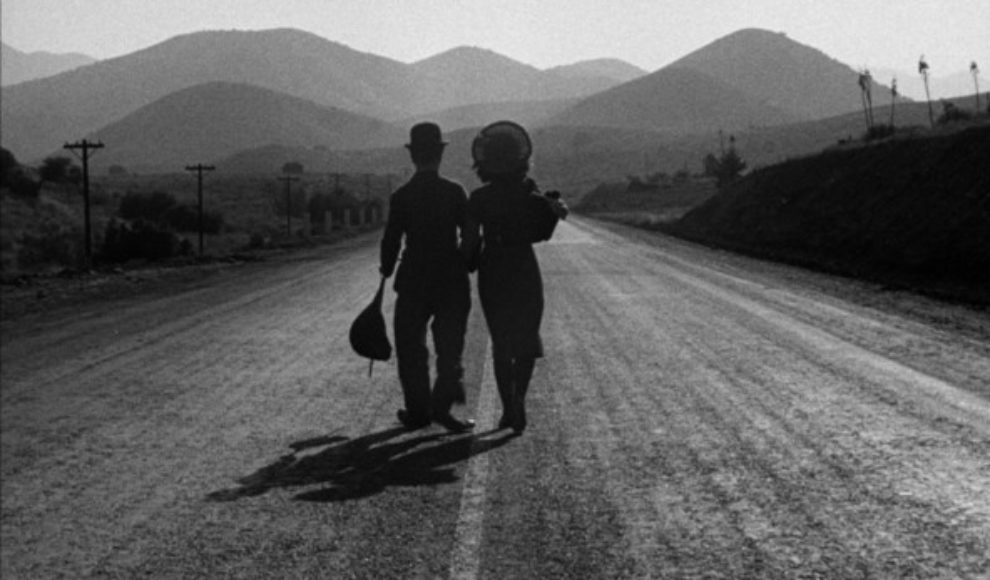
Monsieur Verdoux (1947)

Monsieur Verdoux
Directed by Charles Chaplin
Written by Charles Chaplin based on an idea by Orson Welles
1947/USA
Charles Chaplin Productions
Repeat viewing/from DVD Collection
#209 of 1001 Movies You Must See Before You Die


[box] Henri Verdoux: Business is a ruthless business, my dear.[/box]

Chaplin never should have started talking.

Henri Verdoux (Chaplin) is fired by a cruel bank after 30 years of employment.  So he decides to support his crippled wife and adorable little son by committing bigamy and serial wife murder of wealthy widows.  What other choice did he have? Then, despite his contempt for big business, he invests all the money in the stock market.

One of his wives, Annabella Bonheur (Martha Raye), is an annoying loud mouth with a mind of her own.  She might just be immortal.  During his frolic, Monsieur Verdoux befriends a beautiful young ex-con and is captivated by her innocence and belief in love. This does not stop him from his life of crime however.

Finally, Verdoux is apprehended and sentenced to the guillotine.  He does not go there, unfortunately, until he delivers a heartfelt speech explaining how serial murder is no worse than war.

Balderdash.  There are a few mildly funny bits, as when Chaplin counts money, and Martha Raye is always a treat.  Mostly, though, this strikes me as a vanity project designed to give Chaplin a soapbox and I find it very irritating.  I know I’m in the vast minority in feeling as I do.  I think Chaplin was a genius but got very self-indulgent later in life.

Monsieur Verdoux was nominated for an Academy Award for Best Writing, Original Screenplay.

Clip

Dark Passage (1947)

Dark Passage
Directed by Delmer Daves
Written by Delmer Daves from a novel by David Goodis
1947/USA
Warner Brothers
Repeat viewing/Netflix rental


[box]Vincent Parry: You know, it’s wonderful when guys like you lose out. Makes guys like me think maybe we got a chance in this world.[/box]

My reaction to this one was colored by my dislike of the “I am a camera” gimmick.  Once Humphrey Bogart shows his face things pick up.

Vincent Parry (Bogart) escapes San Quentin, where he has been incarcerated since being wrongfully convicted for murdering his wife.  He has to deck a guy who offers him a lift after the man asks too many questions.  Then Irene Jansen (Lauren Bacall) picks him up, having learned of his escape.  She followed his trial closely because the case reminded her of the wrongful conviction of her father.

A kindly taxi driver alerts Parry to a cut-rate plastic surgeon who gives people new faces on an outpatient basis (!!?).  The new face is to make Parry look significantly older than he is. Irene cares for him during his week-long recuperation.

Parry soon has to worry not only about finding his wife’s murderer but tracking down the killer of his closest friend while simultaneously fighting off the blackmailing driver he decked during his escape.  With Agnes Moorhead as a friend of the family.

The movie is shot from the Bogart character’s point of view for about the first third.  Then his face is covered in bandages for another good stretch.  Some might find the POV camerawork intriguing.  I find it extremely jarring and unconvincing.  I also had serious problems buying into most of the plot points.  But Bogart and Bacall’s chemistry is totally convincing and the movie might be worth seeing just to look at his face when he gazes at her.  My husband liked this movie much more than I did.

Trailer

A Man About the House (1947)

A Man About the House
Directed by Leslie Arliss
Written by Leslie Arliss, John Perry, and J.B. Williams from a novel by Francis Brett Young
1947/UK
British Lion Film Corporation
First viewing/Amazon Instant

This Gaslight-inspired thriller is pretty good.

Agnes and Ellen Islit are two impoverished English spinsters.  Out of the blue, they inherit their long lost uncle’s estate in Italy.  The straight-laced Agnes doesn’t want to have anything to do with the place but reluctantly agrees to the romantic Ellen’s desire to at least see the property.  They arrive with Agnes intent on selling out and returning to England.  Agnes is the prototypical Englishwoman believing that her way is the only correct way of doing things.

Ellen is immediately enchanted but it takes butler Salvatore to make Agnes warm to Italy.  She warms to him at the same time.  But unbeknownst to the women, Salvatore believes the property, which historically belonged to his ancestors, is rightfully his …

This took quite awhile to become a thriller.  It begins as more of a travelogue/romance with Moore being convincing as a life-loving Italian.  The ending is telegraphed.  Quite competently made but not a must view.


Good News (1947)

Good News
Directed by Charles Walters
Written by Betty Comden and Adolph Green from a play by Buddy G. DeSylva et al
1947/USA
Metro-Goldwyn-Mayer
Repeat viewing/Amazon Instant


[box] The moon belongs to everyone/ The best things in life are free/ The stars belong to everyone/ They gleam there for you and for me – “The Best Things in Life Are Free”, lyrics by Lew Brown and Buddy G. DeSylva [/box]

This college musical has the highest IMDb user rating of any movie released in 1947. The reason why will forever be a mystery to me.

Tommy Marlow (Peter Lawford?!) is captain of Tait College’s football team and Big Man on Campus.  Not knowing that he is also heir to a pickle fortune, new girl in town Pat McClellan, a self-styled diva, spurns him for a wealthy drip.  Not used to being rejected, Tommy is naturally fixated on Pat.  Meanwhile plucky sorority sister Connie Lane (June Allyson), who is working her way through school,  is secretly in love with Tommy.  Tommy wants to improve his French to impress Pat so Connie tutors him.  Tommy slowly begins to see the light and asks Connie to the prom.

But the mischievous Babe alerts Pat to Tommy’s wealth and Tommy foolishly throws off Connie for Pat.  You can bet Tommy and Connie will be dancing together in the closing number.  With Mel Torme as one of the gang.

As far as I am concerned, the most interesting thing about this movie is Peter Lawford’s impeccable French accent.  He certainly doesn’t convince as a football player!  Otherwise, this just strikes me as completely sophomoric.  I don’t even like the songs that much. There are a few OK dance numbers.  I’ve seen this before and my reaction was exactly the same.  But there is no accounting for tastes….

Good News received an Oscar Nomination for Best Music, Original Song for “Pass That Peace Pipe” by Hugh Martin, Ralph Blane, and Roger Edens.

Trailer – If this appeals, you might love this movie