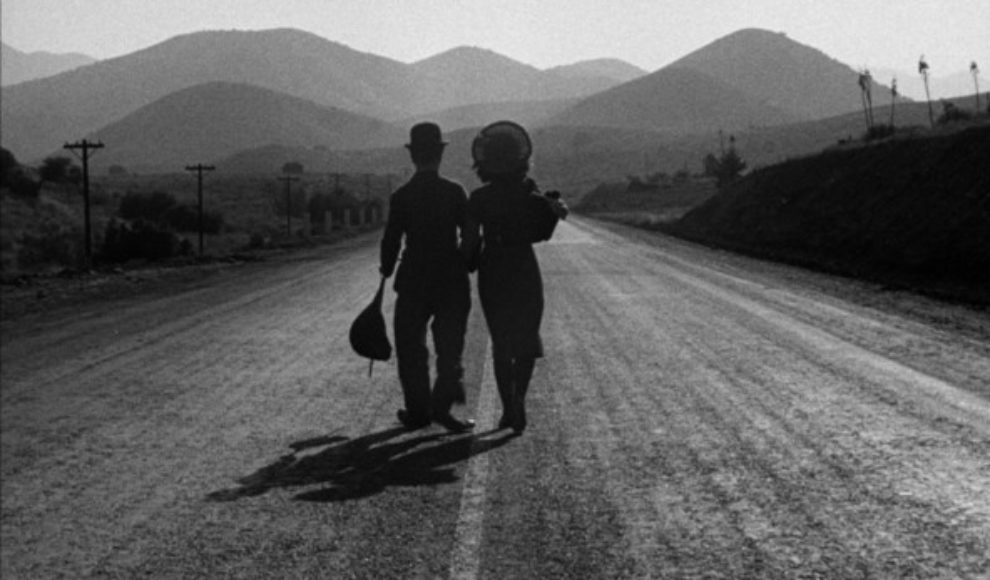
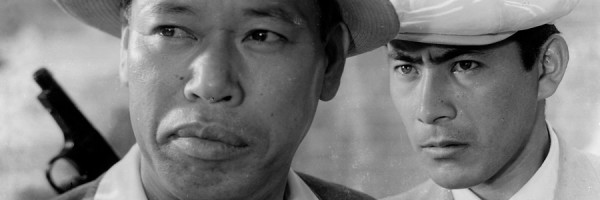
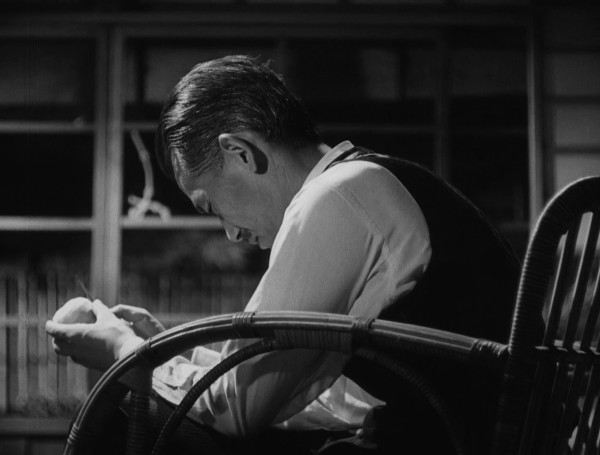
I have now seen 68 films that were released in 1949. The complete list is here. A few B movies were reviewed only here.
This time I had a hard time deciding the ranking toward the top of the list. Ozu won but on another day I might have picked Reed. I was unable to see Whiskey Galore this time around. It is also a very good film but it’s been so long that I did not include it in my rankings. Kurosawa’s The Quiet Duel, Ford’s She Wore a Yellow Ribbon, and Walsh’s White Heat were also-rans.
Passport to Pimlico Directed by Henry Cornelius Written by T.E.B Clarke 1949/UK J. Arthur Rank Organization/Ealing Studios
First viewing/YouTube
P.C. Spiller: Blimey, I’m a foreigner.
This is a very funny film. I’ll bet it was even funnier to weary post-war British audiences.
Pimlico is a tight-knit London working-class neighborhood. One day when an unexploded bomb is detonated, Arthur Pemberton falls in the resulting crater. There he finds a treasure and an old treaty. A history professor (Margaret Rutherford) is called in to advise and says that the document is proof of a royal grant of the land in perpetuity to the Duke of Burgundy. Thus, she says, Pimlico is a sovereign country.
The residents gleefully exploit this fact to free themselves from the pub closing laws, rationing restrictions, and other government regulations that have been cutting back on their fun.
Eventually, the modern Duke of Burgundy shows up. He proves to be an amiable Frenchman who immediately begins courting a local girl. Whitehall and the Foreign Office do not have the foggiest notion of how to deal with this development. A ruling looks like it will take months of meetings.
In the meantime, when persuasion fails to work to stop the massive flow of Londoners into the duchy to buy rationed goods, Britain is forced to close its borders. The Pimlicans retaliate by conducting immigration checks on all modes of transport transiting their country. Eventually, negotiations between the two sovereigns begin. With Hermione Baddley as a local shopkeeper and Naughton Wayne and Basil Radford as bureaucrats from the Foreign Office.
This is a barrel of fun with some classic lines. The state dinner at the end was right on target. How the British of the day must have relished the wicked skewering of all their trials! Recommended.
The print currently available on YouTube is no great shakes.
Passport to Pimlico was nominated for an Oscar for Best Writing, Story and Screenplay.
Take Me Out to the Ball Game Directed by Busby Berkeley Written by Harry Tugend and George Wells from a story by Gene Kelly and Stanley Donen 1949/USA Metro-Goldwyn-Mayer
First viewing/Netflix rental
[box] Eddie O’Brien: Oh, Miss Higgins! You’re the prettiest manager in baseball.
K.C. Higgins: You’re certainly the prettiest shortstop.[/box]
MGM puts two-thirds of the cast of On the Town together with Esther Williams for a mighty derivative musical on the old baseball diamond.
Eddie O’Brien (Gene Kelly), Dennis Ryan ( Frank Sinatra) and Nat Goldberg (Julius Munchen) are players on the Wolves, a turn-of-the-century baseball team. Eddie and Dennis do a vaudeville act during the off season. Eddie is a cocky womanizing braggart and Dennis is more the shy retiring type.
During spring training, the team hears the bad news that it has been inherited by K.C. Higgins, who intends to take an active role in management. Lo and behold, it turns out that her given names are Katherine Catherine Higgins (Esther Williams) and she is a looker (and a dynamite swimmer). Dennis immediately develops a crush on her but she and Eddie spar. She gives Eddie a very bad time for breaking training.
In between musical numbers, Shirley Delwyn (Betty Garrett) spots skinny, little Dennis from the stands. She lustily pursues him for the rest of the picture. The last act drama comes when Eddie plays hooky to go to rehearsals for a show which, unbeknownst to him, is backed by gamblers who are betting against the team. With Edward Arnold in a small role.
I was not crazy about On the Town and I liked this one less. It has less story, more mugging, and the music is not as good.
Can you imagine a time when Sinatra was seen as a loser with the ladies? It boggles the mind.
Never Fear (AKA “Young Lovers”) Directed by Ida Lupino Written by Ida Lupino and Collier Young 1949/USA The Filmmakers
First viewing/Amazon Prime
[box] When I was about 9, I had polio, and people were very frightened for their children, so you tended to be isolated. I was paralyzed for a while, so I watched television. — Francis Ford Coppola[/box]
Ida Lupino makes a nice solid little picture her first time in the director’s chair.
Carol Williams (Sally Forrest) and Guy Richards (Keefe Brasselle) are an aspiring dance duo and madly in love. Their nightclub act looks ready to make the big time so he proposes. Just when their act is booked and bringing in enough money to afford an engagement ring, she develops a fever. It’s polio. She is looking at months of rehabilitation.
Carol spends much of her time in the hospital feeling sorry for herself, crying, and depressing all the other patients. She finally picks up and starts to work on learning to walk again but it’s going much too slow for her taste. She keeps picking fights with Guy, who has gotten himself a job selling real estate rather than looking for another partner.
Just as Carol is released, now walking with a cane, Guy finally gives up and starts another partnership and act. Carol tries to start a spark with another patient who has been kind to her but it’s no go. Is she going to have any support in starting over again?
I thought this was a sensitive look at the courage it takes to overcome a disability and the emotional obstacles patients face. It’s nothing great, about on the level of a good Lifetime movie, but very watchable. Apparently Lupino made an uncredited contribution to the screenplay.
Thirst (Törst) Directed by Ingmar Bergman Written by Herbert Grevenius based on short stories by Birgit Tengroth Sweden/1949 Svensk Filmindustri
First viewing/Hulu
[box] “It is not a lack of love, but a lack of friendship that makes unhappy marriages.” ― Friedrich Nietzsche[/box]
Man, oh man, this is dark. Almost 90 minutes of torment and marital discord. Since it’s Bergman, it has its moments.
Rut and Bertil, a young married couple, are traveling by train to Stockholm after a holiday in Italy. Rut basically puts all his energy into staying calm and sane while Bertil pours out her misery and berates him. We flash back to the events that got her to this place.
First, she became pregnant by a man who did not reveal his marriage until their affair had almost reached its natural conclusion. She wanted the child but was forced to abort it. The abortion left her sterile. The nurse told her to cheer up as she still had her glamorous career in the ballet but of course her knee gave out and ended that. She takes all this out on Rut non-stop. She also continually harps on his earlier failure to end an affair with Viola, a fellow ballerina with a bad heart, soon enough to suit her.
Throughout we also witness Viola’s sad story. At some point she married. Her husband is now dead and she is totally absorbed by grief. Her emotional state is not improved by unwanted sexual advances by her obnoxious psychologist and her lesbian former ballerina colleague. The ending holds out some shred of hope for Rut and Bertil but not so much for poor Viola.
This looks good and the acting is great. I think the movie suffers from its script. It’s distressing without any pay off. At least when Bergman writes this sort of thing, he generally has something to say about the human condition that makes the torment worthwhile.
Clip – by this time one’s sympathies are firmly on the side of the husband
The Inspector General Directed by Henry Koster Written by Philip Rapp and Harry Kurnitz based on the novel by Nikolai Gogol 1949/USA Warner Bros.
First viewing/Netflix rental
[box] The Mayor: Your Excellency – he took bribes, he drank all my wine, he-he-he yelled out the windows, he even made love to my wife! How could… How could I doubt that he was an Inspector General?[/box]
Your reaction to this musical comedy will depend almost entirely on your appreciation of the multi-talented Danny Kaye. I can sort of take him or leave him and overall I enjoyed the film but was not wowed by it.
This is the Gogol novel, for some reason moved from Russia to Hungary. As the film opens, we attend a town council meeting headed by the mayor (Gene Lockhart). This gang of crooks is very worried because there is an inspector general prowling around in their district rooting out corruption and punishing it severely.
Georgi (Kaye) is an illiterate stooge in the travelling show of Yakov (Walter Slezak), a gypsy. He is fired for being unable to sell an invalid peasant Yakov’s worthless patent medicine. He wanders, starving, through the country side and is finally unjustly arrested for stealing a horse. He is carrying a scrap of paper, which he can’t read, that has been signed by Napoleon. When he is brought in, the council believes he is the inspector general despite his rags. They dress him in finery and treat him to a lavish banquet.
The rest of the movie is filled with comic incidents as the town attempts to bribe Georgi and later to attempt to assassinate him. Justice and love triumphs in the end. With Elsa Lanchester as the Mayor’s seductive wife and Alan Hale as a member of the council.
This has some clever lyrics and dialogue and is entertaining overall. I’m immune to Kaye’s mugging but his singing and dancing is quite good. He certainly puts 110% of his energy into everything he does. The Warner Bros. supporting cast is sterling as always. My enjoyment was not enhanced by the faded public domain print of the film available from Netflix.
Whirlpool Directed by Otto Preminger Written by Ben Hecht and Andrew Solt from a novel by Guy Endore 1949/USA Twentieth Century Fox Film Corporation
First viewing/Netflix rental
[box] David Korvo: You were wise not to tell your husband, Mrs. Sutton. A successful marriage is usually based on what a husband and wife don’t know about each other.[/box]
Otto Preminger reunites with Gene Tierney and David Raskin for an OK psychological drama. Jose Ferrer is the highlight.
Ann Sutton (Tierney) is to all appearances very happily married to wildly successful society psychiatrist Dr. William Sutton (Richard Conte). But she has a terrible secret. Her secret comes out one day when she is caught shoplifting from a department store. Unfortunately for her, David Korvo (Ferrer) witnesses the apprehension and helps her preserve her secret and her name.
He calls her soon afterwards. She thinks he is blackmailing her but it turns out he has something far more sinister in mind. He takes her to a party where he performs instant character analyses on the guests and soon demonstrates his mastery of hypnosis on Ann. His hypnotic technique cures Ann of her chronic insomnia and headaches. Thereafter she willingly consults him.
Korvo practices his quackery out of his apartment but the virtuous Ann refuses to see him there. Instead, they consult over drinks in the hotel bar.
It turns out Korvo has a problem too. He bilked a former lady friend/client into turning over her daughter’s trust fund to him. The lady has since broken with him and is now seeing Ann’s husband. She threatens to confess to her daughter and sue him. When the lady turns up murdered, Ann is found standing over the corpse. She says she has no idea how she got there. All the evidence seems to suggest she was having an affair with Korvo. Korvo, himself, is lying in a hospital recovering from gallbladder surgery.
Can Dr. Sutton and Lt. James Colton (Charles Bickford) get to the truth?
Jose Ferrer is fabulous as the wily, sarcastic Korvo. Raskin’s score is the other standout. Otherwise, the wildly improbable tale keeps one’s attention if not more.
Adam’s Rib Directed by George Cukor Written by Ruth Gordon and Garson Kanin 1949/USA Metro-Goldwyn-Mayer
Repeat viewing/Amazon Instant
#228 of 1001 Movies You Must See Before You Die
[box] Kip Lurie: Lawyers should never marry other lawyers. This is called in-breeding; from this comes idiot children… and other lawyers.[/box]
This may be the best picture to recommend for anyone who wants to understand the magic that was Spencer Tracy and Katharine Hepburn. I am also very fond of the supporting performances.
Adam Bonner (Tracy) and his wife Amanda (Hepburn) are criminal trial attorneys. He works for the prosecution and she for the defense. He is assigned to prosecute dizzy housewife Doris Attinger (Judy Holliday) who shot at her husband (Tom Ewell) and his mistress (Jean Hagen) when she caught them together. Amanda gets a bee in her bonnet about the double standard applied to women in these situations and determines to defend Doris. At no time does anyone in the film point out the egregious conflict of interest that this entails on the part of both attorneys. Well, it’s a comedy so OK.
The film follows the Bonners at home and in court as they spar and exchange repartee about women’s rights and the law. A bit of conflict is thrown in due to their neighbor Kip Lurie’s (David Wayne) interest in Amanda. With Hope Emerson as a lady wrestler.
This is a funny film and features several tour de force performances. I especially like Tracy’s crocodile tears and, of course, the scene on the massage table. Holliday and Hagen make a delightful pair of ditzy broads. I have an irrational fondness for Tom Ewell and he is perfect here as always. A classic.
This marked Hagen’s film debut.
Adam’s Rib was nominated for an Oscar for Best Writing, Story and Screenplay.
East Side, West Side Directed by Mervyn LeRoy Written by Isobel Lennart from a novel by Marcia Davenport 1949/USA Metro-Goldwyn-Mayer
First viewing/Netflix rental
[box] Brandon Bourne: [Desparately] Jess, can’t you understand what this is for me. I’m like a drunk who knows liquor will wreck him. He hates it. He hides from it. He… he tries!
Jessie Bourne: What are you asking for? Permission?[/box]
This “woman’s picture” has some nice performances but the story was a little too pat for my taste.
As the film opens, attorney Brandon Bourne (James Mason) and his wife Jessie (Barbara Stanwyck) are dining with her mother (Gale Sondergaard) and mom’s publisher husband, They have evidently weathered some blow to their happy marriage and appear to be very much in love. He is called to meet with a client but they agree that she will wait for him to come home for a “bedtime snack”.
Brandon has the spine of an earthworm. Since it is still “early” when he finishes with the client, he decides to stop by a nightclub for a drink. There he is soon spotted by his ex-paramour Isabel Lorrison (Ava Gardner). She is with another man but very, very interested in picking up with Brandon where they left off. He tells her no. He then meets sweet young Italian Rosa Senta (Cyd Charisse) and begins flirting with her. She reveals she is waiting for her “fella” to come home from Europe. Then Isabel approaches Brandon again and her escort slugs him in front of reporters. Rosa takes him home to her mother’s house to save him from the press. It is thus morning before Brandon comes home to Jesse.
Brandon’s antics and their connection to Isabel have made the morning paper. Jesse accepts Brandon’s lame explanation of the innocence of the events and they make plans to take a romantic getaway. But at work, Isabel shows up to reinforce her claim on Brandon. Since Brandon is an idiot, he goes to Isabel’s apartment to tell her that all is over and she should leave him alone. It does not take a genius to guess what happens next.
In the meantime, Jessie drives Rosa out to the airport to meet her fella. This turns out to be Mark Dwyer (Van Heflin), whose book Jessie’s stepfather is publishing. Mark’s interest in Rosa is brotherly and soon he is in love with Jessie. He helps her through her marital woes. Conveniently, he is an ex-cop who can also help in the murder investigation that concludes the film. With William Frawley as a bartender, William Conrad as a cop, and Beverly Michaels as a shady lady.
With this cast and the MGM treatment, this film just has to be moderately entertaining. But that’s all really. It is full of way too many coincidences and convenient fall-backs for our heroine.
Once a Jolly Swagman (AKA “Maniacs on Wheels”) Directed by Jack Lee Written by William Rose and Jack Lee from a novel by Montagu Slater 1949/UK Wessex Films Productions
First viewing/Amazon Prime
[box] “On my tombstone they will carve, “IT NEVER GOT FAST ENOUGH FOR ME.” ― Hunter S. Thompson, Kingdom of Fear: Loathsome Secrets of a Star-Crossed Child in the Final Days of the American Century[/box]
This story of a motorcycle speedway racer in Britain has a lot in common with contemporary American boxing films. The young Dirk Bogarde was the best thing about the film for me.
In the 1930’s, Bill Fox (Bogarde) is a working-class factory worker with a love for speed and motorbikes. He spends his free time hanging around the speedway watching his Australian friend and star racer Lag Gibbon. He starts dating Lag’s sweet sister Pat (Renee Asherson).
Bill is eventually given a chance to ride and steadily progresses up the rankings. His break-though happens at a race in which Lag is severely injured in a crash. He expresses his regret but then neglects his friend while he is in the hospital. Pat cannot forgive him.
Bill becomes a star and acquires a society girlfriend. She is too headstrong for him, though, and he walks out. After finally visiting Lag, he eventually reconciles with Pat and they marry. Bill tries advocating for the rights of the riders vis-a-vis the management, especially with regard to race injuries. For his pains, he is blackballed from the track. He decides to go to America to race. Pat, who hates speedracing and worries constantly about Bill, puts her foot down. They split up but Hitler’s invasion of Poland precludes Bill’s relocation to the U.S.
We follow the separate lives of Bill and Pat during the war and Bill’s struggles to reestablish himself afterwards.
This is one of those corruption of an honest bloke by success stories that were so popular during this period. It started out slow for me and improved toward the end as the story focused more on Bill’s inner turmoil.
As far as I can tell, the British title was there more or less as an excuse for the playing of “Waltzing Matilda” in the score throughout. It makes more sense than the American title, Maniacs on Wheels, however!
I’ve been a classic movie fan for many years. My original mission was to see as many movies as I could get my hands on for every year from 1929 to 1970. I have completed that mission.
I then carried on with my chronological journey and and stopped midway through 1978. You can find my reviews of 1934-1978 films and “Top 10” lists for the 1929-1936 and 1944-77 films I saw here. For the past several months I have circled back to view the pre-Code films that were never reviewed here.
I’m a retired Foreign Service Officer living in Indio, California. When I’m not watching movies, I’m probably traveling, watching birds, knitting, or reading.
Photographs and videos found in this blog, unless indicated, are not owned by me and are here only for the purpose of education and discussion. Media found here are not intended for any commercial purpose. Copyright infringement is not intended.
Written material belongs to me and is copyrighted by flickersintime.com