The Glen Miller Story (1954)

The Glen Miller Story
Directed by Anthony Mann
Written by Valentine Davis and Oscar Brodney
1954/USA
Universal International Pictures
First viewing/Netflix rental

[box] Sy’s Assistant: He’s trying five saxes with a trumpet lead.

Si Schribman: Maybe it’s good and maybe it ain’t, but it’s radical![/box]

This is a very pleasant biopic with outstanding swing music provided by Glenn Miller and his orchestra.

Glenn Miller (James Stewart) keeps his trombone in the pawn shop between gigs.  He is more interested in arranging music than the trumpet, however.  Finally, his arrangements are noticed and he is hired by a band.  That is his signal to begin his brief courtship of Helen Burger (June Allyson), a girl he dated in college but hasn’t talked to in years. Although she is engaged to someone else, before we know it they are married.

Helen encourages him to form his own band.  The rest of the movie follows the orchestra from its shaky beginnings to great success.  All of this is accompanied by Glenn Miller’s biggest hits.  With Harry Morgan as a pianist and George Tobias as a backer.

This is quite outside director Mann’s normal range of genre pictures and he shows himself to be a competent director of “A” movies as well.  The whole thing is very solid if not particularly remarkable.  I enjoy big band music and liked it a lot.

Trailer

Clip with Louis Armstrong


Sansho the Bailiff (1954)

Sansho the Bailiff (Sansho Dayu)
Directed by Kenji Mizoguchi
Written by Fuji Yahiro and Yoshikata Yoda from a short story by Ogai Mori
1954/Japan
Daiei Studios
Repeat viewing/Netflix rental
#290 of 1001 Movies You Must See Before You Die


[box] Masauji Taira: [Speaking to his son Zushio on the verge of being exiled and separated from his family] Zushio, I wonder if you’ll become a stubborn man like me. You may be too young to understand, but hear me out anyway. Without mercy, man is like a beast. Even if you are hard on yourself, be merciful to others. Men are created equal. Everyone is entitled to their happiness.[/box]


Mizoguchi’s tale of misery and mercy is truly a classic.

In medieval Japan, a Governor who sides with the peasants against a tax collector is sent into exile.  Before he goes, he impresses the virtue of mercy on his young son Zushio.  He gives the boy a small statue of the Goddess of Mercy as a reminder.

His wife Tamaki (Kinuyo Tanaka) and two children try to follow.  They are making the journey on foot with a single servant.  The way is rife with bandits and slave traders.  One night, they cannot find a lodging and camp in the woods.  A woman who says she is a priestess offers them warm food and leads them to a boat that will supposedly take them out of harm’s way.  They are pounced on by traffickers.  Tamaki is taken onto one boat and the two children and servant set out in another.

The children end up being purchased by the cruel Sansho, a petty official.  They disguise their identity. Sansho works his slaves mercilessly and brutally punishes any who try to escape.  Ten years pass.  Zoshiro looks to be working his way into Sansho’s favor with his willingness to punish escapees himself.  His sister Anju is appalled.

Then Anju hears a new slave singing a sad song mourning Zoshiro and Anju and thinks she has worked out where their mother is located.  When Zoshiro is ordered to take their old servant up into the mountains to die, Anju thinks she sees an escape route.

I remember this movie as being almost unbearably cruel and sad.  Somehow I didn’t remember that mercy is the theme that runs throughout.  It is not often in evidence but triumphs in the end.  I liked the film far more this time that on previous viewings.  I always appreciated the stunning imagery.

Clip – a lesson on mercy

Champagne Safari (1954)

Champagne Safari
Directed by Jackson Leighter
Written by Lawrence Klingman
USA/1954
Jackson Leighter Associates
First viewing/Amazon Prime


[box] As far as I know it bombed. I never made a cent out of it but at one time I did have a print of it which I thought might interest Yasmin (her daughter) when she was old enough to understand it. I suppose I still have it around….somewhere….” — Rita Hayworth, 1973[/box]

Prince Aly Khan, the son of the Aga Khan, and his then wife Rita Hayworth invited her American friends Jackson and Lola Leighter to accompany their party on a trip through the Middle East and Africa.  The trip was about two years after their marriage and was planned as a second honeymoon.  At the end of the trip, Hayworth returned to America alone and despite some later attempts at reconciliation the marriage was over.

Leighter photographed the trip.  The film has the feeling of a home movie, with snippets of Hayworth posing for the camera.  The sights include the Valley of the Kings in Egypt and African Ishmaelis paying tribute to Aly, whose father was regarded “almost as a god”, in Kenya and Tanganyika.  Aly and the Leighters continued on to an animal safari but Hayworth went to pack her belongings.  Hayworth and the Leighters reunited for the ocean voyage back to the U.S.

This is an amateurish movie but might be of interest to Hayworth fans or for its glimpses of the last gasps of colonial Africa (the Mau-Mau rebellion had already begun in Kenya.)

Clip

The Vanishing Prairie (1954)

The Vanishing Prairie
Directed by James Algar
Written by James Algar, Winston Hibler, and Ted Sears
1954/USA
Walt Disney Productions
First viewing/Amazon Instant


[box] “Trees were so rare in that country, and they had to make such a hard fight to grow, that we used to feel anxious about them, and visit them as if they were persons.”
― Willa Cather, My Ántonia[/box]

This is what a nature documentary looked like in the 1950’s.

The film starts out with a cartoon view of the American prairie.  Then the narrator creates a picture of what a party of early settlers would have seen as it crossed the wild prairie on the way to Oregon.  After the introduction, the film focuses on various prairie birds and animals, often creating little anthropomorphic stories to go with their behavior.

I enjoyed this for what it was.  There seemed to be more focus on birds than there was in Disney’s The Living Desert and I especially liked that part.  The movie spent a lot of time with prairie dogs who are, of course, super cute and easy to create drama and comedy around.

The Vanishing Prairie won the Academy Award for Best Documentary, Feature.

Clip – opening

Brigadoon (1954)

Brigadoon
Directed by Vicente Minnelli
Written by Alan Jay Lerner
1954/USA
Metro-Goldwyn-Mayer
First viewing/Netflix rental


[box] All the music of life seems to be/ Like a bell that is ringing for me/ And from the way that I feel/ When that bell starts to peal/ I would swear I was falling/ I could swear I was falling/ It’s almost like being in love. – “Almost Like Being in Love”, lyrics by Alan J. Lerner [/box]

This has some nice songs and Minnelli does well with Cinemascope but it didn’t grab me.

Americans Tommy Albright (Gene Kelly) and Jeff Douglas (Van Johnson) have come to Scotland to hunt grouse.  One day, they stumble across a strange village that doesn’t appear on the map.  It is a wedding day and villagers are preparing for festivities.  Tommy is immediately taken by Fiona Campbell (Cyd Charisse) the beautiful older sister of the bride.

It develops that the village is under a protective spell that means it reappears only once every hundred years.  The villagers are not aware of the passage of time, nor do they age. If any villager leaves town the village will disappear entirely.  A young man who is jealous of the wedding threatens to do just that.  As the day comes to an end, Tommy is faced with deciding whether he wants to stay with Fiona or return to modern New York.

Again, this has good music and some lovely balletic dancing.   It lacks pacing or a compelling story, though, and I found it quite forgettable.  The Scottish accents leave a lot to be desired.

Brigadoon was nominated for Academy Awards in the categories of Best Art Direction-Set Decoration, Color; Best Costume Design, Color, and Best Sound, Recording.

2015 in Review: Top Ten New-to-Me Movies


My viewing for 2015 spanned from 1945 to 1954.  I saw 508 movies this year, about 320 of which I had never seen before.  There were many gems among them, far too many to include in a top ten list!

There were no new-to-me films that I rated 10/10.  The 9/10 “new” films I did not have room for here were:  Samurai Rebellion (1967); No Regrets for Our Youth (1946); Night and the City (1950); She Wore a Yellow Ribbon (1949); Red Army (2014); Twelve O’Clock High (1949); All My Sons (1948); Gate of Hell (1953); The Quiet Duel (1949); White Mane (1953); Morning for the Osone Family (1946); and Directed by John Ford (1971).

Many thanks to all of my readers.  You keep it fun.

10.  Last Holiday (1950) – directed by Henry Cass

bfi-00n-85f

9.  Gion Bayashi (1953) – directed by Kenji Mizoguchi

gion

8.  Young Man with a Horn (1950) – directed by Michael Curtiz

YOUNG_MAN_WITH_A_HORN-6

7.  Umberto D. (1952) – directed by Vittorio De Sica

936full-umberto-d-poster

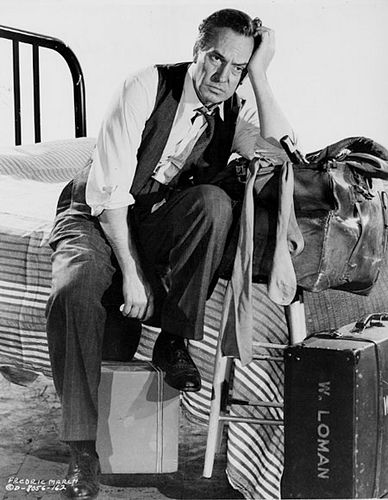
6. Death of a Salesman (1951) – directed by Laslo Benedek

death

5.  The Heart of the Matter (1953) – directed by George Moore O’Farrell

22057 - The Heart of the Matter

4.  The Heiress (1949) – directed by William Wyler

vlcsnap-238307

3. Le Plaisir (1952) – directed by Max Ophüls

le plaisir

2.  Brighton Rock (1947) – directed by Rowan Joffé

brighhton

1.  All the King’s Men (1949) – directed by Robert Rossen

1949

***************************


Just for fun, here is a mash-up of clips from about 300 films that had appeared on the IMDb Top 250 by November 2012. How many can you spot?

Johnny Guitar (1954)

Johnny Guitar
Directed by Nicholas Ray
Written by Philip Yordan from a novel by Roy Chanslor
1954/USA
Republic Pictures
Repeat viewing/Netflix rental
#292 of 1001 Movies You Must See Before You Die

[box] Johnny: There’s only two things in this world that a ‘real man’ needs: a cup of coffee and a good smoke.[/box]

Nick Ray strays into Sam Fuller territory with this gaudy, off-kilter Technicolor Western.

Vienna (Joan Crawford) owns a saloon in the middle of cattle country.  The headstrong businesswoman’s plan is to wait for the railroad to pass through and then cash in on a new town.  The ranchers have little use for the railroad or Vienna.  But Vienna has a secret weapon in the form of the enigmatic Johnny Guitar (Sterling Hayden).  The two apparently had a thing at one time but at first things are more platonic not least because Vienna has since had a thing with the Dancin’ Kid.

A stagecoach is robbed and a man is killed.  Blame is pinned on the Dancin’ Kid’s gang. Emma (Mercedes McCambridge), the sister of the victim, insists that Vienna was also mixed up in this.  She starts organizing a lynching party.

The Kid’s gang is evidently innocent of the stagecoach hold-up but decides the best way to get money to leave town is to rob the local bank.  Vienna is in the bank at the time but her money is spared.  All these things whip Emma into a state of righteous wrath and builds up to the climactic battle between the two women.  With Ernest Borgnine as a gang member, Ward Bond as a town elder and John Carradine as a loyal drunk.

If for nothing else, this is worth seeing simply to watch Crawford and McCambridge try to outdo each other in the overacting department as each actress’s character vies to become Queen Bee of the territory.  Otherwise, it’s enjoyable but nothing that makes me want to see it again.

TrailerJohnny


The Barefoot Contessa (1954)

The Barefoot Contessa
Directed by Joseph L. Mankiewicz
Written by Joseph L. Mankiewicz
1954/USA
Figaro/Transoceanic Film
First viewing/Amazon Instant
#288 of 1001 Movies You Must See Before You Die


[box] Maria Vargas: In Hollywood, it is not easy to become a star.

Harry Dawes: Ah, where is it easy?[/box]

Mankiewicz takes a melodramatic look behind the “glamour” of show business through a cynical Cinderella story of a Spanish beauty who becomes a Hollywood star.  It’s watchable enough.

Writer-Director Harry Dawes (Humphrey Bogart) has fallen on hard times and has taken to working for egomaniac producer Kirk Edwards.  The two are in Europe scouting for a fresh face to star as leading lady in their new film.  They find her in gorgeous nightclub dancer Maria Vargas.  Despite her bearing and beauty, Maria is a simple sort who prefers going barefoot and has a turbulent home life.  With the help of Dawes and PR man Oscar Muldoon (Edmund O’Brien),  Maria’s film debut is a sensation and she is a star.

All Maria’s fame and beauty seem to do for her, however, is make her the prize in a tug-of-war between the men in her life.   Finally, it seems she may have found her Prince Charming in the form of handsome, wealthy Count Vincenzo Torlato-Favrini (Rossano Brazzi).  But life is not a fairy tale even for the rich and famous.  With Valentina Cortese, Warren Stevens, Elizabeth Sellars, and Marius Goring.

I thought this film dragged and could not really get too excited about Gardner’s fate.  The actors all seemed tired.  I might not have been in the right mood.

Edmund O’Brien won the Academy Award for Best Supporting Actor beating out three far superior performances in On the Waterfront.  Mankiewicz was nominated for Best Writing, Story and Screenplay.

Trailer

Magnificent Obsession (1954)

Magnificent Obsession
Directed by Douglas Sirk
Written by Robert Blees and Wells Root based on a screenplay by Sarah Y. Mason and Victor Heerman and a novel by Lloyd C. Douglas
1954/USA
Universal International Pictures
Repeat viewing/Netflix rental


[box] Dr. Bob Merrick: [of a plan to do anonymous good works] Well, if it’s as simple as all that, why, I’ll certainly give it a chance.

Edward Randolph: Now wait, Merrick! Don’t try to use this unless you’re ready for it! You can’t just try this out for a week like a new car, you know! And if you think you can feather your own nest with it, just forget it. Besides, this is dangerous stuff. One of the first men who used it went to the Cross at the age of thirty-three…[/box]

Once you get past all the glorious Technicolor, all that is left is a thoroughly preposterous melodrama.

Spoiled playboy Bob Merrick (Rock Hunter) recklessly loses control of his speedboat and crashes, requiring treatment with the only resuscitator in town.  Because he has selfishly monopolized this item, it is not available for use to revive saintly and beloved Dr. Phillips when he has a heart attack.  Despite a thriving practice, Phillips leaves his widow Helen (Jane Wyman) little money.  It turns out that the doctor has spent most of his income on anonymous good deeds.

Bob tries to apologize to Helen but she wants nothing to do with him.  Finally, she gets hit by a car when fleeing from him and is left blind.

The contrite Bob pledges his life to carrying on the altruistic philosophy of Dr. Phillips and to the study of neurosurgery.  In the meantime, he gets next to Helen in the guise of “Robby”, a humble medical student.  Surely my astute readers can put together a suitably inevitable and sudsy ending without further assistance from me.  With Agnes Moorehead as Dr. Phillips’ nurse and Otto Krueger as of his disciples.

I have a confession to make.  While my records show that I had seen this movie before, I have no recollection of any part of the plot.  This time, as I often do with movies I have seen, I first watched the film with the commentary track on, in this case sparing me much of the treacly dialogue.  When I played the movie again I simply could not stay awake.  Since there is no way I am going to subject myself to Magnificent Obsession again, this will have to suffice as my only review.

This was a remake of a 1935 picture of the same name directed by John Stahl and starring Irene Dunne and Robert Taylor, which I have not seen.

Jane Wyman was nominated for an Academy Award as Best Actress.

Trailer

French Cancan (1954)

French Cancan (1954)
Directed by Jean Renoir
Written by Jean Renoir and Andre-Paul Antoine
1954/France/Italy
Franco London Films/Jolly Film
Repeat viewing/My DVD collection


[box] Henri Danglard: You know why it breaks my heart to see you go? They can smash the place to pieces for all I care! But the profession’s losing a good trouper. I thought you were one of us. If not, get out! Line up for the quadrille, girls.[/box]

Jean Renoir finally returns to a liberated France to capture all the color and gaiety of Belle Epoque Paris in this fictionalized look at the birth of the Moulin Rouge and the Cancan.

Henri Danglard’s (Jean Gavin) nightclub is doing a lackluster business despite the attraction of Lola ‘La Belle Abbesse’ (Maria Felix), a fiery Spanish beauty who belly-dances and sings for the crowd.  Henri and Lola are having an affair.  One night they decide to go slumming in Montmarte.  There Henri finds that people are still dancing the cancan.  He dreams of opening a place where the bourgeoise could enjoy moderately priced luxuries and beautiful, untarnished girls.

He also notices a young laundress dancing at the cafe, who appears to have the requisite talent.  Her name is Nini (Françoise Arnoul).  Danglard dances with her, sparking the jealousy that will consume Lola for the rest of the film.  He asks Nini to try out for a show.  She assumes this offer will include a visit to the casting couch so moves quickly to lose her virginity to her baker sweetheart Paolo.  But Danglard treats her only with gentlemanly courtesy,

The rest of the movie follows the Danglard’s money woes in builiding the Moulin Rouge and the training of the dancers.  Eventually, Danglard and Nini begin an affair leading to typical love dramas with Lola, Paulo, and a Russian Prince who has taken a fancy to Nini.  But the plot is very secondary to several musical numbers and the spendid dancing.

After a long exile, Renoir returned to his beloved Paris in a mood to recreate her most glamorous days.  He also masters his father’s ways with the faces and figures of beautiful women.  He found the perfect rosy Renoir subject in Arnoul.  Gabin lost little of his sex appeal as he aged.  This is all handled in such a way that it might very well appeal to musical comedy naysayers.  Recommended.

Clip – Edith Piaf