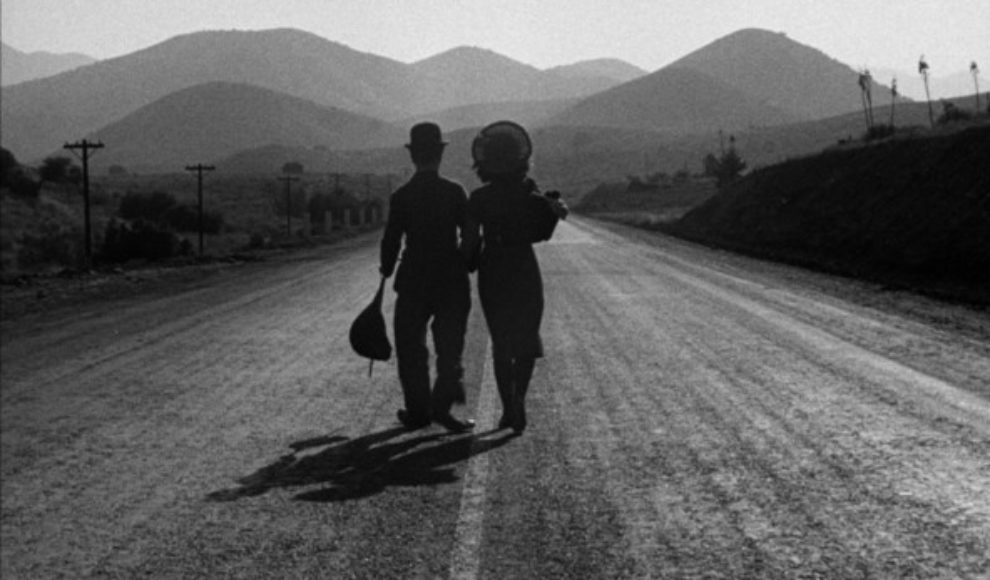
Lonelyhearts (1958)

Lonelyhearts
Directed by Vincent J. Donehue
Written by Dore Schary from the play by Howard Teichmann and the novel by Nathaniel West
1958/USA
Dore Schary Productions
First viewing/YouTube

[box] Fay Doyle: All right, what did you call me up for? Who are you kidding? Listen, you wanted a sad story, you heard a sad story! You also wanted some action![/box]

This had its hits and misses for me.  The acting made it work.

Adam White (Montgomery Clift) is a sensitive and thoroughly decent young man.  He is also very smart and eager to become a writer.  His immediate goal is to get a job as a reporter so he strikes up the acquaintance of Florence Shrike (Myrna Loy), wife of the city editor of a prominent daily, at the local watering hole.  Finally he gets his introduction to William Shrike (Robert Ryan).  Shrike is an embittered cynic.

After they match wits over ginger ale (White) and Scotch (Shrike), Adam gets his job. Unbeknownst to him, Shrike’s main motivation is to torture the young man his wife took an interest in.  Shrike has still not forgiven her for an affair she had 10 years before.

So Shrike saddles White with responsibility for a new feature, a Miss Lonelyhearts advice column.  The tales of woe in the letters he receives are too much for the young man to bear but Shrike offers no way out.  Finally, White learns some hard lessons about his correspondents and himself.  With Maureen Stapleton’s film debut as one of the letter writers and Delores Hart as White’s fiancee.

What a treat to see Myrna Loy again!  She gives a heartfelt and subtle performance.  For my money Loy is the best thing about this movie though all the acting was of a high standard.  The problem is with the very wordy script.  There are tons of speeches that ring false and a lot of predictable melodrama.  Nonetheless, I had teared up by the end though I would have preferred to see the story told in the eyes of the great cast.

Maureen Stapleton was nominated for Best Supporting Actress for her performance in Lonelyhearts.

Clip

The Lovers (1958)

The Lovers (Les amants)
Directed by Louis Malle
Written by Louise de Velmorin
1958/France
Nouvelles Editions de Films
First viewing/Netflix rental


[box] “I know it [obsenity] when I see it, and the motion picture involved in this case is not that.” Jacobellis v. Ohio, 378 U.S. 184, 197 (1964) (Stewart, J., concurring)[/box]

If you look, you will see the birth of the French New Wave.

Jeanne Tournier (Jeanne Moreau) is bored despite her great wealth and social standing.  Her husband Henri, a newspaper publisher, barely tolerates her.  The couple live in a grand chateau in the countryside outside Dijon but Jeanne spends as much time as possible in Paris.  There she carries on an affair with polo player Raoul Flores and gossips with her shallow friend Maggie.  Even this doesn’t satisfy somehow.

Henri eventually works up enough interest to demand that Jeanne invite Maggie and Raoul for the weekend at their home.  Naturally, Jeanne thinks this is a terrible idea but she complies.  On her way home from Paris, her car breaks down.  Now she is in danger of leaving her friends alone with Henri.

But a passing stranger comes to the rescue.  He’s not too impressed with Jeanne but agrees to drop her off at her home.  Henri invites him to stay the night.  The stranger proves to be the spark that lights Jeanne’s fire.

This is quite OK and Moreau, as always, is a joy to watch.  Here she goes through several different mood changes and it is amazing to see her appearance change drastically.  The New Wave elements come in most clearly when Jeanne and Raoul go to an amusement park.

Don’t go into this looking for anything even approaching obscenity.  The film is almost anti-erotic until the stranger enters the picture.  Even then there is zero nudity and though the couple go to bed the camera is discreet.  There are some shots of Moreau’s face when her character is clearly enjoying whatever is being done to her off camera.  But it was all apparently too much for Cleveland Heights, Ohio at the time.

Fan trailer – clips set to Brahms

Desire Under the Elms (1958)

Desire Under the Elms
Directed by Delbert Mann
Written by Irwin Shaw from the play by Eugene O’Neill
1958/USA
Don Hartman Productions
First viewing/Amazon Prime

[box] They wa’n’t strong enuf fur that! They reckoned God was easy. They laughed. They don’t laugh no more. Some died hereabouts. Some went West an’ died. They’re all under ground–fur follerin’ arter an easy God. God hain’t easy. (He shakes his head slowly.) An’ I growed hard.  — Eugene O’Neill, Desire Under the Elms[/box]

More domestic disfunction in 1958, this time in New England.

Ephraim Cabot (Burl Ives) is a 76-year-old tyrant with a prosperous farm.  He works his three grown sons mercilessly and treats them with contempt.  The youngest, Eben (Anthony Perkins), seems to be the softest but he is secretly filled with steely determination to make all that Ephraim owns his own.  The source of this wealth was his own mother’s dowry.

Ephraim may be hard but he is also lonely.  He sets off to find a wife.  While he is gone, Eben digs up Ephraim’s secret cache of gold and buys up his half-brothers’ share of the farm. They take the money and set off to prospect for gold in California.

Ephraim comes back with a young Italian wife, Anna (Sophia Loren).  She is just as determined to make the farm hers as Eben is.  After a stormy start, they end up in each other’s arms.  Tragedy ensues.

This is an O’Neill drama with the gravitas of Greek tragedy and OK in its way.  It hinges, however, on believing the grand passion between Perkins and Loren.  I didn’t buy it for a minute.  Perkins is a fine actor but he is just not cut out to be any kind of romantic lead. Ives was certainly having quite a year!

Desire Under the Elms was nominated for an Oscar for Best Cinematography, Black-and-White.

Trailer

Endless Desire (1958)

Endless Desire (Hateshinaki yokubô)
Directed by Shohei Imamura
Written by Shohei Imamura and Hisachi Yamanouchi from a novel by Shinji Fujiwara
1958/USA
Nikkatsu
First viewing/Hulu

[box] I like to make messy films. — Shohei Imamura[/box]

Is this film noir or pitch black comedy?  A bit of both really.

A group of veterans agreed to meet on a certain date to uncover a cache of morphine that had been buried by one of them, a lieutenant Hashimoto.  From the start, things are not as they should be.  Hashimoto’s “sister” and her thug husband tell them that he is dead and insist on joining in the hunt.  Likewise, the band is unable to shake a hanger-on whom nobody recognizes.  Finally, the group is required to hire the owner’s son in order to rent the building from which they plan to dig.  They are under time pressure as the authorities plan to demolish the whole shopping area where the drugs are located.

The hapless team have nothing but trouble en route to the treasure.

Imamura could have picked up the pace a bit but basically this is an amusing romp.

Trailer (no subtitles)

White Wilderness (1958)

White Wilderness
Directed by James Algar
Written by James Algar
1958/USA
Walt Disney Productions
First viewing/Amazon Instant

[box] The prediction that glaciers will be gone from Glacier National Park has been moved up by 10 years to 2020, the same year it’s predicted the Arctic Sea will be ice-free in the summer. — Bill Kurtis [/box]

Disney’s faked lemming mass suicide turned out to be murder.  Otherwise, it’s about par for the course for a 50’s Disney nature documentary — that is to say corny but watchable.

The formula has now been set.  We begin with an animated “origins” sequence, follow with scenes illustrating the geology and climate, and end with many scenes of cute animals going about their daily business.

When I was posted to Finland, I covered Arctic Council meetings and learned to love the extreme North.  This was made in Canada so the fauna is different but I still enjoyed it.

From Wikipedia:  A Canadian Broadcasting Corporation documentary, Cruel Camera, found the lemmings used for White Wilderness were flown from Hudson Bay to Calgary, Alberta, Canada, where they did not jump off the cliff, but were in fact forced off the cliff by the camera crew.  Because of the limited number of lemmings at their disposal, which in any case were the wrong sub-species, the migration scenes were simulated using tight camera angles and a large, snow-covered turntable.

White Wilderness won the Academy Award for Best Documentary, Feature.  It was nominated for Best Music, Scoring of a Dramatic or Comedy Picture.

Clip –  Lemming exodus


Rusty Knife (1958)

Rusty Knife (Sabita naifu)
Directed by Toshio Masuda
Written by Shintaro Ishiharo and Toshio Masuda
1958/Japan
Nikkatsu
First viewing/Hulu

[box] “You can get much further with a kind word and a gun then you can with a kind word alone” ~ Al Capone[/box]

This is a gritty Japanese noir with more graphic violence that we would have seen on US screens at the time.

The authorities have been unable to pin anything on local crime boss Katsumata so he is loose and creating chaos.  Finally they get an anonymous letter from one of three men who witnessed the murder of a city councilman by Katsumata and his gang.  Katsumata astutely guesses and eliminates the rat.  The other two witnesses were named in the letter and it is a race between the mob and the police as to who will catch up with them first.

One of the witnesses has been trying to go straight after five years in jail for murdering the thug who raped his girlfriend and caused her suicide.  During the course of the story, he learns that he may not have eliminated all the culprits and sets about trying to do so.

This is solid if not great.  There’s some nice cinematography and a jazzy score.  One wonders how corrupt Japan really was at the time.  It seems to be a recurrent theme.

Trailer (no subtitles)

Dunkirk (1958)

Dunkirk
Directed by Leslie Norman
Written by David Divine and W.P. Lipscomb from a novel by Trevor Dudley Smith and a book by Ewan Butler and J.S. Bradford
1958/UK/USA
Ealing Studios
First viewing/YouTube rental

[box] Merchant Seaman: It may be a phoney war to you, but it’s not to all the blokes at sea. Never has been.[/box]

This war history was the kind of excellent “sleeper” I am always hoping for.

This is a dramatization of the events surrounding the evacuation of over 300,000 British and Allied troops from the beaches of Dunkirk.  We follow three different stories.  The briefest is press conferences and official conversations following the fate of the British army.  We also focus on the home front.  Bernard Lee plays a concerned citizen and Richard Attenborough plays a man who is more concerned with his wife and new baby than what he thinks of as a phony war.  Both of these men are boat owners who will have to decide whether to put their vessels on the line.

The major drama comes from a small group of soldiers who have been separated from their company and must desperately try to cross enemy lines in an attempt to rejoin their comrades.  John Mills is a corporal who must keep them moving.

This was just my cup of tea.  It is the kind of moving historical drama that the British were so good at.  The story is equal parts action and pathos.  Richard Attenborough is becoming one of my favorite actors but the rest are no slouches either.

Trailer

I Bury the Living (1958)

I Bury the Living
Directed by Albert Band
Written by Louis Garfinkle
1958/USA
Maxim Productions
First viewing/Netflix rental

[box] Robert Kraft: Andy, you better get this straight right now. You heard that lieutenant. It’s possible for some people to have things inside them that make other things happen. Nothing is impossible for a man like that, if he thinks about it hard enough.[/box]

This is predictable but of fairly high quality for a B horror flick.

Robert Kraft (Richard Boone) is on the management committee of a conglomerate.  One of the business’s concerns is the local mortuary and cemetery.  The committee members take turns managing that business.  Despite Kraft’s considerable objections, it is now his turn to take over.  One of his first actions is to give the elderly caretaker, Andy McKee (Theodore Bikkel), retirement on full pay for his forty years of faithful service.

In the office is a detailed map of all the grave sites.  Black pins mark “occupied” plots while plots with white pins have been purchased.  Kraft discovers that when he accidentally replaces a white pin with a black pin the plot owner dies.  Kraft is driven almost insane as the death toll mounts.

I figured out the ending about 10 minutes into the movie and then it was just a matter of waiting.  Despite this there were actually a few moments of mild scares en route.  This is better acted and produced than most such fare.  Bikkel gives it his all with the Scottish accent.

TrailerI B

God’s Little Acre (1958)

God’s Little Acre
Directed by Anthony Mann
Written by Ben Maddow (uncredited)/Philip Yordan (front) from a novel by Erskine Caldwell
1958/USA
Security Pictures
First viewing/Netflix rental

[box] Ty Ty Walden: Lord, give me the strength to spread out my arms to the ends of my fields. Let me fill up the holes, make the land smooth. You spared my sons, and I’ll never dig another hole again. Except to… to plant seeds for things to grow.[/box]

1958 seems to be Hollywood’s year for Southern Disfunction.  Unfortunately, despite my beloved Robert Ryan and director Mann, this does not rise to the top of its genre.

Ty Ty Walden (Ryan) is a backwoodsy type ex-cotton farmer with a large family of lusty adult children.  His dying grandfather told him there was gold buried on the place and for the last 15 years he and his boys have spent their time in non-stop digging on the property. The only place free of enormous holes is “God’s Little Acre”, a small plot he has dedicated to the church.  Since he conducts no economic activity besides digging, he is little danger of having to make a donation.

The plot is full of all kinds of incidents but mostly concerns the romantic and sexual shenanigans of the kids.  Primarily of these is a love triangle concerning the continuing lust between daughter-in-law Griselda (Tina Louise) and son-in-law Will (Aldo Ray) and the consternation of both their spouses.  With Buddy Hackett as the suitor of TyTy’s youngest daughter, Rex Ingram as a loyal retainer, and Michael Landon as an albino (seriously!).

When the picture started and I saw that Ryan was going to play a drawling rube I began to cringe.  However, Ryan actually manages to deliver a complete and credible performance. Everyone else is also fine.  It is the material that is all over the place.  The tone careens violently between broad farce and melodrama.  Kind of like Lil’ Abner meets Peyton Place.

Trailer

The Long, Hot Summer (1958)

The Long, Hot Summer
Directed by Martin Ritt
Written by Irving Ravetch and Harriet Frank Jr.
1958/USA
Jerry Wald Productions
First viewing/Netflix rental

[box] Ben: Life’s very long and full of salesmanship, Miss Clara. You might buy something yet.[/box]

It’s such joy to watch a young, sexy Paul Newman woo Joanne Woodward on screen!

Ben Quick (Newman) has a reputation as a “barn-burner”.  There is no proof but he is kicked out of one town after another.  The sure thing is that he is an inveterate con man. At the urging of her sexy sister-in-law Eula (Lee Remick), Clara Varner (Woodward) picks up Quick as he is walking down the road toward town, a suitcase in his hand.  Clara is smart and cultivated and wants as little as possible to do with Quick.  She has been dating the genteel son of an old Southern family for years.  He’s not proving to be very quick on the uptake though.

Clara is the daughter of Will Varner (Orson Welles), a crude self-made man who owns just about everything in town.  Will is sorely disappointed in his son Jody (Anthony Franciosa), who just lacks the Varner ruthlessness, and in Clara for not giving him grandsons.  Will sees Quick as a kindred spirit.  Soon he has him lined up as the father of his grandbabies. Quick had been trying to get under Clara’s skin before but this new offer makes him relentless.  With Angela Lansbury as Will’s lady love.

Here Newman plays Hud before there was a Hud.  He is superb and irresistible. Woodward matches him every step of the way.  There is a wonderful playfulness in their scenes.  The story is sort of an ersatz blend of William Faulkner and Tennessee Williams but with this cast and the sparkling dialogue I didn’t mind a bit.

Clip