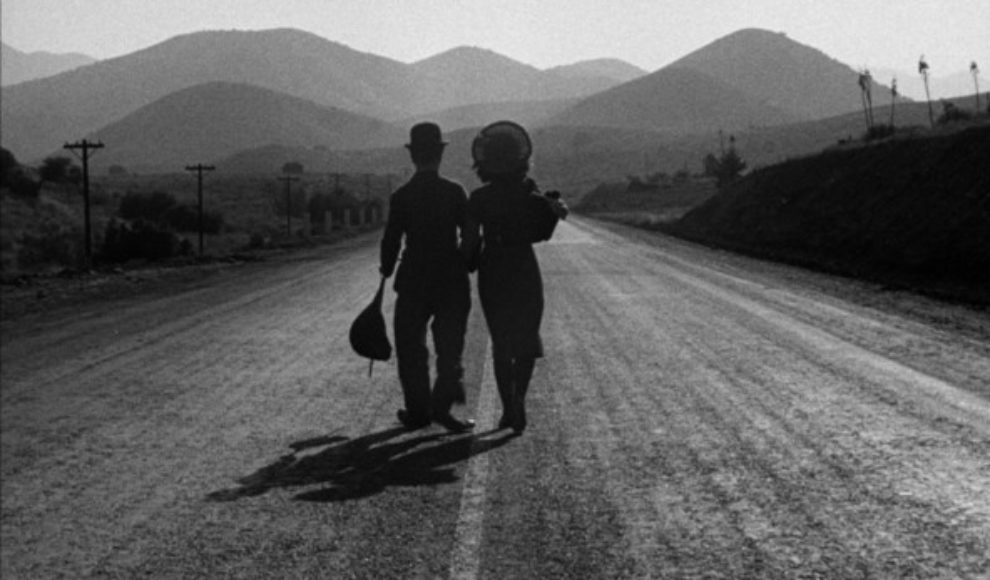
Salvatore Giuliano (1961)

Salvatore Giuliano 
Directed by Francesco Rosi
Written by Suso Cecchi D’Amico, Enzo Provincale, Francesco Rosi, and Franco Salinas
1961/Italy
Galatea Film/Lux Film/Vides Cinematografica
First viewing/Netflix rental

[box] When plunder becomes a way of life for a group of men in a society, over the course of time they create for themselves a legal system that authorizes it and a moral code that glorifies it.” ― Frédéric Bastiat[/box]

Rosi gives us some beautifully shot violence and I have a confession to make.

The film is told in a series of flashbacks within flashbacks spanning the years from 1945 to 1960 in Sicily.  At the end of WWII, a Separatist movement arises in Sicily that conducted a reign of terror against both the police and the mafia.  Young Salvatore Giuliano is recruited and becomes an impassioned advocate for independence as well as an adept killer.

Eventually, Sicily is granted a form of autonomy.  Now the separatists become more like the lackeys of the mafia.  Giuliano mostly sticks to his mountain hide out.  He is later betrayed by his right-hand man, Gabrieli Pisciola.

My confession.  I listened to the commentary track on day 1.  On day 2, I watched the film. I had had a bad night the night before and kept drifting between sleep and consciousness.  So this review doesn’t mean much.  I’m not going to be watching it again so this will have to do.

Trailer – no subtitles

Underworld U.S.A. (1961)

Underworld U.S.A.
Directed by Samuel Fuller
Written by Samuel Fuller
1961/USA
Globe Enterprises
First viewing/FilmStruck


[box] Sandy: Why don’t you take a good look at yourself. What do you see? A doctor? A scientist? A businessman? You see a scar-faced ex-con. A two-bit safecracker. A petty thief who don’t know when he really made the big time. Where do you come off to blast her? No matter what she’s been, what she’s done. She’s a giant! And you wanna know why? Well, I’ll tell ya. Because she sees something in you worth saving. If only one tenth of one percent of all the good in her could rub off on you, you’d be a giant, too. But you’re a midget! In your head, in your heart, in your whole makeup. You’re a midget![/box]

This is Sam Fuller at his lurid best aided by the performance of Cliff Robertson and the cinematography of Hal Mohr.

Tolley Devlin had a terrible childhood.  He was raised in prison until his convict mother died.  His father is a small-time hoodlum.  Tolley is taken in hand by kindly Sandy.  Shortly thereafter as a young teenager, he witnesses shadowy figures beat his father to death.  Rather than cooperate with the police, he decides to take matters into his own hands.

This has to wait until 20 years later when Tolley is in prison for burglary.  One of his chief suspects is dying in the prison hospital and Tolley wangles a job there.  On his death bed, the suspect reveals the names of the other murders.

Tulley insinuates himself with the gang, now a major organized crime ring, and plays both ends against the middle.  In the meantime, he earns the love of a drug courier for the mob. Much violence and skullduggery ensue.

Any one familiar with Fuller’s work would not need to see the credits to know he directed it.  He takes a time-worn format and makes it quirky enough that the same old story seems new and interesting.  I had forgotten how good an actor Robertson was.

Trailer

Breakfast at Tiffany’s

Breakfast at Tiffany’s
Directed by Blake Edwards
Written by George Axelrod based on the novel by Truman Capote
1961/USA
Jurow-Shepherd
Repeat viewing/Netflix rental
One of 1001 Movies You Must See Before You Die

[box] Holly Golightly: Anyone who ever gave you confidence, you owe them a lot.[/box]

The movie opens with Audrey Hepburn in Givenchy and you think you have found movie paradise.  Then Mickey Rooney takes the screen in yellow face and buck teeth and you start to doubt it.

Holly Golightly (Hepburn) has the charm, beauty and sex appeal to easily score 50 dollar bills when she goes to the powder room while on dinner out on the town.  What she does in addition to get the money is left unstated.  She is slightly dotty and often loses her building key.  Upstairs neighbor Mr. Yunioshi (Rooney) constantly is interrupted with her buzzing him to let her in.  He is big on ineffectual bluster but will resort to calling the cops when Holly’s parties get out of hand.

Holly meets writer Paul Varjak (George Peppard) as he is moving in to the building.  They have a lot in common as he is being “kept” by his interior designer, a wealthy older woman (Patricia Neal).  They bond early on.  He reminds her of her brother Fred, who was her constant companion during her terrible childhood and she calls Paul “Fred” for the rest of the movie.

We learn that Holly is sweet and vulnerable but also a bit of a fraud.  Her English accent and frequent use of French belie a hardscrabble Texas upbringing.  Inevitably, Paul falls for Holly but she is more interested in marrying for money to support her brother, who will soon be discharged from the army,

I have a long-running love/hate relationship with this film.  This is the iconic Hepburn performance and she is just perfect in it. My next favorite is Martin Balsam as Holly’s agent. It’s a good story which has me in tears by the end

The producer’s commentary expresses regret that they didn’t cast Rooney’s part with a Japanese actor.  That would have helped a bit but the offensively stereotypical characterization of the man would still have been a gigantic problem.  1961 was the tale end of the time when White actors could play Asians and if the performance had not been so broad and obnoxious it might have been a mere footnote to discussions of this film.

Still, I recommend seeing this one before you die – or get much older.

“Moon River” won the Oscar for Best Music, Original Song and Henry Mancini won for Best Music, Scoring of a Dramatic or Comedy Picture.  Breakfast at Tiffany’s was nominated in the categories of Best Actress; Best Writing, Screenplay Based on Material from Another Medium and Best Art Direction-Set Decoration, Color.  How did it miss for Best Costume Design?

Trailer

Night Tide (1961)

Night Tide
Directed by Curtis Harrington
Written by Curtis Harrington
1961/USA
Phoenix Films
First viewing/YouTube

[box] Mora: Yes, I love the sea most of all. But I’m afraid of it, too.

Johnny Drake: I guess we’re all a little afraid of what we love.[/box]

This is the kind of dreamy “horror” movie that Val Lewton used to make – albeit on a higher budget.

Johnny Drake (Dennis Hopper) is a lonely sailor on leave.  At a coffeehouse, he spots Mora, a dark-haired beauty, sitting alone .  He tries to chat her up but she would prefer to listen to the music.  He is nothing if not persistent and follows her until she eventually becomes more friendly.  He learns she is an attraction in the pier amusement park appearing as a mermaid.  She has a strange affinity with the sea.

They fall in love.  Soon Johnny becomes acquainted with the very strange people surrounding Mora.  All warn him that her two previous boyfriends were found drowned. He is not dissuaded.  Eventually he begins to wonder if she really is a mermaid.

Far from being a prequel to Splash (1984), this movie portrays mermaids as menacing creatures who lure sailors to their doom.  The potential that Mora is one gives Johnny some pretty horrific nightmares.  This movie is strangely hypnotic.  On the other hand, most of the acting other than Hopper’s is fairly stilted and the pacing could have been better.  On balance, I’m glad I saw this unique little film.

Trailer

Creature from the Haunted Sea (1961)

Creature from the Haunted Sea
Directed by Roger Corman
Written by Charles B. Griffith
1961/USA
Roger Corman Productions
First viewing/Amazon Instant

[box] Sparks Moran: [narrating] It was dusk. I could tell ’cause the sun was going down.[/box]

The “unspeakable secret” is that the creature is a badly executed muppet.

The Bay of Pigs was apparently on Corman’s mind.  A gangster, his moll, and his gang transport a group of Cubans and stolen loot from the Cuban treasury to the US for use by counter-revolutionalry forces. Among the gang is an American spy. The gangster’s plan is to bump off his passengers and steal the money. The gangster invents a sea creature as the cause of the mysterious disappearances.  Little does he know that there really is a monster.

The film feels a lot like a spoof of James Bond movies a year before they even existed. The monster is ridiculous but some of the dialogue is pretty funny.

Corman had an extra couple of days while shooting The Last Woman on Earth in Puerto Rico so he commissioned a script that could use the same cast.  The rush job and ultra-low budget certainly show.

Joe Dante – Trailers from Hell

Il Posto

Il Posto
Directed by Ermanno Olmi
Written by Ermanno Olmi and Ettori Lombardo
1961/Italy
24 Horses/Titanus
Repeat viewing/FilmStruck


“Oh, you hate your job? Why didn’t you say so? There’s a support group for that. It’s called EVERYBODY, and they meet at the bar.” ― Drew Carey

Olmi deserves a lot of credit for turning a story as slight as this one into something really enchanting and memorable.

Domenico Cantoni has recently left school and has received a letter allowing him to take an aptitude test for employment at a large corporation in Milan.  The wages are low but a job there means lifetime employment.  We follow Domenico through the slightly surreal examination process, during which he meets and tentatively attempts to court a female applicant.

Both Domenico and his friend are eventually hired. No clerk job is available so he begins working life as a messenger.  She works in another building, has a different lunch break, and is very difficult for him to make contact with.  He bumbles along during his working life and the social life the company provides at a very weird New Year’s Eve party.

Everybody has felt like a fish out of water at sometime and Olmi perfectly captures that feeling.  His Domenico is young, vulnerable, and totally endearing.  Although absolutely nobody would sign up to work at this particular corporation, the director takes an amused and even affectionate look at the organization and its employees.  I enjoyed this very much.  Recommended.

Trailer

Judgement at Nuremberg (1961)

Judgement at Nuremberg (1961)
Directed by Stanley Kramer
Written by Abby Mann based on his original story
1961/USA
Roxlom Films Inc.
Repeat viewing/Netflix rental


[box] Hans Rolfe: My Country, right or wrong.[/box]

This multi-star production examines changing attitudes to Germany post-WWII.

The film is set in 1948 towards the end of the many Nazi war crimes trials.  The court now reaches the trial of a group of judges that applied Nazi race laws.  The head of the panel of Allied judges is Dan Haywood (Spencer Tracy), a middle American district attorney, who, with the film’s audience will be educated in the legal system under Hitler.  The judges are defended by attorney Hans Rolfe (Maximilian Schell) and prosecuted by JAG Col. Tad Lawson (Richard Widmark).  The most prominent of the German jurists on trial is Dr. Ernst Jannings (Burt Lancaster) a widely published and respected legal scholar.

Rolfe’s defense hinges on depicting his clients as patriots and as judges whose duty was to apply the law of the land.  But the prosecution shows that the judges succumbed political pressure to rule contrary to the established facts.  With Marlene Dietrich as the widow of an executed war criminal, Montgomery Clift as a man sterilized as a “mental defective”; and Judy Garland as a Gentile whose innocent friendship with an elderly Jew led to the man’s execution.

The film is three hours and six minutes long and probably would have been even more powerful with at least half an hour worth of cuts and a tighter screenplay.  That said, it kept my attention throughout and is always thought-provoking.  In the background of the trial lurks the Cold War, in which the U.S. needs the support of West Germany.  Gradually, we see suggestions that Nazi misconduct should be relegated to the history books.  The film comes down squarely on the side of holding individuals responsible for the consequences of their actions.  There’s quite a bit of speechifying but it is of a high standard and goes down fairly easily.

Maximilian Schell won the Oscar for Best Actor and Abby Man for Best Writing, Screenplay Based on Material from Another Medium.  Judgement at Nuremberg was nominated in the categories of Best Picture; Best Supporting Actor (Clift); Best Supporting Actress (Garland); Best Director; Best Cinematography, Black-and-White; Best Art Direction-Set Decoration, Black-and-White; Best Costume Design, Black-and-White; and Best Film Editing.

Trailer

The End of Summer (1961)

The End of Summer
Directed by Yasujiro Ozu
Written by Kogo Noda and Yasujiro Ozu
1961/Japan
Toho Company/Takarazaka Productions
Repeat viewing/Netflix rental


[box] “Folks are usually about as happy as they make their minds up to be.” ― Abraham Lincoln[/box]

Near the end of his own life, Ozu makes a reflective film about what’s really important at the end of the day.

Widower Manbei Kohayagawa is enjoying his golden years.  He owns a sake brewery but is growing more and more hands-off in its operations.  He has three daughters – the eldest, Fumiko, is married to a company employee.  Next comes Akiko (Setsuko Hara), a widow with a young son.  Youngest is the single Noriko.  This being Ozu, one of the threads of the story is attempts to find husbands for Akiko and Noriko.

More important is the family’s upheaval over Manbei’s reunion with a former mistress and her child who may or may not be his daughter.  Spies are sent out and when suspicions are confirmed Fumiko berates her father harshly.  Manbei’s illness causes a reassessment of the situation and in the end several characters choose between personal happiness and familial obligations.

I always gush about Ozu films and why should this be any exception?  There’s a lot of comedy here and well as true poignancy.  He captures that feeling between exasperation and love for family members that should be familiar to many viewers.

The film is exquisitely shot as usual.  One sequence that both my husband and I remarked on was the arrival of a train.  It begins with a conversation between a man and a woman with unstated undercurrents.  Then you think the man is looking away and the woman looking at him.  It turns out both are looking at an arriving train.  This is indicated simply by sound.  It doesn’t sound like much but the perfection of the composition and the unison of the actors’ movements make it very special.  Highly recommended.

Enjoy this beautiful montage of clips from Ozu’s final six films

Bloodlust! (1961)

Bloodlust!
Directed by Ralph Brooke
Written by Ralph Brooke based on the story “The Most Dangerous Game” by Richard Connell
1961/USA
cinegrafik
First viewing/Amazon Prime

[box] Dean Gerrard: I can’t go on forever pretending to be a useless drunk.[/box]

Do yourself a big favor and watch the original 1932 The Most Dangerous Game instead of this low-budget rip-off.

It is 1961 and therefore the heroes and heroines of this tale must be teenagers (played by actors in their twenties).  They are out on a yachting trip and spot a mysterious island. When the captain of the vessel passes out, they decide to take the boat in and explore. They meet crazy island owner Dr. Albert Balleau.  His hobby is hunting … humans.

The best thing about this movie is that it is only 68 minutes long.  It’s not campy enough to tickle my fancy.  Also, it does not feature Joel McCrea with his shirt off like the original version.

Trailer

The Parent Trap (1961)

The Parent Trap
Directed by David Swift
Written by David Swift from a book by Erich Kastner
1961/USA
Walt Disney Productions
Repeat viewing/Netflix rental

Sharon McKendrick:  Watch out for snakes!

I hadn’t seen this since childhood and had forgotten a lot.  Haley Mills is fantastic as usual.

Identical twins Susan Evers and Sharon McKendrick (both played by Mills) have been separated since infancy when their parents divorced.  Susan has lived in California with her father Mitch (Brian Keith) and Sharon in Boston with mother Maggie (Maureen O’Hara).  They meet at summer camp and get off to a very rocky start.  When they discover they are sisters, however, their greatest desire is to meet the parents they have been denied and to reunite the family.  They decide the easiest way to get their first wish is to switch places when they go home.

Susan and Sharon are surprisingly convincing at imitating each other.  Maggie even seems amenable to their plan.  The great sticking point is Mitch who is about to marry a gold-digging young blonde bimbo named Vicky (Joanna Barnes).   Sharon, Susan and Maggie all hate the two-faced Vicky.  The entire family eventually assembles at Mitch’s house, where wedding plans are underway.  The rest of the story deals with the the ladies’ plot to oust Vicky.  With Charles Ruggles as the girls’ grandfather, Catherine Nesbitt as their grandmother, Una Merkle as Mitch’s housekeeper and Leo G. Carroll as the sympathetic preacher.

This was a pleasant trip down memory lane.  With this cast it was almost bound to be enjoyable.  My favorite parts were the scenes with Vicky.  These Disney films are also good for catching beloved character actors from the 30’s and 40’s.

When did Hollywood decide that Bostonians speak with British accents?  It was a tradition that lasted since the first talkies.  Mills does pretty well with her American accent as Susan.

The Parent Trap was nominated for Academy Awards for Best Sound and Best Film Editing.

Mills and Mills sing “Let’s Get Together”